Royal Mail Second-Class Changes 2026: What The New Postal Rules Mean For UK Businesses?

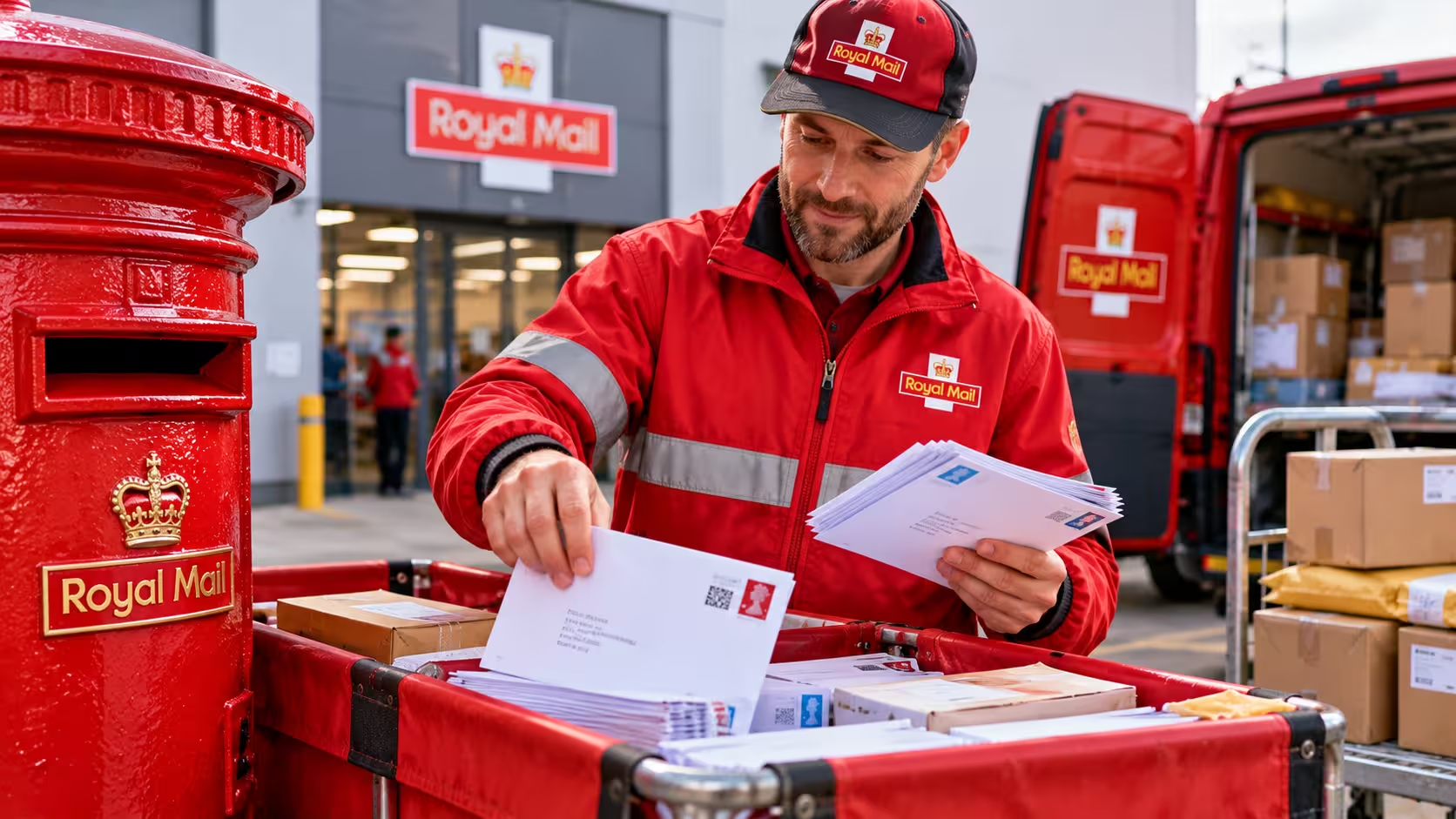
Royal Mail Second-Class changes are transforming how non-urgent letters are delivered across the UK during 2026.
Instead of delivering Second-Class letters on every normal delivery day, Royal Mail is moving towards an alternate-weekday system as part of wider reforms to the Universal Service.
The changes are particularly important for UK businesses that still depend on letters for invoices, statements, customer notices, marketing campaigns and other communications.
The rollout is already underway, but it is being introduced gradually across Royal Mail’s delivery offices. Royal Mail expects the new operating model to be fully implemented by December 2026.
How Is Royal Mail Second-Class Delivery Changing In 2026?
The biggest change is that Second-Class letters and other non-First-Class letters are moving to delivery on alternate weekdays from Monday to Friday.
Royal Mail still aims to deliver Second-Class mail within three weekdays. The change therefore affects how frequently delivery rounds containing Second-Class letters take place rather than simply extending every letter’s delivery time.
First-Class letters continue to have a next-working-day delivery aim and remain part of a six-day Monday-to-Saturday letter service.
Parcels are also not being moved onto the alternate-weekday Second-Class letter system.
For businesses, this means greater attention may need to be paid to the day on which a letter is posted, particularly when the recipient needs time to respond.
Why Were The Royal Mail Second-Class Changes Introduced?
The Royal Mail Second-Class changes were introduced as part of wider reforms to the Universal Service.
One of the biggest reasons is the long-term decline in the number of letters being sent in Britain. Businesses and consumers increasingly use email, online accounts, apps, electronic billing and digital communication instead of traditional letters.
Maintaining the same delivery network for a much smaller volume of letters can become increasingly expensive.
The reforms are intended to allow Royal Mail to operate its letter network more efficiently while continuing to provide a nationwide postal service.
The main objectives include:
- Reducing Unnecessary Delivery Costs: Fewer dedicated Second-Class delivery rounds can lower the cost of operating the letter network.
- Supporting the Universal Service: The reforms are designed to make nationwide letter delivery more financially sustainable.
- Improving Reliability: Royal Mail can concentrate resources on meeting revised delivery targets rather than maintaining a delivery frequency that no longer reflects letter volumes.
- Responding to Changing Customer Behaviour: Businesses and households now communicate digitally far more often than when the existing postal requirements were originally developed.
The reforms therefore represent a shift from focusing primarily on delivery frequency towards trying to create a more sustainable and predictable service.
What Problems Was Royal Mail Trying To Solve With The New System?
Royal Mail has faced a combination of falling letter volumes, rising operating costs and repeated problems meeting delivery-performance targets.
The traditional Universal Service model required letters to be delivered six days a week across the UK. That requirement was created when households and businesses sent substantially more letters.
As letter volumes declined, Royal Mail continued operating a large nationwide collection, processing and delivery network.
Another significant problem has been reliability.
During the 2025/26 reporting period, only 90.2% of Second-Class mail was delivered within three working days. The target applying during that period was 98.5%.
The new system is intended to give Royal Mail greater operational flexibility while introducing revised performance requirements.
Ofcom has also introduced additional reliability targets designed to prevent letters that miss their normal delivery target from becoming excessively delayed.
How Have Royal Mail Second-Class Deliveries Changed Over The Years?
Second-Class post has traditionally been the lower-cost option for people and businesses that do not require next-day delivery.
For many years, the Universal Service required Royal Mail to provide letter deliveries six days a week.
However, the postal market gradually changed as digital communication replaced many letters.
The latest reform can broadly be viewed through the following timeline:
| Period | Development |
| Earlier Years | Second-Class letters formed part of the traditional six-day Universal Service delivery network |
| 2020s | Letter volumes continued declining as digital communication expanded |
| July 2025 | Ofcom announced major reforms to Royal Mail’s Universal Service obligations |
| April 2026 | Revised First-Class and Second-Class delivery-performance targets came into effect |
| 2026 | Royal Mail began introducing alternate-weekday Second-Class letter delivery |
| December 2026 | Royal Mail expects the nationwide rollout of the new delivery model to be completed |
The 2026 change is therefore one of the biggest structural changes to ordinary UK letter delivery in recent years.
How Has Royal Mail Improved The Second-Class Service Through Recent Reforms?
The reforms should not be interpreted as evidence that Second-Class performance has already improved substantially.
Royal Mail has continued to face criticism over late deliveries and has missed previous regulatory targets.
Instead, recent reforms are intended to create the conditions for future improvement.
One important change is the introduction of a revised headline target requiring 95% of Second-Class mail to be delivered within three weekdays.
There is also a new reliability target requiring 99% of Second-Class mail to arrive within five working days.
This second target is particularly significant because it focuses on letters that miss their original delivery aim.
Royal Mail has also committed to a £500 million investment programme over five years as part of efforts to improve service quality.
The company is expected to work towards meeting its revised delivery requirements while implementing the new operating model.
When Did The New Second-Class Delivery Rules Start?
The Royal Mail Second-Class changes have several important dates, which can cause confusion.
Ofcom announced reforms to the Universal Service in July 2025.
The revised quality-of-service targets then came into effect on 1 April 2026.
Royal Mail subsequently began rolling out the operational changes required for alternate-weekday Second-Class delivery.
This rollout is taking place gradually rather than through one nationwide switch.
Royal Mail expects implementation across its delivery network to be completed by December 2026.
Therefore, the changes are already active in 2026, but not every delivery office necessarily moved onto the new system at exactly the same time.
Has Royal Mail Changed Second-Class Deliveries Everywhere In The UK?
Not immediately.
Royal Mail has around 1,200 delivery offices involved in the implementation of the new delivery model.
The company has said the rollout will take approximately five to six months and is expected to be completed by December 2026.
As a result, customers in different parts of the UK may notice the changes at different times.
This phased approach also means businesses should avoid assuming that every customer is currently experiencing exactly the same Second-Class delivery pattern.
Once implementation is completed, the alternate-weekday model is expected to form the normal approach for Second-Class and other non-First-Class letters.
How Does The New Second-Class Delivery Schedule Work?
Under the new system, Second-Class letters are delivered every other weekday between Monday and Friday.
Royal Mail continues to aim for Second-Class letters to arrive within three weekdays.
Royal Mail provides the following example of when Second-Class letters may become due for delivery based on the posting day:
| Day Posted | Expected Delivery-Due Day |
| Monday | Thursday |
| Tuesday | Friday |
| Wednesday | Monday |
| Thursday | Tuesday |
| Friday | Wednesday |
| Saturday | Thursday |
| Sunday | Thursday |
Bank holidays can affect these timings.
Businesses should therefore consider both the posting date and the expected delivery window before setting deadlines in letters.
What Is The Latest Royal Mail Second-Class Update In 2026?
As of October 2026, the major Second-Class reform is still being rolled out across the UK.
Royal Mail has begun introducing the new delivery model gradually across approximately 1,200 delivery offices, with national implementation expected to be completed by December 2026.
There have also been additional changes affecting businesses during 2026.
From 5 October 2026, Royal Mail introduced price changes affecting products including Business Mail, Advertising Mail, Publishing Mail and Partially Addressed Mail.
From 7 October 2026, the deadline for businesses submitting rolling posting-volume forecasts for certain Sorted Letter and Large Letter services changed from 3pm to midday on the working day before posting.
These developments mean businesses using Royal Mail regularly should review both delivery schedules and mailing procedures rather than focusing only on Second-Class stamps.
Is Royal Mail Meeting Its New Second-Class Delivery Targets?
Royal Mail’s recent performance shows why reliability remains an important part of the reforms.
During 2025/26, Royal Mail reported that 90.2% of Second-Class letters were delivered within three working days.
The target applying during that reporting period was 98.5%.
Ofcom subsequently opened an investigation into Royal Mail’s 2025/26 delivery performance.
From 1 April 2026, the headline target was revised to require 95% of Second-Class letters to be delivered within three weekdays.
A further target requires 99% to be delivered within five working days.
The revised target is lower than the previous headline requirement, but the additional five-day target is intended to put greater pressure on Royal Mail to prevent severe delays.
Whether the new delivery model produces consistent improvements will therefore depend on Royal Mail’s performance after the rollout is completed.
How Much Does Second-Class Post Cost In 2026?
A standard Royal Mail Second-Class letter weighing up to 100g currently costs 91p.
A standard First-Class letter costs £1.80.
This creates a significant price difference for companies sending large quantities of letters.
For example, a business sending hundreds or thousands of routine letters may find Second Class substantially more economical than First Class.
Businesses should therefore decide whether speed or cost is more important for each type of correspondence.
Second Class may remain suitable for:
- Routine Statements
- General Customer Correspondence
- Non-Urgent Marketing Material
- Membership Communications
- Newsletters
- Non-Urgent Administrative Letters
First Class or another faster service may be more appropriate where a letter is connected to a strict deadline.
How Will The Royal Mail Second-Class Changes Affect UK Small Businesses?
The impact will depend heavily on how much a company relies on physical post.
Businesses that have already moved most customer communication online may notice relatively little difference.
Companies that regularly send invoices, statements, notices or marketing material through the post may need to adjust their processes.
Invoices And Payment Reminders
Businesses sending paper invoices should allow sufficient time for the invoice to arrive before calculating when a customer is reasonably expected to respond.
Late delivery could otherwise reduce the effective payment period available to the customer.
Payment reminders and final notices may require even more careful scheduling.
Customer Letters And Important Notices
Businesses using Second-Class letters for important customer information may need to review whether the service remains appropriate.
Where a communication must reach somebody before a legal, contractual or administrative deadline, businesses may want to post earlier or consider a faster service.
Direct-Mail Marketing Campaigns
Direct-mail campaigns can still use Second-Class services, particularly where large quantities of material are being distributed.
However, campaign dates may need greater flexibility.
Businesses should avoid planning a promotion on the assumption that every recipient will receive a mailing on exactly the same day.
Appointment And Service Communications
Healthcare providers, tradespeople, professional firms and other service businesses may use letters for appointment information.
Where appointment dates are close to the posting date, businesses may need to use a faster communication method or support postal communication with email, text messages or telephone contact.
Could Businesses End Up Spending More On First-Class Post?
Potentially.
The alternate-weekday system may encourage some businesses to move time-sensitive correspondence from Second Class to First Class.
That could increase mailing costs.
A standard First-Class letter currently costs considerably more than a standard Second-Class letter.
Businesses therefore do not necessarily need to upgrade all mail.
A better approach may be to classify correspondence according to urgency.
For example:
- Use Second Class For Routine And Non-Urgent Letters
- Use First Class For More Time-Sensitive Correspondence
- Use Tracked Or Guaranteed Services Where Proof Or Certainty Is Important
- Use Digital Communication Alongside Post Where Appropriate
This can help businesses control costs without creating unnecessary delivery risks.
Which UK Businesses Could Be Most Affected By The Changes?
Businesses that depend heavily on physical letters are likely to feel the changes most.
Examples include:
- Accountancy Firms: Particularly where tax documents, reminders and client correspondence are posted.
- Solicitors And Legal Businesses: Where correspondence may involve important deadlines.
- Property Businesses: Including landlords, letting agents and property-management companies sending notices or statements.
- Financial Businesses: Where statements, customer notices and other documents continue to be sent by post.
- Healthcare Providers: Particularly organisations sending appointment or administrative correspondence.
- Membership Organisations: Where renewals, newsletters or membership information are distributed by post.
- Charities: Particularly those using direct mail for fundraising campaigns.
- Retail And Marketing Businesses: Where postal advertising forms part of customer-acquisition campaigns.
The greater the company’s dependence on physical correspondence, the more important it becomes to understand the new delivery timetable.
What Happens If A Second-Class Letter Is Delayed?
Second-Class mail has a delivery aim rather than a guaranteed delivery time.
A letter arriving later than expected does not automatically mean Royal Mail has broken a guaranteed delivery commitment.
However, Royal Mail operates compensation arrangements for eligible mail that is lost, damaged or significantly delayed, subject to the relevant service rules and evidence requirements.
Businesses sending documents with significant financial, contractual or legal importance should consider whether ordinary Second-Class post provides sufficient protection.
A tracked, signed or guaranteed service may be more appropriate when evidence of delivery is important.
What Should Small Businesses Do To Prepare For The New Delivery System?

Businesses do not necessarily need to stop using Second-Class post.
Instead, postal processes should be adjusted to reflect the new delivery model.
Useful steps include:
- Review Mailing Deadlines: Post letters earlier where customers must respond by a fixed date.
- Separate Urgent And Routine Mail: Avoid paying First-Class prices for correspondence that does not require faster delivery.
- Update Internal Procedures: Ensure employees understand that Second-Class delivery patterns are changing.
- Review Customer Notices: Check whether payment, appointment or response deadlines provide sufficient postal time.
- Use Digital Backups: Consider sending important information by email or text as well as post where appropriate.
- Monitor Mailing Costs: Take account of Royal Mail price changes when preparing annual budgets.
- Check Service Performance: Businesses relying heavily on Royal Mail should monitor whether delivery performance improves as the new system becomes established.
The most effective approach is likely to be a combination of postal and digital communication rather than depending entirely on one method.
What Could Happen To Royal Mail Second-Class Deliveries After 2026?
December 2026 is expected to mark completion of the rollout rather than the end of changes to the UK postal market.
Attention is likely to shift towards whether the new system delivers better reliability and whether Royal Mail can consistently meet its revised performance targets.
Postal pricing is also likely to remain an important issue as letter volumes continue to decline.
Further regulatory discussions could consider affordability, service standards and the long-term structure of the Universal Service.
For businesses, the key issue after 2026 will be whether the reforms create a more predictable postal service without making business correspondence significantly more expensive.
Conclusion
The Royal Mail Second-Class changes represent a major shift in the way ordinary letters are delivered across the UK.
Second-Class and other non-First-Class letters are moving to alternate-weekday delivery from Monday to Friday, while Royal Mail continues to aim for delivery within three weekdays.
The reform was introduced against a background of declining letter volumes, rising operating pressures and repeated problems with delivery performance.
For UK small businesses, the changes do not mean Second-Class post is no longer useful. At 91p for a standard letter, it remains substantially cheaper than First Class for many routine communications.
However, businesses should allow more time for important correspondence, review mailing deadlines and use faster or digital alternatives where timing is critical.
With the rollout expected to be completed by December 2026, businesses that still rely heavily on post should ensure their communication processes reflect the new system.
Frequently Asked Questions
Is Royal Mail Still Delivering Second-Class Letters Every Day?
Second-Class letters are moving to alternate-weekday delivery from Monday to Friday. The new model is being phased across the UK during 2026.
How Long Does Second-Class Mail Take In 2026?
Royal Mail aims to deliver Second-Class letters within three weekdays, although bank holidays and operational issues can affect delivery times.
When Will The New Second-Class System Be Fully Rolled Out?
Royal Mail expects its phased rollout across approximately 1,200 delivery offices to be completed by December 2026.
Does The Change Affect First-Class Letters?
No. First-Class letters retain a next-working-day delivery aim and continue to be delivered as part of the six-day Monday-to-Saturday letter service.
Are Royal Mail Parcels Affected By The Second-Class Changes?
The alternate-weekday reform applies to Second-Class and other non-First-Class letters. Royal Mail says parcel deliveries will continue up to seven days a week.
Is Second-Class Post Still Cheaper Than First Class?
Yes. A standard Second-Class letter currently costs 91p, while a standard First-Class letter costs £1.80.
Can Businesses Claim Compensation For Delayed Second-Class Mail?
Compensation may be available for eligible delayed, lost or damaged items depending on Royal Mail’s rules and the service used. Ordinary Second Class does not provide a guaranteed delivery date.

Jermaine writes informative business content related to entrepreneurship, finance, innovation, operations, and emerging opportunities for growing businesses in the UK.

Does Gross Misconduct Always Lead to Dismissal?
No. Gross misconduct does not always lead to dismissal. It can be serious enough to justify dismissal without notice, including for a first offence, but dismissal is not…
Andy Burnham Whitehall Job Cuts: What Is Changing In 2026?
The Andy Burnham Whitehall job cuts story has become part of a much wider debate about how the UK Government should operate and where political power, public money…
Insights for the Modern
UK Small Business.
Join 15,000+ owners receiving tactical analysis on finance, marketing, and technology. No clutter.
Zero spam. Unsubscribe in one click.