UK Petrol Station Liquidation: What Happened and What’s Next?

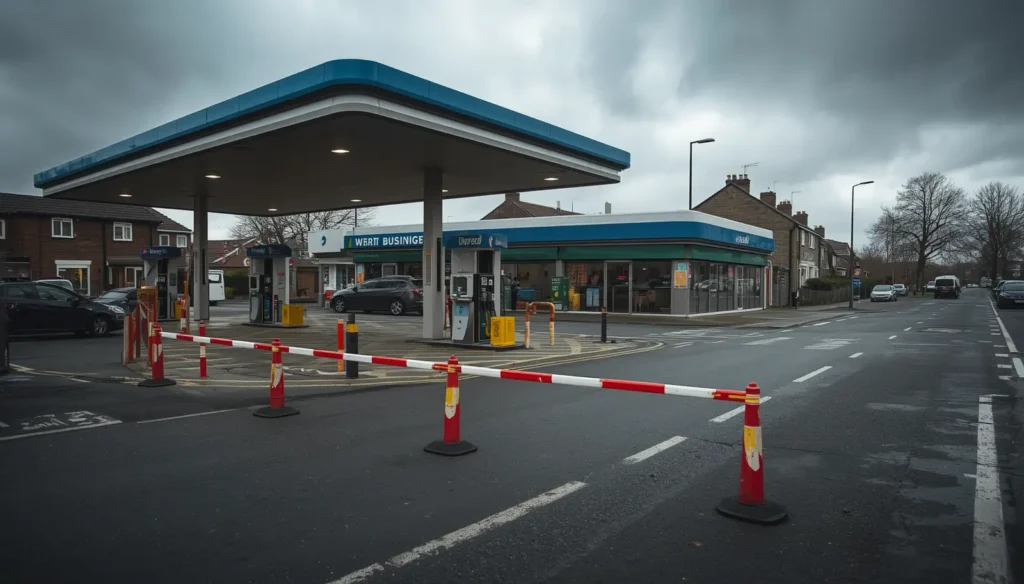
A UK petrol station that served the Leigh community for around nine years has closed after the company connected with the site entered liquidation proceedings. HD Food and Fuel Ltd operated from Firs Lane Filling Station in Leigh, Greater Manchester, and was incorporated in April 2017.
Reports say Andrew Mark Bland of DMC Recovery Limited was appointed to oversee the liquidation after winding-up proceedings involving the company. The exact underlying cause of the business failure has not been publicly confirmed, so higher fuel prices, operating costs or other commercial pressures should not be presented as the proven reason for the closure.
The case has attracted attention at a time when motorists have already faced volatility in global oil markets. Conflict involving Iran and disruption around the Strait of Hormuz have affected energy-market expectations, but there is no verified evidence that these events directly caused this particular petrol station to fail.
Key Highlights:
- HD Food and Fuel Ltd was incorporated on 4 April 2017 and is linked to Firs Lane Filling Station in Leigh.
- The petrol station had served the area for about nine years before its reported closure.
- Local residents reportedly said the forecourt had been closed for around a week when the closure became public.
- Andrew Mark Bland was reported as the liquidator overseeing the process.
- The precise cause of the company’s financial failure has not been publicly confirmed.
- Nearby supermarket filling stations mean local motorists still have alternative places to buy fuel.
- Liquidation of the operating company does not automatically determine the long-term future of the physical site.
The most important point is that this is a specific company insolvency case, not proof that UK petrol stations generally are entering liquidation.
What Happened in the UK Petrol Station Liquidation?
HD Food and Fuel Ltd is associated with Firs Lane Filling Station, Firs Lane, Leigh, WN7 4TT. The company was incorporated in April 2017 with the stated business activity of retailing automotive fuel in specialised stores.
News reports published in June 2026 said the filling station had ceased operating and that a winding-up order had followed a petition filed earlier in the year. Andrew Mark Bland of DMC Recovery Limited was named in reports as the person overseeing the liquidation.
The Business and Petrol Station Involved
- The filling station is in Leigh, roughly eight miles from Bolton and around 17 miles from Manchester. It had operated since 2017, giving it about nine years of trading history by the time the closure was reported.
- The official company record for HD Food lists company number 10708220, the Firs Lane Filling Station address and the automotive-fuel retail activity.
- Company-register pages can sometimes display information that has not yet caught up with every insolvency development, so readers should consider later court, liquidator and filing information as well.
What Has Been Reported About the Closure?
- Local discussion reportedly began after customers noticed that the petrol station was no longer operating. Residents posting in a local social-media group were reported as saying that it had been closed for about a week.
- Motorists in the surrounding area still have other filling-station options, including forecourts operated by major supermarkets in and around Leigh.
Details That Remain Unconfirmed
- The available reporting does not establish a definitive cause for the company’s collapse.
- There has also been no verified public announcement confirming the long-term use of the site or a specific number of job losses.
- No reliable, attributable official spokesperson statement about the cause of the closure was located during this review.
- For that reason, no quotation has been invented or attributed to the company, liquidator or public authority.
Why Did the UK Petrol Station Go Into Liquidation?
The exact reason has not been publicly confirmed. A liquidation can follow serious financial difficulty, but the existence of liquidation proceedings does not, by itself, prove whether the decisive problem was HMRC debt, cash flow, tax liabilities, operating costs, competition or another factor.
This distinction matters because the closure happened during a period of wider concern about fuel prices. The United States and Israel began attacks on Iran on 28 February 2026, followed by Iranian retaliation and severe disruption around the Strait of Hormuz. The route normally carries roughly one-fifth of global oil exports, making disruption there important to global energy markets.
Oil prices rose sharply during the wider crisis and later fell from earlier peaks, although movements in wholesale oil prices do not always pass immediately or fully into UK pump prices.
What Can Be Said Safely?
- The petrol station closed and liquidation proceedings were reported.
- The company had traded from the Leigh site since 2017.
- Wider oil-market disruption affected motorists and fuel-market expectations during 2026.
- No reliable evidence reviewed establishes that geopolitical events directly caused this company’s liquidation.
The wider fuel-price context is relevant background, but it should not be confused with a confirmed explanation for this individual business failure.
What Does Petrol Station Liquidation Mean in the UK?

Liquidation is a formal legal process used to wind up a company. Depending on the type of liquidation, assets may be realised, claims dealt with and available funds distributed according to insolvency rules before the company is ultimately brought to an end.
The official UK liquidation process guidance explains that company assets are used to pay debts and identifies creditors’ voluntary liquidation, compulsory liquidation and members’ voluntary liquidation as distinct routes.
A petrol station closing its doors is therefore not automatically the same thing as liquidation. A business may temporarily stop trading, permanently cease trading, be struck off, enter administration or enter liquidation, and each situation has different legal implications.
Key Differences
| Term | What It Generally Means |
| Temporary closure | Trading stops for a limited period |
| Ceasing to trade | The business stops normal commercial activity |
| Liquidation | A formal process for winding up a company |
| Administration | A separate insolvency procedure that may seek rescue or a better outcome for creditors |
| Dissolution | The company is removed from the register and ceases to exist |
In this case, the available reporting points to liquidation and winding-up proceedings, so describing the company simply as being “in administration” could misstate the legal position.
What Happens After a Petrol Station Enters Liquidation?
Once a liquidator is appointed, the company’s affairs move into a formal process. The liquidator may take control of relevant company assets, examine financial affairs, deal with claims and realise assets where appropriate.
The Role of the Liquidator
- A liquidator’s role can include identifying and securing company property, reviewing liabilities, communicating with creditors and distributing available funds in accordance with insolvency law.
- The appointment of a liquidator does not mean every asset immediately disappears or that every connected property must permanently close.
- The outcome depends partly on ownership arrangements and on which assets legally belong to the company.
Possible Outcomes for the Petrol Station Site
The physical filling-station site and the company that operated from it are not necessarily the same legal asset. Depending on ownership, leases, licences and commercial decisions, a site may have several possible futures.
- The forecourt may remain closed.
- Assets may be sold as part of the insolvency process.
- The property may be sold or leased separately.
- Another operator may eventually trade from the location.
- The premises may be redeveloped or used for another purpose.
None of those possibilities should be presented as a confirmed plan for Firs Lane unless an owner, liquidator, planning authority or future operator makes a formal announcement.
Could the Petrol Station Reopen After the Liquidation?

Yes, the physical site could potentially operate again, but reopening has not been confirmed.
Liquidation concerns the legal and financial affairs of a company. A filling-station property may be owned by that company, leased from another party or subject to other arrangements. A new business could potentially acquire assets or secure rights to operate from the site.
Any reopening could also depend on practical matters such as fuel-supply contracts, environmental responsibilities, licences, equipment, safety requirements, property rights and commercial viability.
What Reopening Would Depend On?
| Factor | Why It Matters |
| Ownership of the site | Determines who can sell, lease or use the premises |
| Ownership of equipment | Pumps, tanks and shop assets may be dealt with separately |
| Insolvency process | Asset sales may depend on the liquidator and legal position |
| Regulatory requirements | A new operator must meet applicable rules |
| Commercial viability | A buyer must consider costs, demand and competition |
For local residents, the safest position is therefore that the previous operation has closed, while the site’s longer-term future remains uncertain.
What Does the Liquidation Mean for Employees and Creditors?
The effect on employees and creditors depends on their individual circumstances and the precise insolvency process. It would be wrong to assume that every worker has the same entitlement or that every creditor will receive the same outcome.
Employees and Workplace Rights
- An insolvent employer may make employees redundant, continue employing some staff for a period or, in certain situations, transfer a business to another employer.
- People affected by an insolvent employer can check the official employee insolvency rights guidance, which explains possible routes involving redundancy pay, unpaid wages and other statutory entitlements.
Creditor Claims
- Suppliers, landlords and other parties owed money may need to register or submit evidence of their claim to the person handling the insolvency.
- The procedure depends on the type of case.
Repayment Is Not Guaranteed
- Being accepted as a creditor does not guarantee full payment. Recovery can depend on the value of available assets, secured claims, insolvency costs and the legal priority of different creditors.
- Anyone directly affected should keep contracts, invoices, payslips and correspondence and follow instructions issued through the formal insolvency process.
Does This UK Petrol Station Liquidation Signal a Wider Crisis?
No. One petrol station liquidation does not establish that the UK’s entire forecourt sector is in crisis.
Independent and smaller fuel retailers can face commercial pressures from energy-market volatility, staffing costs, property expenses, competition, card-processing charges, financing costs and changes in customer behaviour. However, those pressures do not prove why HD Food and Fuel Ltd entered liquidation.
The wider 2026 energy backdrop has been unusually volatile. Conflict beginning on 28 February and disruption affecting the Strait of Hormuz created significant concern because the waterway is central to global oil flows. UK motorists consequently faced renewed uncertainty over pump prices.
The liquidation should therefore be viewed on two separate levels: the specific insolvency of one company and the broader economic environment affecting fuel retailers and motorists. Connecting the two as direct cause and effect without evidence would be misleading.
What Claims About the Petrol Station Liquidation Should Readers Be Careful About?
Readers should be cautious about headlines or social-media posts that turn incomplete information into definite conclusions.
“The Exact Cause of the Collapse Is Already Known”
The precise cause has not been publicly established in the sources reviewed. Wider fuel-price pressure may form part of the commercial background, but it should not be labelled as the confirmed cause of liquidation.
What Liquidation Does Not Automatically Mean?
- It does not prove that all UK petrol stations are in financial trouble.
- It does not automatically mean every employee has the same employment outcome.
- It does not guarantee that creditors will receive nothing.
- It does not prove the physical site can never reopen.
- It does not establish that the 2026 oil-price shock caused this particular failure.
Careful separation between confirmed facts, wider context and speculation is essential when reporting a business insolvency.
What Should Customers, Employees and Creditors Do Next?

People affected by the closure should rely on current, verifiable information rather than social-media speculation.
For Local Customers
- Check the site’s current operating status before travelling.
- Use alternative nearby filling stations where necessary.
- Watch for verified updates about any sale, reopening or new operator.
For Employees
- Keep employment contracts, payslips and wage records.
- Retain correspondence concerning closure or redundancy.
- Follow instructions from the employer, liquidator or relevant official service.
For Creditors
- Keep invoices, contracts and evidence of the amount owed.
- Verify the formal insolvency position.
- Contact the person handling the case where appropriate.
- Submit required claim documentation within relevant procedures.
Practical next steps depend on a person’s legal relationship with the company, so directly affected individuals or businesses may need professional advice tailored to their circumstances.
Conclusion
The UK petrol station liquidation attracting attention concerns HD Food and Fuel Ltd and the filling station associated with Firs Lane in Leigh. The business had served the area since 2017 and was reported closed after roughly nine years of operation.
Reports identify Andrew Mark Bland as overseeing the liquidation, while the precise cause of the company’s failure remains unconfirmed. The closure also comes against a difficult international energy backdrop, including disruption around the Strait of Hormuz and significant oil-price volatility, but that broader context should not be presented as the proven cause of this insolvency.
The key distinction is between what is known about the company, what remains uncertain about the reason for its failure and what may eventually happen to the physical site. Further clarity may emerge through formal filings, the liquidator or other verified public information.
Frequently Asked Questions
Who Is HD Food and Fuel Ltd?
HD Food and Fuel Ltd is a private company incorporated in April 2017 and associated with Firs Lane Filling Station in Leigh. Its registered business activity relates to the retail sale of automotive fuel.
Where Is the Petrol Station Involved in the Liquidation?
The filling station is on Firs Lane in Leigh, Greater Manchester, approximately eight miles from Bolton and around 17 miles from Manchester.
Has the Exact Reason for the Company’s Failure Been Confirmed?
No definitive cause was established in the reliable material reviewed for this article. Wider fuel-market pressures are relevant context but should not be presented as the proven cause of the liquidation.
Is Liquidation the Same as Bankruptcy in the UK?
Not usually. Bankruptcy generally applies to individuals, while companies may enter insolvency procedures including liquidation or administration.
Can Another Company Buy or Operate the Petrol Station?
Potentially, yes. A new operator could acquire assets or obtain rights to use the site, depending on property ownership, the liquidation process, regulation and commercial decisions.
How Can Someone Check Whether a UK Company Is in Liquidation?
People can review official company filings and relevant insolvency information, while creditors should also follow communications from the appointed office-holder or official receiver where applicable.
Will More Information About the Petrol Station Become Available?
Possibly. Further details may emerge through company filings, insolvency notices, creditor communications, the liquidator or verified reporting.
Editorial Note:
This article separates verified facts from wider fuel-price context and unconfirmed claims. The exact cause of HD Food and Fuel Ltd’s failure has not been assumed. No invented quotes have been used. This is informational, not financial/legal advice.
How We Checked?
Using current reporting, official company records and UK insolvency guidance. Company details, liquidation information and wider energy-market claims were reviewed separately to avoid presenting speculation as fact.

Jermaine writes informative business content related to entrepreneurship, finance, innovation, operations, and emerging opportunities for growing businesses in the UK.

Does Gross Misconduct Always Lead to Dismissal?
No. Gross misconduct does not always lead to dismissal. It can be serious enough to justify dismissal without notice, including for a first offence, but an employer should…

Andy Burnham Whitehall Job Cuts Begin Under Devolution Push
Andy Burnham’s government has begun the first operational stage of its Whitehall devolution push, with civil servants due to be seconded into regional mayoral authorities from autumn 2026.…
Insights for the Modern
UK Small Business.
Join 15,000+ owners receiving tactical analysis on finance, marketing, and technology. No clutter.
Zero spam. Unsubscribe in one click.