DWP Reports Rising Deductions for Millions of Universal Credit Claimants

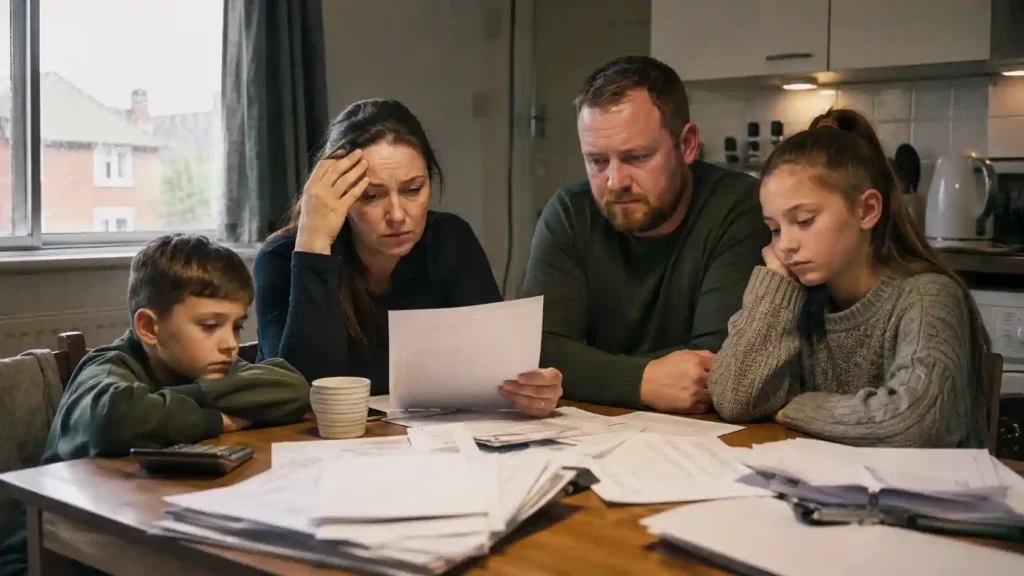
Nearly half of all households receiving Universal Credit are now having deductions taken directly from their monthly payments, according to the latest Department for Work and Pensions (DWP) figures.
Around 3.3 million households experienced at least one deduction during February 2026, highlighting the growing financial pressure facing many low-income families across Britain.
The increase largely reflects the continued migration of claimants from older legacy benefits onto Universal Credit.
While the Government argues that recent reforms have reduced repayment pressures, welfare organisations warn that deductions are still leaving many households struggling to cover essential living costs.
Key findings from the latest DWP data include:
- 46% of Universal Credit households had deductions applied
- Around 300,000 more households were affected compared to last year
- The maximum deduction cap remains at 15% of a claimant’s standard allowance
- Advance repayments remain one of the biggest reasons for deductions
- Campaigners say deductions continue to contribute to poverty and housing insecurity
Why Are More Universal Credit Claimants Facing DWP Deductions in 2026?
The latest DWP statistics show a significant rise in the number of Universal Credit claimants facing deductions from their monthly entitlement.
More than eight million people currently receive Universal Credit across Britain, and nearly half are now seeing repayments automatically removed before payments reach their bank accounts.
One major reason behind the increase is the Government’s ongoing migration programme, which is moving people from legacy benefits such as:
- Housing Benefit
- Income-related Employment and Support Allowance
- Income-based Jobseeker’s Allowance
- Tax Credits
As more people transition onto Universal Credit, deductions linked to previous debts and advance payments are also increasing.
Many claimants take advance payments when first applying because Universal Credit generally involves a five-week wait before the first payment arrives. While advances offer short-term support, they must later be repaid through monthly deductions.
A welfare adviser working with low-income households explained the issue clearly:
“Many people accept advance payments because they have no other option during the waiting period. But once repayments begin, households often struggle to manage reduced monthly income alongside rising living costs.”
The DWP says deductions are designed to help claimants manage debts responsibly, but critics argue the repayment system still creates financial hardship for vulnerable households.
What Types of Deductions Are Being Taken From Universal Credit Payments?

There are several different forms of deductions that can reduce a claimant’s monthly Universal Credit payment.
Universal Credit Advance Repayments
Advance payments remain one of the most common deductions. These loans are intended to help claimants cover immediate costs while waiting for their first payment.
However, repayments are automatically deducted from future Universal Credit awards, reducing the amount claimants receive each month.
| Type of Advance | Purpose | Repayment Method |
| New Claim Advance | Support during first claim period | Monthly deductions |
| Budgeting Advance | Emergency household expenses | Monthly deductions |
| Change of Circumstances Advance | Support after major life changes | Monthly deductions |
Although repayment periods have been extended in recent years, many households still struggle with lower monthly income.
Third-Party Deductions
Third-party deductions involve money taken directly to repay debts owed to organisations outside the Government.
Common examples include:
- Rent arrears
- Energy bill debt
- Water charges
- Council tax arrears
These deductions are intended to prevent larger financial problems such as eviction or utility disconnection. However, they also reduce disposable income for everyday essentials.
DWP and HMRC Debt Recovery
The Government also deducts money to recover overpayments and outstanding debts linked to:
- Universal Credit overpayments
- Tax credit debts
- Benefit overpayments
- Social Fund loans
In some cases, claimants may not immediately realise why deductions are being applied, particularly if debts date back several years.
How Much Can the DWP Deduct From Universal Credit Payments?
Current rules mean deductions are capped at 15% of a claimant’s standard Universal Credit allowance.
This limit was reduced from 25% under the Government’s Fair Repayment Rate reforms introduced after Rachel Reeves’ 2024 Budget.
The maximum monthly deduction depends on household circumstances and claimant age.
| Claimant Type | Maximum Monthly Deduction |
| Single claimant under 25 | £51 |
| Single claimant aged 25+ | £64 |
| Couple both under 25 | £79 |
| Couple with one partner aged 25+ | £100 |
The Government stated that lowering the deduction threshold would leave around 1.2 million low-income households better off by an average of £420 per year.
Officials also claimed approximately 700,000 families with children would benefit from the reforms.
Despite these changes, the latest DWP figures reveal that around 21% of Universal Credit households still have deductions set at the maximum permitted level.
A debt support specialist described the challenge faced by many claimants:
“Even with the lower deduction cap, many households are already budgeting down to the last pound. Losing £60 or £100 a month can make the difference between paying rent on time or falling behind.”
What Does the Latest Overpayment Data Reveal About Universal Credit Debt?

Recent figures show that benefit overpayments have increased significantly over the past several years, particularly following the pandemic and cost-of-living support schemes.
| Financial Year | Universal Credit (£m) | Housing Benefit (£m) | Pension Credit (£m) | ESA (£m) | Other (£m) | Cost of Living Payments (£m) | Total Overpayment |
| 2018–19 | 700 | 1300 | 210 | 540 | 1150 | 0 | £3.9BN |
| 2019–20 | 1730 | 1080 | 270 | 520 | 900 | 0 | £4.5BN |
| 2020–21 | 5540 | 950 | 270 | 520 | 920 | 0 | £8.2BN |
| 2021–22 | 5920 | 880 | 350 | 500 | 1050 | 0 | £8.7BN |
| 2022–23 | 5500 | 860 | 330 | 410 | 800 | 400 | £8.3BN |
| 2023–24 | 6460 | 980 | 520 | 430 | 760 | 550 | £9.7BN |
The sharp increase in overpayments during and after the pandemic reflects the rapid expansion of Universal Credit claims and emergency support measures.
Universal Credit now represents the largest source of benefit overpayments recovered through deductions.
Key Reasons for Rising Overpayments
| Cause | Explanation |
|---|---|
| Changes in income | Earnings fluctuations affecting entitlement |
| Claimant reporting errors | Incorrect or delayed information |
| Administrative mistakes | DWP processing issues |
| Emergency pandemic support | Fast-tracked payments during COVID-19 |
As repayment recovery continues, millions of households are expected to face deductions for several more years.
How Are Universal Credit Deductions Affecting Low-Income Households?
Welfare organisations argue that deductions are contributing to ongoing financial insecurity for vulnerable claimants.
Policy in Practice warned that deductions and sanctions can significantly reduce the actual amount households receive each month, making budgeting increasingly difficult.
According to the organisation, income volatility has become a major concern for many families already struggling with inflation, rent increases and energy costs.
| Financial Pressure Area | Impact on Claimants |
| Reduced monthly income | Difficulty covering essentials |
| Rent arrears | Increased housing insecurity |
| Utility debt | Greater reliance on emergency support |
| Food costs | Increased food bank usage |
| Mental wellbeing | Rising stress and anxiety |
Many households rely on strict monthly budgeting, meaning even relatively small deductions can create serious financial strain.
Rising Risks of Rent Arrears and Housing Insecurity
Campaigners have also warned that deductions may increase the risk of:
- Evictions
- Temporary accommodation use
- Homelessness
- Long-term debt dependency
Families with children are often among the most heavily affected, particularly where deductions combine with wider welfare restrictions such as the two-child limit or benefit cap.
Rory Ewan, policy and practice analyst at Policy in Practice, highlighted the issue directly:
“Universal Credit should be a foundation of financial stability, not a source of sudden shocks. Too often, what people actually receive falls far short of their entitlement.”
He added that the gap between entitlement and actual payments is contributing to rising poverty and housing insecurity across Britain.
What Are Welfare Organisations and Campaigners Saying About DWP Deductions?

Welfare groups continue to argue that the current deduction system places too much pressure on households already living on low incomes.
Policy in Practice said deductions routinely undermine financial security by reducing the money available for essential spending.
Campaigners believe the current system creates several long-term risks, including:
- Increased poverty levels
- Greater demand for food banks
- Growing household debt
- Housing instability
- Financial stress among families
Many organisations are now calling for additional protections, including lower deduction caps and longer repayment periods.Some campaigners also argue that certain deductions should be paused entirely during periods of severe financial hardship.
Are the Government’s Fair Repayment Rate Reforms Working?
The Government maintains that the Fair Repayment Rate reforms have significantly improved financial outcomes for Universal Credit claimants.
The reduction from 25% to 15% was introduced to reduce repayment pressures and help households retain more of their monthly benefit payments.
According to ministers, the reforms were expected to:
- Benefit 1.2 million low-income households
- Improve financial stability
- Reduce hardship among families with children
- Lower the impact of debt recovery deductions
However, welfare organisations argue the reforms have only partially addressed the problem.
Critics point out that deductions still occur alongside other welfare reductions, including:
- Benefit caps
- Bedroom tax
- Sanctions
- Two-child benefit limits
As a result, many households continue to face multiple financial pressures simultaneously.
What Could Happen Next for Universal Credit Claimants?

Pressure is continuing to grow for further welfare reforms as deductions affect increasing numbers of claimants.
Policy experts have suggested several possible future changes, including:
- Lowering deduction caps further
- Extending repayment periods
- Increasing hardship protections
- Improving claimant communication about debts
- Reviewing historical overpayment recovery policies
The future direction of Universal Credit policy may depend heavily on wider economic conditions and ongoing political debates surrounding welfare spending.
For now, millions of households are expected to continue experiencing deductions from their monthly payments as the Government balances debt recovery with financial support measures.
Conclusion: Why Rising Universal Credit Deductions Remain a Major Concern?
The latest DWP figures show that deductions from Universal Credit payments are affecting millions of households across Britain, with nearly half of claimants now experiencing automatic repayments each month.
Although the Government’s Fair Repayment Rate reforms have reduced the maximum deduction cap, many welfare organisations argue the current system still leaves vulnerable households facing serious financial pressure.
As living costs remain high and more people move onto Universal Credit, concerns about poverty, debt and housing insecurity are likely to remain central to the debate over welfare reform in the UK.
Frequently Asked Questions
Can Universal Credit deductions be challenged?
Yes, claimants can contact the DWP if they believe deductions are incorrect or causing severe financial hardship. In some cases, repayment arrangements may be reviewed.
What is the maximum deduction allowed from Universal Credit?
The current deduction cap is 15% of the claimant’s standard allowance.
Why do people repay Universal Credit advances?
Advance payments are loans provided before the first Universal Credit payment arrives and must later be repaid through deductions.
How do third-party deductions work?
Third-party deductions allow the DWP to pay debts such as rent arrears or utility bills directly from Universal Credit payments.
Can DWP deductions affect housing payments?
Yes, deductions can reduce the money available for rent and household bills, increasing the risk of arrears.
Are Universal Credit deductions increasing in 2026?
Yes, the number of households experiencing deductions has increased by around 300,000 compared to the previous year.
What support is available for claimants struggling with deductions?
Claimants may seek help from debt advice charities, local councils, welfare advisers and Citizens Advice.

John covers a wide range of business topics including technology, productivity, startups, digital transformation, and business development for modern companies.

DWP Universal Credit Rollout End: Is the Move to Universal Credit Finally Finished?
The DWP Universal Credit rollout has officially finished, ending a programme that began in 2013. DWP completed its exercise to contact remaining legacy-benefit claimants in late March 2026,…

Andy Burnham Cash ISA Rules: What Changes for UK Savers?
Searches for Andy Burnham cash ISA rules centre on a practical question: will savers still be able to put £20,000 a year into tax-free cash savings? Under the…
Insights for the Modern
UK Small Business.
Join 15,000+ owners receiving tactical analysis on finance, marketing, and technology. No clutter.
Zero spam. Unsubscribe in one click.