Andy Burnham’s Home EV VAT Cut: How Much Could Drivers Save?

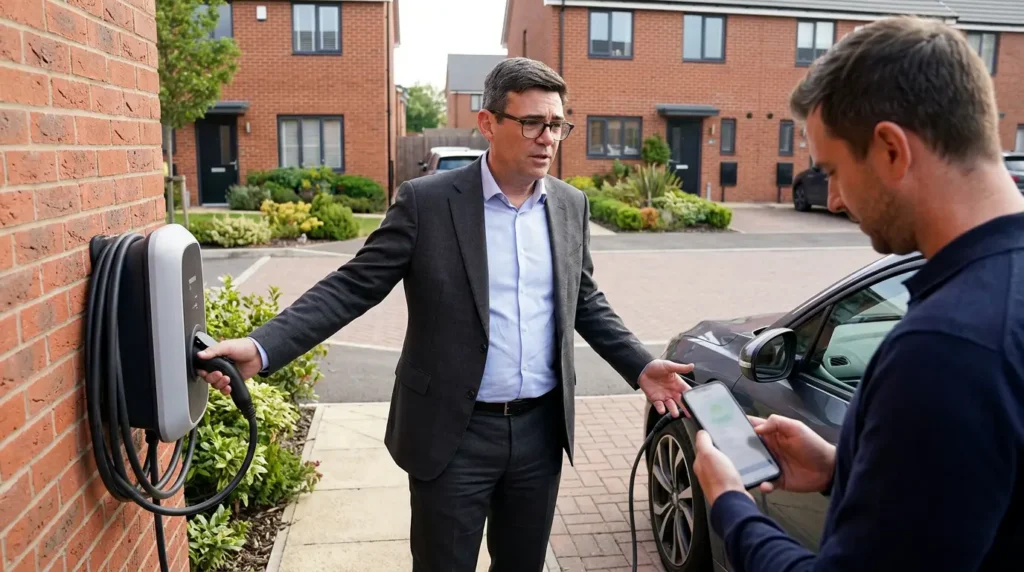
Andy Burnham’s home EV VAT measure could make domestic charging about 4.76% cheaper from 1 October 2026 by reducing VAT on household electricity from 5% to 0%.
At the current capped electricity rate, adding 100kWh at home would fall from roughly £26.11 to £24.87, saving about £1.24. Repeating that charge weekly would produce an illustrative annual saving of approximately £65, although most drivers will use different amounts.
Key Takeaways:
- Home electricity VAT is scheduled to fall from 5% to 0%.
- The average household saving is estimated at around £45 a year.
- Public charging is expected to remain subject to 20% VAT.
- Drivers without private charging may receive little direct benefit.
- Some qualifying non-VAT-registered small businesses could also benefit.
Actual EV savings will depend on mileage, vehicle efficiency, charging losses, tariff type and October’s electricity prices. The £65 figure is therefore a high-consumption example, not an average payment or guaranteed saving.
What Has Andy Burnham Announced About Home EV VAT?

The Government announced on 21 July 2026 that VAT on domestic electricity would be removed from 1 October. Because suppliers cannot distinguish electricity used by household appliances from electricity used to charge a car, qualifying home EV charging falls within the same domestic supply.
Policy Highlights:
- The domestic electricity VAT rate will move from 5% to 0%.
- The average household price-cap saving is estimated at £45 annually.
- The saving comes on top of £150 removed from bills at the previous Budget.
- The measure is expected to cost about £850 million in 2026–27.
- Funding is linked to cancelling a digital ID programme costed at £1.8 billion over three years.
- The estimated inflation effect is a 0.10-percentage-point reduction in CPI and 0.14 percentage points in RPI.
Burnham said the measure would “put more money in people’s pockets and bring back hope”. It is a household electricity tax reduction rather than a separate EV grant, rebate or payment to drivers.
When Will the Home EV VAT Cut Begin and Where Will It Apply?
The zero rate is scheduled to begin on 1 October 2026, in time for the next quarterly energy price-cap period. Bills covering electricity used before and after that date may divide consumption between the old and new VAT treatments.
The measure directly covers eligible domestic electricity supplies in England, Scotland and Wales. Northern Ireland cannot necessarily implement the same VAT change automatically because EU VAT rules continue to apply to goods there, including electricity.
The Government expects suppliers to pass the reduction to eligible customers on both variable and fixed tariffs. However, the exact date on which it appears on an individual account could depend on billing periods, meter readings and supplier systems.
How Much Could Home EV Drivers Save After the VAT Cut?

Savings depend primarily on the amount of electricity added to the vehicle. Removing 5% VAT from a VAT-inclusive price lowers the final amount by approximately 4.76%.
Current Charging Cost Calculation
The current capped electricity rates show an average unit price of 26.11p per kWh for a standard variable tariff paid by Direct Debit between 1 July and 30 September 2026. The figure includes 5% VAT.
Illustrative Home-Charging Costs
| Electricity Added | Current Cost | Estimated Zero-VAT Cost | Saving |
| 40kWh | £10.44 | £9.95 | £0.50 |
| 60kWh | £15.67 | £14.92 | £0.75 |
| 80kWh | £20.89 | £19.89 | £0.99 |
| 100kWh | £26.11 | £24.87 | £1.24 |
These calculations exclude charging losses and use a national average rate; regional prices, payment methods and tariffs will produce different results.
How Does the £65 Estimate Work?
A 100kWh charge at 26.11p per kWh costs £26.11. Removing the VAT reduces the estimated price to £24.87, creating a saving of about £1.24.
Charging the same 100kWh every week would produce an annual saving of approximately £64.65, normally rounded to £65. This assumes unusually high annual home-charging consumption, comparable electricity prices and complete supplier pass-through.
Why Do Other Estimates Range From 24p to 78p?
A vehicle taking around 60–63kWh could save approximately 75p–78p at the current capped rate. At an off-peak rate near 8p per kWh, the saving on a similar charge would be closer to 23p–24p.
One published calculation based on 7,100 annual miles estimated yearly savings of £17.64 at the capped rate or £5.43 on a low overnight tariff. A separate 100kWh, 500-mile example shows charging costs falling from £8, or 1.6p per mile, to about £7.62, or 1.52p per mile, provided the 8p tariff includes VAT and the reduction is passed on.
Why Does Removing 5% VAT Cut the Final Price by 4.76%?
VAT is calculated from the pre-tax price rather than deducted directly from the final bill. If electricity costs £100 before tax, adding 5% VAT produces a total of £105.
Removing the £5 tax reduces the £105 final price by 4.76%, not 5%.
The correct calculation is:
VAT-inclusive price ÷ 1.05 = VAT-exclusive price
For electricity priced at 26.11p per kWh, dividing by 1.05 gives approximately 24.87p. This distinction matters when estimating home EV VAT savings and prevents the benefit from being overstated.
Standing charges are also currently quoted inclusive of VAT, but the precise treatment of every bill component should be confirmed when detailed implementation guidance is published.
Which EV Drivers Are Likely to Benefit Most and Least?
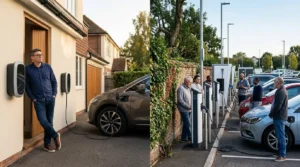
The greatest cash savings will go to households buying the most qualifying domestic electricity for EV charging.
Drivers Likely to Benefit Most
- High-mileage drivers charging mainly at home.
- Households operating two or more electric vehicles.
- Owners of EVs with large batteries.
- Drivers using standard-rate electricity rather than very low off-peak rates.
- Households with a driveway, garage or private parking space.
Drivers Likely to Benefit Less
- People relying mainly on public rapid chargers.
- Renters or flat residents using communal commercial chargers.
- Low-mileage drivers.
- Households generating much of their charging electricity through solar panels.
- Drivers already paying very low overnight rates.
Around eight million households in England, representing 32%, have no off-street parking. Nearly four million, or 16%, may have adequate nearby on-street parking and could potentially use safe cross-pavement charging solutions where local rules permit.
Access to a qualifying domestic supply, rather than EV ownership by itself, will determine who benefits most.
Why Will Public EV Charging Remain More Expensive?
Domestic electricity is moving towards 0% VAT, but the current tax authority position is that electricity supplied at public chargepoints remains standard-rated at 20%. Public prices also include infrastructure, network, maintenance, land, payment-processing and operational costs.
Home and Public Charging Compared
Current Tax and Cost Differences:
| Charging Arrangement | VAT Position | Illustrative Electricity Price |
| Home electricity before October | 5% | 26.11p per kWh capped average |
| Qualifying home electricity from October | 0% | About 24.87p using the current rate |
| Rapid public charging | 20% | Recent estimates around 76p–79p per kWh |
A 42kWh public session at 79p per kWh costs £33.18. Some reports suggest that moving public charging from 20% to 5% would reduce this to £28.14, but that calculation simply removes 15% from the retail price.
An exact VAT conversion, dividing by 1.20 and multiplying by 1.05 would produce approximately £29.03, a saving of about £4.15 before any operator price changes. This distinction offers a more accurate comparison of the tax effect.
What Does the Tribunal Case Change?
A First-tier Tribunal ruled that supplies below 1,000kWh per month to an identified person at identifiable premises could qualify for the reduced domestic rate, potentially including public car parks. However, the tax authority has applied for permission to appeal.
The current public charging VAT position therefore remains 20% while the case proceeds. Its stated position is that “standard rate VAT applies to electricity supplied through public EV charging infrastructure”.
Industry calculations suggest the VAT difference produces about £85 million in additional annual tax and could reach £315 million by 2030 as EV use increases. Those are projections rather than confirmed future receipts.
How Could Andy Burnham’s Electricity VAT Policy Affect Small Businesses?

The policy has a narrower business application than its household coverage. It is expected to benefit small businesses that already qualify for domestic energy VAT relief and are not VAT registered, alongside eligible charities and residential care homes.
A normal commercial electricity account will not automatically become zero-rated merely because a business operates an EV.
Relevant factors include:
- Whether the premises receive a qualifying domestic or reduced-rate supply.
- Whether the business is VAT registered.
- Whether the building has mixed residential and commercial use.
- How workplace or customer charging is billed.
- Whether the business currently reclaims input VAT.
- Whether an eligibility declaration is required.
A home-based sole trader charging a business EV through an ordinary domestic meter may benefit through the household bill. Business mileage reimbursement, company-car charging and expense claims remain separate tax matters, so businesses should not treat the VAT reduction as changing those rules.
What Limits, Conditions and Uncertainties Should Readers Understand?
The October savings are estimates because the next electricity price cap had not been announced when the policy was published. The regulator is due to release rates for 1 October to 31 December 2026 by 26 August.
Fixed Tariffs and Supplier Pass-Through
The official electricity VAT announcement says suppliers are expected to pass the reduction to all eligible customers, including those on fixed tariffs. The wording expresses a government expectation; individual bills will show how and when each supplier implements it.
Customers should check the unit rate, standing charge, VAT line and billing period on the first statement covering post-October consumption.
How Long Is the Cut Funded?
The immediate measure is funded for the remainder of the 2026–27 financial year. Any continuation beyond that period is expected to be considered at the Budget alongside updated costings and an economic forecast.
The zero rate should therefore not yet be described as permanent.
Northern Ireland Arrangements
EU VAT rules continue to apply to electricity in Northern Ireland, meaning agreement would be needed to implement the same tax change directly. The Northern Ireland Executive is instead due to receive comparable funding to provide cost-of-living support.
The form, eligibility and timing of that support may differ from the VAT reduction operating in Great Britain.
What Should EV Drivers and Small Businesses Watch Next?

Several official decisions will determine the policy’s real value.
Important Next Steps
- The October–December price-cap announcement due by 26 August 2026.
- Supplier notices explaining revised rates and fixed-tariff treatment.
- Detailed tax guidance covering qualifying supplies and standing charges.
- The appeal concerning VAT at public chargepoints.
- The Cost of Public EV Charging Review, due to report in autumn 2026.
- The next Budget decision on longer-term funding.
- Northern Ireland’s separate support arrangements.
- Future changes to workplace, on-street and cross-pavement charging.
The public-charging review is examining energy prices, wider cost contributors and options for reducing consumer costs. Until it reports or the Government announces another measure, drivers should not assume public charging VAT will fall.
Conclusion
Andy Burnham’s home EV VAT change should make domestic charging modestly cheaper from 1 October 2026. At current capped rates, a 100kWh charge would save about £1.24, producing a possible annual saving close to £65 when repeated weekly.
Most drivers will save less because they charge smaller amounts, drive fewer miles or use discounted overnight tariffs. Nevertheless, high-mileage households and those operating multiple EVs could see a larger cumulative benefit.
The policy also sharpens the divide between drivers with private parking and those paying 20% VAT at public chargepoints. For small businesses, eligibility is limited mainly to non-VAT-registered organisations already receiving qualifying domestic or reduced-rate energy supplies, rather than ordinary commercial accounts.
FAQs
Is the £65 EV Saving an Average Figure?
No, it assumes that 100kWh is charged at home every week at approximately the current capped rate. Most drivers’ savings will differ according to mileage, efficiency and tariff.
Will Overnight EV Tariffs Still Receive the VAT Cut?
Qualifying domestic electricity on an overnight EV tariff should fall within the measure. The cash saving will be smaller when the existing unit price is already low.
Can a Landlord Claim the Saving on Communal Chargers?
It depends on how the electricity supply and charging service are classified and billed. A commercially operated communal charger may not receive the same treatment as a resident’s domestic meter.
Does the Cut Cover Company Cars Charged at Home?
Electricity bought through an eligible domestic account may benefit even when it charges a company car. Employee reimbursement and company-car expense rules are separate from the household VAT change.
Will Home Solar Users Save as Much?
Households charging mainly with self-generated solar electricity buy fewer taxable units from their supplier. Their direct VAT saving may therefore be lower than that of households drawing all charging power from the grid.
Will Public Charging VAT Definitely Stay at 20%?
The current official position remains 20% while an appeal and a wider charging-cost review continue. A lower rate would require a successful legal outcome or a separate government decision.
Could the October Electricity Rate Change the £65 Estimate?
Yes, the October price cap may raise or lower the unit price used in the calculation. A higher unit rate would increase the cash value of removing VAT, while a lower rate would reduce it.
Note: All charging costs are illustrative and should be recalculated using the confirmed October 2026 electricity rate. The £65 estimate is not an average or guaranteed saving, and public charging VAT has not been reduced.

Jermaine writes informative business content related to entrepreneurship, finance, innovation, operations, and emerging opportunities for growing businesses in the UK.

Does Gross Misconduct Always Lead to Dismissal?
No. Gross misconduct does not always lead to dismissal. It can be serious enough to justify dismissal without notice, including for a first offence, but an employer should…

Andy Burnham Whitehall Job Cuts Begin Under Devolution Push
Andy Burnham’s government has begun the first operational stage of its Whitehall devolution push, with civil servants due to be seconded into regional mayoral authorities from autumn 2026.…
Insights for the Modern
UK Small Business.
Join 15,000+ owners receiving tactical analysis on finance, marketing, and technology. No clutter.
Zero spam. Unsubscribe in one click.