DWP Pensioner Payment Changes August: £739 Due Early in 2026


Some State Pension payments due on Monday 31 August 2026 will be made early on Friday 28 August 2026 because of the Summer Bank Holiday. The DWP has confirmed that the adjustment will be automatic, so affected pensioners should not need to make a claim or contact the Pension Service beforehand.
The widely reported £739 payment is not a new pensioner bonus. It is the rounded value of a normal four-week payment for someone receiving the full basic State Pension of £184.90 a week.
Key Takeaways:
- Payments due on 31 August are expected on 28 August.
- The payment is early, not additional.
- £739.60 is four weeks of the full basic State Pension.
- A full new State Pension payment could be £965.20.
- Scotland’s 3 August bank holiday will not bring DWP State Pension payments forward.
- Individual payments depend on the pensioner’s entitlement and National Insurance record.
These distinctions are important because not every August State Pension payment will change and not every pensioner will receive the headline amount.
Why Will Some State Pension Payments Arrive Early in August?

The change prevents pensioners from having to wait until after the bank holiday for money that was already due.
Official payment guidance states: “If your payment date is on a weekend or a bank holiday you’ll usually be paid on the working day before.”
The practical reasons are straightforward:
- Banks and payment systems have restricted processing on bank holidays.
- Friday 28 August is the final working day before Monday 31 August.
- The earlier deposit replaces the payment due on the Monday.
- No second payment should arrive on the original date.
- The adjustment should happen without a separate application.
Being paid early changes the date on which the money becomes available. It does not increase the pensioner’s total State Pension entitlement.
Who Could Receive the Reported £739 State Pension Payment?
The £739 figure is most relevant to older pensioners receiving the full basic State Pension under the system that generally applies to people who reached State Pension age before 6 April 2016.
The £739.60 Basic State Pension Calculation
The full basic State Pension rose by 4.8% from £176.45 to £184.90 a week on 6 April 2026. Because State Pension payments are usually made every four weeks, the calculation is:
£184.90 × 4 = £739.60
The rounded £739 figure used in headlines is therefore a regular four-week pension amount rather than a new payment announced specifically for August.
The full new State Pension increased from £230.25 to £241.30 a week, producing a possible four-week payment of £965.20. These figures appear in the official State Pension rate table.
State Pension Amounts At A Glance
| Pension rate | Weekly amount | Four-week amount |
| Full basic State Pension | £184.90 | £739.60 |
| Full new State Pension | £241.30 | £965.20 |
| Lower basic pension category | £110.75 | £443.00 |
The table shows why a single £739 headline cannot describe every pensioner’s payment.
Why Might an Individual Receive a Different Amount?
A person may receive less than the full rate because of gaps in their National Insurance record. Others may receive more because of Additional State Pension, a protected payment, inherited entitlement or pension deferral.
The £739.60 amount should not be confused with a Cost of Living Payment. The current cost of living guidance says there will be no Cost of Living Payment in 2026 and that no further payments are planned.
A pensioner’s award letter and established payment history provide a more accurate personal figure than a general news headline.
Which Pensioners Will Be Affected by the August Bank Holiday Change?

The late-August change mainly affects DWP pensioners whose regular four-week payment is due on Monday 31 August.
The key groups are:
- Pensioners normally paid on a Monday.
- People whose four-week cycle places their payment on 31 August.
- Recipients of either the basic or new State Pension with that due date.
- Scottish recipients whose payment is scheduled for the late-August date.
- Claimants of other DWP benefits due on the same bank holiday.
Scotland has a separate Summer Bank Holiday on Monday 3 August 2026, four weeks before the holiday elsewhere in the UK.
However, DWP told the press:
“Payments will still process as they do for other Scottish Bank Holidays. Government Banking have confirmed that Bacs does not close for Scottish only Bank Holidays. Scottish customers who would normally receive their payment on the 3rd will still receive it on the 3rd.”
This means reports claiming that Scottish State Pension payments due on 3 August will automatically move to Friday 31 July conflict with the department’s confirmation. A payment received on 3 August is technically “before August 4”, but it is not being paid early.
The position is different on 31 August, when affected payments across the UK are expected to move to 28 August.
When Should Affected Pensioners Expect Their Money to Arrive?
A pension normally due on Monday 31 August should reach the recipient’s usual bank, building society or credit union account on Friday 28 August 2026.
The payment may appear at different times depending on the financial institution. Some mobile banking services display incoming or pending transactions before the money becomes available, while others show the deposit only after it has been fully credited.
Pensioners should not expect another payment on 31 August. The Friday payment replaces the amount due on the Monday.
The state pension is normally paid every four weeks. For a new claim, the first payment should arrive no later than five weeks after the chosen start date, after which full payments are normally issued every four weeks. A partial amount may arrive before the first full payment, and the award letter should explain what to expect.
How Does a National Insurance Number Help Determine the Pension Payday?

The final two digits of a National Insurance number normally indicate the weekday on which State Pension is paid. This applies to both the basic and new State Pension payment schedules.
State Pension Payment-Day Number Bands
| Final two digits | Normal payment day |
| 00 to 19 | Monday |
| 20 to 39 | Tuesday |
| 40 to 59 | Wednesday |
| 60 to 79 | Thursday |
| 80 to 99 | Friday |
The schedule is confirmed in the official State Pension payment guidance, which also states that a person might be paid earlier when the normal payment day is a bank holiday.
The table provides a useful starting point, but it does not show whether a person’s particular four-week cycle lands on 31 August.
Which National Insurance Numbers Are Most Likely to Be Affected?
Numbers ending between 00 and 19 are associated with Monday payments. Pensioners in this band are therefore the group most likely to be affected by a Monday bank holiday.
However, not every pensioner with those digits will necessarily have a payment due on that particular Monday. State Pension is paid every four weeks rather than every Monday, so the person must also check the established payment cycle.
The Pension Award Letter Remains the Final Reference
The award letter states what the pensioner should receive and explains the payment arrangement. Recent bank statements can then help confirm the normal four-week pattern.
The National Insurance number identifies the usual weekday, while the letter and payment history identify the individual schedule.
Is the £739 Payment a New DWP Bonus or Cost of Living Payment?
No. The £739.60 payment is neither a new pensioner bonus nor an additional Cost of Living Payment.
It is the full basic State Pension weekly rate of £184.90 multiplied by four. The money would already be due under the pensioner’s regular entitlement; only the date changes when the scheduled payday falls on the late-August bank holiday.
It should also be distinguished from:
- Pension Credit, which is means-tested support for people over State Pension age.
- Winter Fuel Payment, which is separate help with winter heating costs.
- Attendance Allowance, which supports eligible people with care or supervision needs.
- Any future one-off support specifically announced by the Government.
Headlines describing the £739.60 as an “unexpected payout” can create the impression that every pensioner is receiving extra money. In reality, people with incomplete National Insurance records may receive less, while those with additional or protected pension rights may receive more.
No special form or payment fee should be required for the bank holiday adjustment.
What Happens After a State Pension Payment Is Made Early?
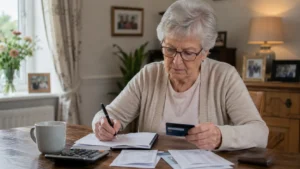
An early payment does not normally move the pensioner permanently onto a new schedule. It is a temporary adjustment for a payment that would otherwise fall on a non-processing day.
The Longer Gap Before the Following Payment
- A payment reaching an account on 28 August rather than 31 August arrives three calendar days early. However, the following payment normally remains connected to the original four-week cycle.
- The money therefore has to cover the same pension period, even though it becomes available sooner. Spending it as an additional payment could leave a pensioner with a longer wait before the next deposit.
- Official guidance says the State Pension is usually paid every four weeks and may arrive early when the normal payday is a bank holiday.
Will the Next State Pension Payment Also Arrive Early?
- Not automatically. The next payment date depends on the normal four-week cycle and whether that date falls on another weekend or bank holiday.
- For someone originally due a payment on 31 August, the next scheduled date would ordinarily be calculated from the normal Monday date, not from Friday 28 August. Moving one payment forward does not usually shorten every later payment interval.
- Pensioners should therefore use the original payment schedule when planning direct debits and essential spending.
What Should Pensioners Do if the August Payment Is Missing or Incorrect?

A missing or unexpected payment should first be checked against the pensioner’s normal cycle. The person should not rely solely on a general headline or another pensioner’s payment date.
The recommended checks are:
- Confirm whether the normal due date is 31 August.
- Check the account on Friday 28 August.
- Review pending and completed bank transactions.
- Compare the amount with the pension award letter.
- Check recent correspondence for deductions or entitlement changes.
- Contact the Pension Service after the expected date has passed.
- Use contact details from an official letter or government service.
An automatic bank holiday change should not require a fee, password or fresh bank details. Messages asking pensioners to “claim” the £739 payment through an unfamiliar link should be treated cautiously, particularly because no separate Cost of Living Payment is due in 2026.
These checks help distinguish a genuinely missing payment from a misunderstanding about the date or amount.
Conclusion
The DWP pensioner payment changes August update affects timing rather than entitlement. State Pension payments normally due on Monday 31 August 2026 are expected to arrive on Friday 28 August because of the late Summer Bank Holiday.
The reported £739.60 is four weeks of the full basic State Pension, while someone on the full new State Pension could receive £965.20. Individual amounts may differ according to National Insurance history and additional pension rights.
Scotland’s earlier bank holiday on 3 August will not bring DWP State Pension payments forward, according to the department’s confirmation. Pensioners should check their own award letter and four-week payment pattern before budgeting around either date.
Frequently Asked Questions
Do Pensioners Have to Apply for the Earlier August Payment?
No application should be required because the date adjustment is expected to happen automatically. The money should enter the account normally used for State Pension payments.
Will Payments Due Before 31 August Also Change?
Payments due on ordinary working days should generally arrive as scheduled. A change is normally made only when the actual due date falls on a weekend or bank holiday.
Will Scottish Pensioners Be Paid on 31 July?
DWP has said State Pension payments due on Monday 3 August will still be processed on that date. The claim that all such payments will arrive on Friday 31 July is therefore not supported by the department’s confirmation.
Can Banks Show the Payment at Different Times?
Yes, the time at which a deposit appears can vary between banks, building societies and credit unions. The official payment date may be the same even when account updates occur at different times.
Where Can a Pensioner Find the Correct Personal Amount?
The State Pension award letter should state the pension entitlement and payment details. A recent bank statement can also confirm the amount normally deposited every four weeks.
Will Direct Debit Dates Change Automatically?
An early pension payment does not normally change existing direct debit dates. Pensioners should check upcoming bills and avoid treating the early deposit as extra income.
How Can a Fake DWP Payment Message Be Identified?
Warning signs include requests for passwords, bank details, fees or action through an unfamiliar link. A genuine automatic payment-date adjustment should not require the pensioner to reapply.

Jennifer contributes business-focused articles covering modern business trends, digital growth, entrepreneurship, and practical insights designed to support startups and SMEs.

DWP Universal Credit Rollout End: Is the Move to Universal Credit Finally Finished?
The DWP Universal Credit rollout has officially finished, ending a programme that began in 2013. DWP completed its exercise to contact remaining legacy-benefit claimants in late March 2026,…

Andy Burnham Cash ISA Rules: What Changes for UK Savers?
Searches for Andy Burnham cash ISA rules centre on a practical question: will savers still be able to put £20,000 a year into tax-free cash savings? Under the…
Insights for the Modern
UK Small Business.
Join 15,000+ owners receiving tactical analysis on finance, marketing, and technology. No clutter.
Zero spam. Unsubscribe in one click.