EcoJet Airlines Collapse Liquidation: What Happened?

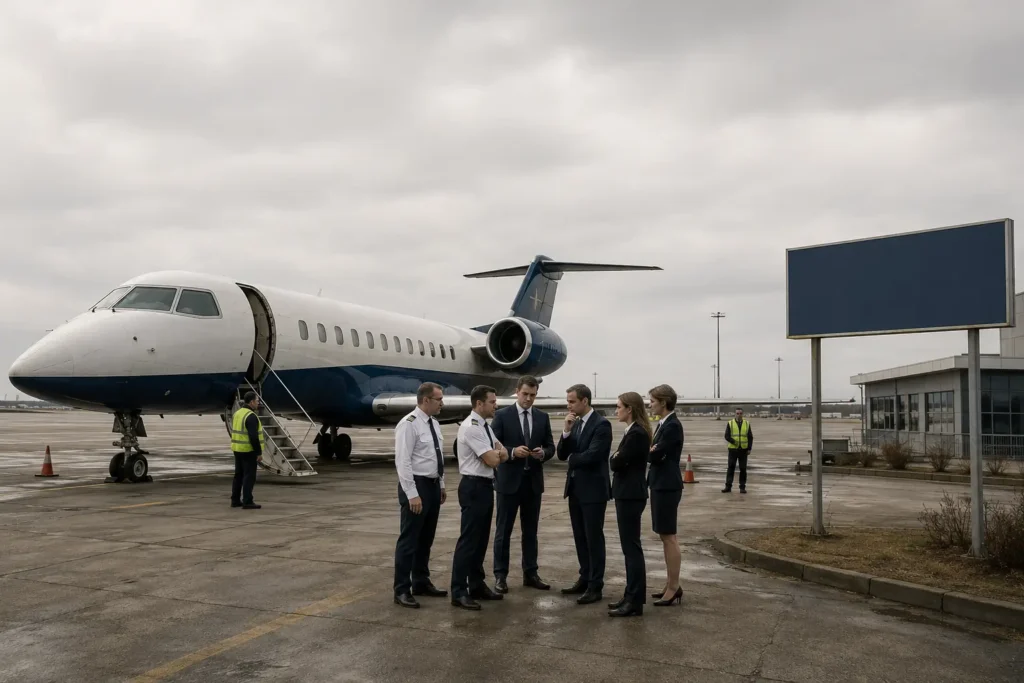
The EcoJet Airlines collapse liquidation refers to the shutdown of the Edinburgh-based start-up airline before it operated commercial passenger flights. Founded in 2023, EcoJet aimed to become the world’s first electric airline by converting existing aircraft to hydrogen-electric power.
The company entered voluntary liquidation after failing to secure around £20 million in funding. Its planned Edinburgh to Southampton route never launched, and the closure highlights the financial, technical and regulatory challenges facing low-carbon aviation in the UK.
What Is the EcoJet Airlines Collapse Liquidation Story?
The EcoJet Airlines collapse liquidation is significant because the company was not a traditional airline failure. It was an ambitious aviation start-up that promised cleaner air travel but closed before carrying a single passenger.
EcoJet was based in Edinburgh and planned to launch domestic flights before expanding into mainland Europe. Its central idea was to reduce aviation emissions by converting existing aircraft rather than building entirely new electric planes.
The company’s proposed model attracted attention because aviation is one of the hardest transport sectors to decarbonise. However, the project remained at an early stage. EcoJet did not reach the point of operating scheduled commercial services, and its planned bookings and flights were cancelled as the business moved into liquidation.
This makes the case important for passengers, aviation investors, sustainability campaigners and UK small businesses watching how green technology ventures manage funding risk.
Why Did EcoJet Airlines Enter Voluntary Liquidation?
EcoJet entered voluntary liquidation because it could not secure the funding needed to continue developing and launching the airline. The business reportedly needed around £20 million in additional investment to move forward.
Several pressures appear to have contributed to the outcome:
- The company remained an early-stage start-up with limited assets.
- Hydrogen-electric aviation technology required further development.
- Airline certification and regulatory alignment took longer than expected.
- Launching an airline requires substantial capital before revenue begins.
- Planned services could not proceed without full operational readiness.
Dale Vince said: “We remain committed to electrifying all forms of transport – aviation is the last frontier and the hardest.”
Funding Shortfall and Failed Investment Plans
EcoJet’s collapse shows how difficult it can be for climate-focused start-ups to bridge the gap between a promising idea and a functioning commercial operation.
Aviation businesses need money for aircraft, staff, technical systems, compliance, insurance, airport arrangements, marketing and customer service long before the first flight departs.
| Issue | Impact on EcoJet |
| Funding target | Around £20 million was reportedly needed |
| Assets | The company had no material assets at collapse |
| Revenue position | No passenger flights had operated |
| Investor challenge | Capital was needed before commercial launch |
The funding problem was therefore not a minor delay; it affected the company’s ability to continue.
Technology and Certification Delays
EcoJet’s proposed aircraft conversions involved hydrogen-electric powertrains. While the concept had environmental appeal, aviation technology must pass strict safety, reliability and certification checks before passengers can be carried.
In the UK, commercial operators generally need appropriate Civil Aviation Authority approval, including operating licensing and safety certification before running passenger services.
For larger aircraft, a Type A Operating Licence is required where aircraft have 20 or more seats or exceed 10 tonnes maximum take-off weight.
Did EcoJet Airlines Ever Operate Flights in the UK?
No, EcoJet Airlines never operated commercial passenger flights in the UK. Although the company announced ambitious plans to launch domestic services, it entered voluntary liquidation before commencing operations. This is an important distinction, as EcoJet was a start-up airline rather than an established carrier with an active flight network.
Its proposed growth strategy included:
- Launching its first route between Edinburgh and Southampton before expanding across other UK destinations.
- Introducing future services to mainland Europe as its hydrogen-electric aviation technology matured.
Because the airline never entered commercial service, no scheduled passenger flights actually took place. As a result, the liquidation primarily affected planned bookings, employees and investors, rather than disrupting existing flight operations. The case illustrates the difference between the collapse of a proposed airline and the failure of an airline already transporting passengers.
What Were EcoJet’s Plans for Electric and Hydrogen-Powered Aviation?
EcoJet aimed to make regional flying cleaner by adapting conventional aircraft with hydrogen-electric propulsion systems. The idea was to reduce carbon dioxide emissions while using aircraft structures already familiar to the aviation industry.
Edinburgh to Southampton Route Proposal
The planned Edinburgh to Southampton route was intended to be EcoJet’s first commercial service. This would have connected Scotland with the south of England and demonstrated how cleaner propulsion might work on domestic routes.
For UK travellers, this route was relevant because domestic aviation often faces scrutiny over emissions, especially where rail alternatives exist.
Retrofitting Aircraft Instead of Building New Planes
EcoJet’s model focused on retrofitting existing aircraft. This meant replacing or adapting traditional propulsion systems rather than designing a completely new aircraft from the ground up.
The appeal of this approach was speed and practicality. If successful, retrofitting could potentially bring lower-emission technology into service faster than waiting for entirely new aircraft designs.
Claimed Emissions Savings and Net Zero Aviation Goals
EcoJet claimed its model could save up to 90,000 tonnes of carbon emissions each year. The proposed propulsion system would primarily produce water vapour rather than carbon dioxide.
Dale Vince said: “It’s taking longer than we hoped, to get the technology and regulatory pieces of the puzzle in alignment, and so we’re pausing work at this time.”
That statement captures the central challenge: the technology may have long-term promise, but commercial aviation requires funding, certification and operational certainty at the same time.
What Does EcoJet’s Liquidation Mean for Passengers and Cancelled Flights?
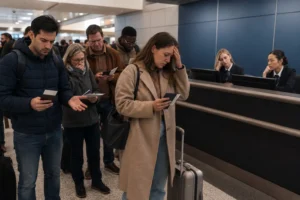
For passengers, the key issue is whether money paid for planned flights can be recovered. Because EcoJet never began commercial operations, affected customers would need to review how they booked and paid.
A practical recent example is a UK traveller who booked a future Edinburgh to Southampton journey with a new airline. If the airline collapses before departure, the traveller should not assume automatic replacement flights will be provided.
The next step is to check payment method, booking terms and whether any package protection applies.
- Credit card payments may offer Section 75 protection in some cases.
- Debit card payments may be eligible for chargeback, depending on bank rules.
- Travel insurance may help only if airline failure is covered.
- ATOL usually protects qualifying package holidays, not every flight-only booking.
- Customers should keep booking confirmations, payment receipts and cancellation emails.
| Booking Situation | Possible Action |
| Paid by credit card | Ask card provider about Section 75 |
| Paid by debit card | Ask bank about chargeback |
| Booked as a package | Check for ATOL certificate |
| Bought insurance | Review airline failure cover |
| Booked through an agent | Contact the agent first |
The main lesson is that passengers should check protection before booking with any new or unproven airline.
How Does UK Airline Liquidation Work for Employees, Directors and Creditors?
Liquidation is the formal process of closing a company and dealing with its remaining affairs. In EcoJet’s case, joint liquidators were appointed and the company’s members chose to fund the process.
Role of Appointed Liquidators
Liquidators review the company’s position, deal with creditors, handle remaining assets if any exist, and manage the legal closure process.
| Party | Main Concern |
| Employees | Statutory entitlements and unpaid wages |
| Creditors | Whether any money can be recovered |
| Directors | Legal duties during closure |
| Customers | Refund routes and booking protection |
| Liquidators | Winding up the company properly |
This process helps ensure the company is closed in an orderly and legally recognised way.
Employee Statutory Entitlements
An Opus Restructuring spokesperson said: “EcoJet was a start-up business and has no material assets. The members have elected to fund the liquidation process to ensure that the company’s employees receive their full statutory entitlements.”
For employees, statutory entitlements can include redundancy pay, unpaid wages, holiday pay and notice pay, depending on eligibility. UK government guidance states that redundancy payments are capped, with weekly pay limits applying from April 2026.
What Lessons Does the EcoJet Collapse Offer for Sustainable Aviation in 2026?

The EcoJet Airlines collapse liquidation does not prove that electric aviation is impossible. It does show that climate-focused aviation projects must manage three difficult areas at once: technology, regulation and finance.
For UK businesses and investors, the main lessons are:
- A strong sustainability mission is not enough without launch-ready funding.
- Aviation regulation should be treated as a core business challenge, not a final step.
- Customer communication must be clear when services are planned but not operating.
- New airlines need transparent protection policies for early bookings.
- Green innovation needs realistic timelines, especially in safety-critical sectors.
Dale Vince said: “This is a vital frontier in the move to net zero, green living, whatever you choose to call it – and it’s absolutely doable. It’s a matter of when not if.”
The more balanced conclusion is that sustainable aviation remains possible, but the path is expensive, regulated and technically demanding.
Conclusion
The EcoJet Airlines collapse liquidation is a clear example of how difficult it is to turn a bold green aviation concept into a working airline. EcoJet planned to launch hydrogen-electric passenger flights, starting with Edinburgh to Southampton, but entered liquidation after failing to secure around £20 million in funding.
The company never carried passengers, had no material assets at collapse, and its owners funded the winding-up process to protect employee statutory entitlements.
For passengers, the case reinforces the importance of checking booking protection. For businesses, it highlights the need for realistic capital planning, regulatory readiness and transparent communication. For sustainable aviation, EcoJet’s collapse is a setback, not a final verdict.
FAQs
Was EcoJet a real airline or only a planned airline?
EcoJet was a planned airline start-up. It had announced routes and ambitions, but it did not operate commercial passenger flights before entering liquidation.
Who founded EcoJet Airlines?
EcoJet was founded by Dale Vince, the founder of Ecotricity and owner of Forest Green Rovers.
What is voluntary liquidation in simple terms?
Voluntary liquidation is when a company is formally closed down, usually because it cannot continue trading or its members decide to wind it up.
Can a UK airline sell tickets before launching services?
A start-up may advertise or plan services, but passengers should always check whether flights are confirmed, protected and operated by a fully authorised carrier.
Why is electric aviation difficult to launch commercially?
Electric aviation faces challenges around battery or hydrogen technology, safety certification, aircraft performance, infrastructure and high upfront investment.
Does EcoJet’s collapse mean green aviation has failed?
No. It means one early-stage project failed to reach commercial launch. The wider clean aviation sector is still developing.
What should customers do before booking with a new airline?
Customers should check payment protection, insurance cover, ATOL status where relevant, airline authorisation, refund terms and whether the route is already operating.

Jermaine writes informative business content related to entrepreneurship, finance, innovation, operations, and emerging opportunities for growing businesses in the UK.
Best Rubbish Removal Companies in London: 6 Services to Know
London residents often need rubbish cleared quickly after moving home, renovating a property, replacing furniture or completing a garden project. Businesses also regularly require unwanted office furniture, packaging…
Mark Brennan M&S WRC Decision: Why His Dismissal Was Unfair?
The Mark Brennan M&S WRC decision found that a long-serving sales adviser was unfairly dismissed after his staff discount credentials were used 73 times in six weeks. Mark…
Insights for the Modern
UK Small Business.
Join 15,000+ owners receiving tactical analysis on finance, marketing, and technology. No clutter.
Zero spam. Unsubscribe in one click.