Is Data Annotation Tech Legit for UK Users? An Updated Review of Pay, Applications and Risks


Yes, DataAnnotation.tech is a legitimate AI training platform that pays eligible contractors for completed work. However, legitimate does not mean every applicant will qualify, receive assignments or earn a dependable income.
The platform recruits people to evaluate artificial intelligence responses, check factual accuracy, write prompts, review code and complete specialist assessments.
Its advertised compensation is attractive, particularly for professionals with programming, scientific, financial or legal expertise.
However, our examination of publicly available evidence highlights three significant risks: unpaid qualification time, inconsistent task availability and limited communication when applications or accounts encounter problems.
As of 30 October 2026, the UK Trustpilot page displayed a score of 3.9 out of 5 from 1,977 reviews. This differs from the older ratings frequently repeated in online comparisons.
Who Owns DataAnnotation.tech?
DataAnnotation is associated with Surge AI, an American AI data company founded by Edwin Chen.
A September 2025 Forbes investigation described DataAnnotation Tech as a wholly owned Surge affiliate. TIME had previously reported the relationship in April 2024.
This matters because DataAnnotation’s worker-facing branding does not always make the wider corporate structure immediately obvious.
Surge AI provides human-generated training data and evaluation services to companies developing advanced AI systems.
Rather than relying entirely on automated software, these businesses employ human contributors to assess whether AI-generated content is accurate, relevant and appropriate.
In TIME’s reporting, Sonam Jindal, who led the AI, Labor and the Economy programme at Partnership on AI, explained how increasingly capable AI systems require more sophisticated human expertise and higher-quality training data.
That professional assessment helps explain why specialist contributors can command considerably higher advertised rates than workers completing basic annotation tasks.
However, the industry also raises concerns about contractor protections, transparency and the distribution of profits generated through human expertise.
Researcher Milagros Miceli, quoted by TIME, identified algorithmic management and weak industry regulation as potential contributors to poor working conditions.
For UK applicants, corporate legitimacy should therefore be assessed separately from individual working conditions.
Which Countries Can Apply to DataAnnotation.tech?
The UK is among the countries regularly identified as eligible for DataAnnotation opportunities.
Independent platform comparisons and contributor reports consistently identify six major recruitment markets:
- United Kingdom
- United States
- Canada
- Ireland
- Australia
- New Zealand
This corrects the previous article’s unsupported suggestion that the platform accepts applications from more than 50 countries.
Nevertheless, eligibility can change by recruitment campaign, specialist category and client requirements.
Applicants should check the location restrictions displayed for their chosen opportunity before completing an assessment.
Using a VPN to disguise an unsupported location is particularly risky because identity and account-security checks may detect inconsistencies.
What AI Training Jobs Does DataAnnotation Offer?
DataAnnotation focuses primarily on work requiring human judgement rather than repetitive data entry.
Generalist contributors may compare chatbot responses, identify factual errors, evaluate writing quality and explain which answer best meets a user’s request.
Coding specialists assess AI-generated programs, troubleshoot errors, review technical explanations and test software outputs.
Meanwhile, multilingual contributors work on translation, language accuracy and localisation.
Professionals in mathematics, science, law, medicine and finance may qualify for specialist evaluation tasks requiring recognised expertise.
These responsibilities differ substantially in complexity.
For example, reviewing two short AI-generated answers is different from evaluating financial calculations or detecting errors in complicated programming code.
The platform therefore uses qualification assessments to determine which contributors are suitable for particular assignments.
How Much Does Data Annotation Tech Pay UK Workers?
DataAnnotation’s published hourly rates vary by qualification track.
Its official FAQ checked on 30 October 2026 showed the following advertised figures:
| Project category | Published USD rates | Approximate GBP equivalent |
| General AI evaluation | $25–$50/hour | £18.67–£37.35 |
| Multilingual projects | $25–$40/hour | £18.67–£29.88 |
| Coding assignments | $40–$150+/hour | £29.88–£112.05+ |
| STEM projects | $40–$125+/hour | £29.88–£93.37+ |
| Professional projects | $40–$125+/hour | £29.88–£93.37+ |
Currency calculation: These illustrations use the checked exchange rate on 30 October 2026 of approximately $1 = £0.74697.
They exclude PayPal exchange-rate adjustments, potential charges, unpaid hours and UK taxation.
Earlier published material, including a September 2026 review by Annotation Academy, recorded lower starting bands: $25–$30 for general work, $20 for multilingual assignments and $50–$100 for some specialist tracks.
The differences demonstrate why pay claims should always carry a verification date.
Our assessment is that advertised rates are useful for evaluating earning potential, but they do not establish actual monthly income.
A contributor offered $50 per hour who receives two hours of work earns less than someone offered $25 per hour who consistently completes twenty paid hours.
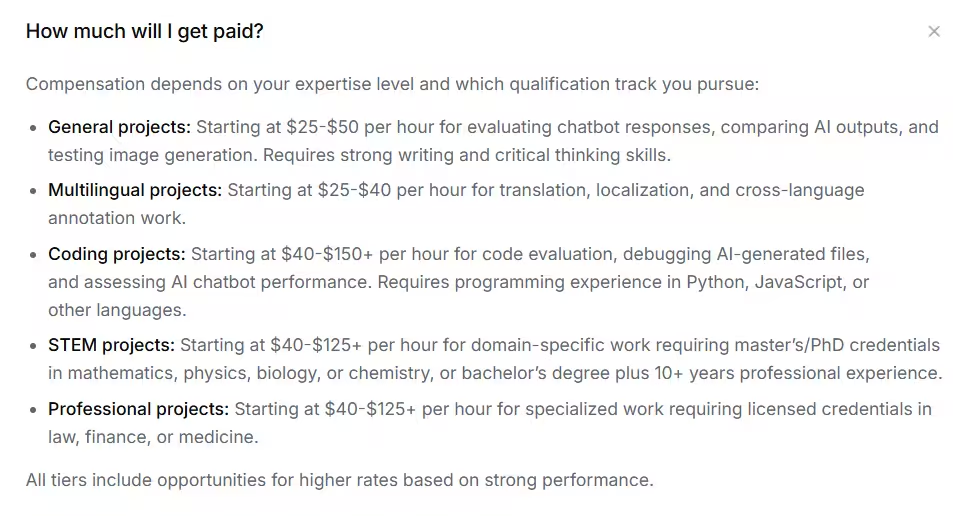
Official DataAnnotation hourly compensation ranges for generalist, coding, multilingual and professional opportunities.
How Does the DataAnnotation Application Process Work?
The application process is competitive, and applicants cannot assume that completing an assessment guarantees acceptance.
The normal process involves creating an account, selecting an appropriate qualification track and submitting an initial assessment.
The company states that most Starter Assessments take approximately one hour, while some specialist assessments can take one to two hours.
However, independent contributor accounts describe longer sessions, especially where detailed explanations are required.
Why Do So Many Applicants Fail?
Several factors can prevent an application from progressing.
- Assessment quality: The company evaluates reasoning, factual accuracy, writing quality and the ability to follow detailed instructions.
- Unsuitable expertise: Applicants may select specialised tracks without sufficient technical knowledge or relevant credentials.
- Limited project demand: Passing an assessment does not necessarily mean suitable assignments are available.
- Incomplete submissions: Technical interruptions or unfinished qualification stages can prevent progression.
- Communication limitations: The company acknowledges that it cannot respond individually to every applicant.
Importantly, DataAnnotation states that the Starter Assessment can only be taken once, with no retakes.
There is no independently established platform-wide application failure percentage that should be presented as a verified acceptance rate.
Applicants should complete the test independently, respect instructions concerning AI tools and avoid purchasing services promising guaranteed acceptance.
A particularly useful distinction is that not receiving an approval email does not prove precisely why an application was unsuccessful.
How Does UK Identity Verification Work?
Successful applicants may be required to complete additional identity verification before accessing particular work.
DataAnnotation identifies Persona as its identity-verification partner.
Its published process requires a valid government-issued photographic identity document, such as a passport or driving licence.
Contributor reports also describe selfie-based verification.
DataAnnotation says its standard identity-verification process can take only a few minutes when the necessary documents are available.
However, this should not be confused with additional background checks.
Annotation Academy’s September 2026 analysis identified UK and international contributors reporting background-check delays of one to several weeks, whereas some US contributors reported much faster clearance.
Those timings are user-reported observations, not guaranteed processing periods.
Applicants should also consider the privacy implications of supplying identity documents and potentially other background information.
Only upload sensitive materials through the authenticated verification process. Never send identification to an unsolicited recruiter.
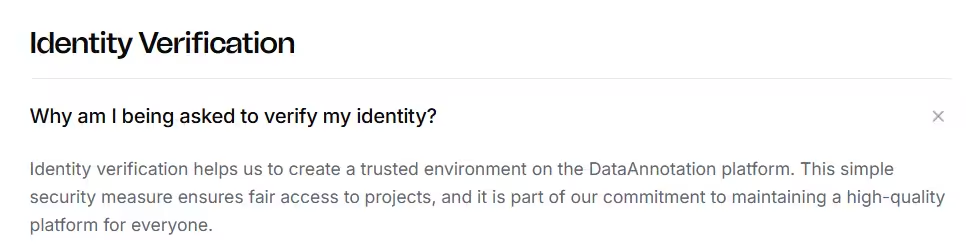
DataAnnotation’s official explanation of Persona identity verification and acceptable documents.
What Do Real UK Users Say About DataAnnotation in 2026?
Public reviews reveal a mixed experience, combining positive reports of payment reliability with serious complaints about applications, workload and account access.
On 30 October 2026, Trustpilot displayed the following review distribution:
| Rating | Share of reviews |
| 5 stars | 54% |
| 4 stars | 19% |
| 3 stars | 4% |
| 2 stars | 2% |
| 1 star | 21% |
These figures describe the review distribution, not the percentage of contractors who successfully earn money.
What Do Positive Reviews Say?
Reviewers frequently appreciate flexible working hours, intellectually engaging tasks and payment for approved work.
A December 2025 review by Mariana Monteiro described the platform as straightforward to use, while identifying uncertainty around available assignments.
Other longer-term contributors report satisfactory payment experiences despite occasional periods without work.
These accounts support the conclusion that the platform can provide genuine paid opportunities.
What Complaints Have UK Reviewers Reported?
On 5 October 2026, UK reviewer Chiara Marchiori reported applying months earlier without receiving a response.
On 23 September 2026, UK reviewer Ian Woodbridge described completing registration but being unable to access a suitable English-language assessment.
UK reviewer Mr George Royce, writing on 25 September 2026, reported repeated problems progressing beyond a qualification stage.
These are identifiable, dated public complaints, although their underlying account records have not been independently inspected.
Another UK reviewer, BSB, alleged in September 2026 that substantial earnings had become inaccessible during an account review. This is a serious allegation, not an independently established finding of withheld payment.
Distinguishing between ordinary task shortages, rejected applications and disputed earnings is essential.
Similarly, complaints from Thailand or South Africa should not be presented as UK customer experiences.
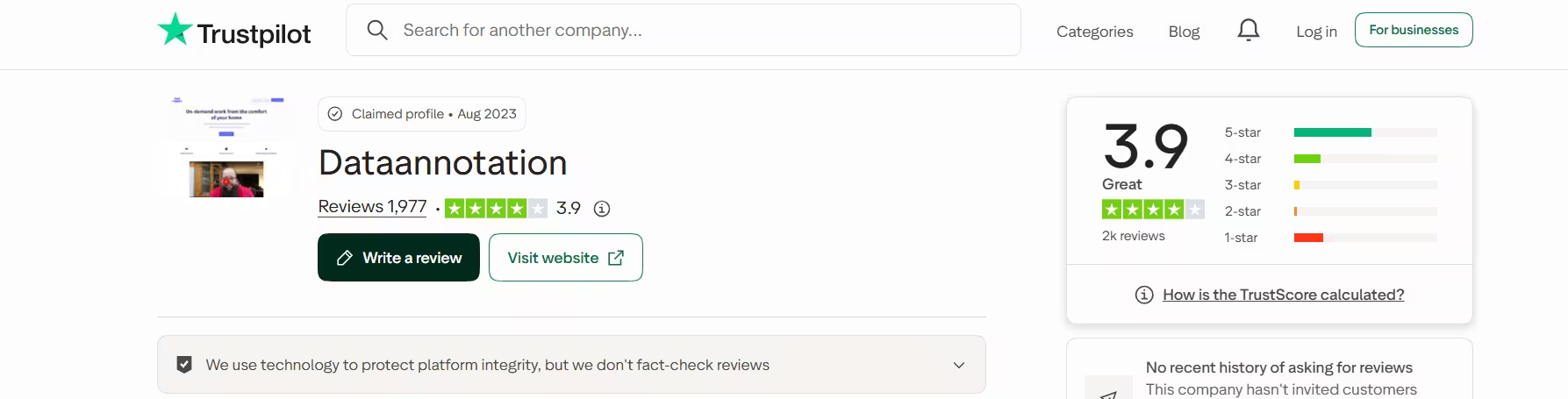
DataAnnotation’s Trustpilot rating, review count and rating distribution checked on 30 October 2026.
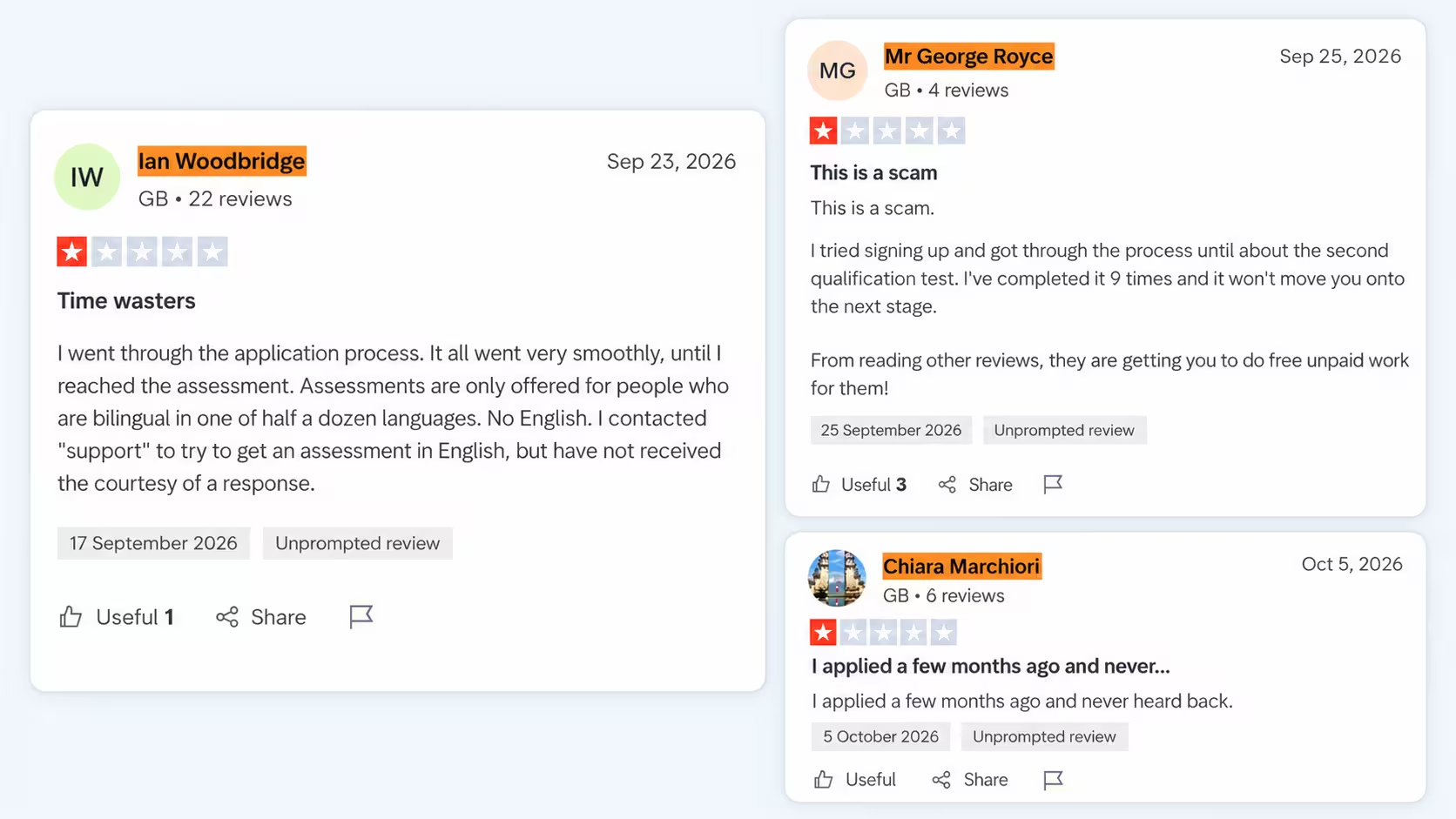
Dated UK reviews describing application delays and qualification problems.
Why Do DataAnnotation Users Lose Access to Projects?
One of the most significant risks is uncertainty about continued access to work.
Annotation Academy examined 41 Reddit threads containing 7,514 comments from 2,313 accounts.
Its findings suggested that empty dashboards and inconsistent project availability were more frequently reported problems than non-payment.
Contributors described several recurring situations.
A dashboard may temporarily contain no assignments because available projects have finished or demand has declined.
A task may appear available but display a red warning when opened because its shared allocation has already been exhausted.
Some contributors report losing access to projects or communication channels without receiving a detailed explanation.
Others describe VPN-related account flags or problems submitting work before task timers expire.
DataAnnotation acknowledges that project access depends on demand, skills and work quality.
However, public information does not establish a guaranteed appeals process for every account restriction.
If assignments disappear, contributors should inspect their account notifications, review project instructions and contact support through authenticated channels.
They should not assume that an empty dashboard automatically means a permanent ban.
How Does DataAnnotation Pay UK Contributors?
DataAnnotation uses PayPal for contractor payments.
The process should not be described simply as receiving weekly wages.
Contributor reports indicate that earnings from submitted hourly work generally become eligible for withdrawal approximately seven days after reporting.
Once funds become withdrawable, contributors request a payment through the platform.
DataAnnotation’s FAQ states that PayPal deposits arrive within a few days of the withdrawal request.
Some reviewers also describe a three-day interval between cash-out requests, but this should be treated as reported experience rather than a universally confirmed policy.
Is There Real Payment Proof?
Public reviews contain genuine-looking reports of successful withdrawals, including accounts from established contractors.
However, a public testimonial is not the same as independently authenticated payment evidence.
For this review, no original UK PayPal receipt linked to a verified DataAnnotation transaction was independently examined.
Consequently, we cannot claim to have personally verified a 2026 payout.
To strengthen the article’s evidence, obtain permission from a genuine UK contributor to publish matching redacted screenshots showing the approved platform balance and corresponding PayPal transaction.
What Is the Real Hourly Rate After Unpaid Work?
Advertised compensation can overstate the effective return on a contributor’s total time.
Consider a hypothetical UK applicant completing eight hours of paid work at $25 per hour.
| Activity | Hours | Earnings |
| Starter Assessment | 3 | £0 |
| Unpaid qualification | 2 | £0 |
| Successfully submitted tasks | 8 | Approximately £149.39 |
| Unsubmitted task lost to technical problems | 1 | £0 |
| Total | 14 | £149.39 |
The apparent hourly rate is approximately £18.67 for paid work.
However, dividing the same earnings by all fourteen hours produces an effective rate of approximately £10.67 per hour, before currency costs and tax.
If the contributor also spends two hours actively searching for unavailable tasks, the effective return falls to approximately £9.34 per hour across sixteen hours.
The seven-day payment clearance period affects cash flow but is not itself seven days of working time.
This distinction matters because contractors generally bear the financial consequences of unpaid preparation and interrupted assignments.
What PayPal Costs Should UK Workers Consider?
DataAnnotation’s USD-denominated earnings may need conversion into sterling.
The final GBP amount can differ from a headline market exchange-rate calculation.
PayPal’s published UK merchant terms explain that currency conversion can include an exchange-rate adjustment. Its business-balance conversion terms specify a rate adjustment of 3% above the base exchange rate for the relevant transaction type.
The exact charge depends on account arrangements, payment classification and applicable terms.
UK contributors should check whether their PayPal account can receive the currency being sent, verify their payment email and examine the conversion rate before withdrawing funds.
If PayPal restricts an account, platform earnings may become difficult to access until the payment issue is resolved.
Retain transaction records and contact PayPal and DataAnnotation through their official support channels.
Avoid accepting alternative transfer instructions from people claiming to resolve an account restriction.
Do UK DataAnnotation Workers Pay Tax?
Income earned through DataAnnotation will generally need to be considered under UK self-employment tax rules.
The £1,000 trading allowance is particularly important for occasional contributors.
According to HMRC’s official trading allowance guidance, individuals with qualifying gross trading income of £1,000 or less in a tax year generally do not need to report it, subject to exceptions.
The threshold concerns gross receipts before expenses, and qualifying income from multiple trading activities must be considered together.
For example, a person receiving £700 from DataAnnotation and £600 from another freelance platform has £1,300 in combined gross trading income.
If gross trading income exceeds £1,000, Self Assessment registration will usually be required unless another applicable exception applies.
The article on when to register a business with HMRC provides additional information on sole-trader registration and deadlines.
What National Insurance Applies in 2026/27?
| Annual self-employed profits | Class 4 National Insurance |
| Up to £12,570 | 0% |
| £12,570–£50,270 | 6% on profits within this band |
| Above £50,270 | 2% on profits above this threshold |
For 2026/27, the Class 2 Small Profits Threshold is £7,105. Eligible self-employed people above this level are generally treated as having paid Class 2 contributions without paying a separate charge.
Voluntary Class 2 contributions are £3.65 weekly where applicable.
Income Tax depends on total taxable income, available allowances and the taxpayer’s circumstances, including whether Scottish income-tax rates apply.
Genuinely self-employed contractors do not normally receive statutory holiday pay or National Minimum Wage protection. However, legal employment status depends on the actual working relationship, not merely the contractor label.
Does DataAnnotation Income Affect Universal Credit?
Yes. Self-employed earnings can affect Universal Credit entitlement.
Claimants must normally report business income and eligible expenses for each monthly assessment period, even when they have no income during that period.
This is different from annual HMRC reporting.
Some gainfully self-employed claimants are also subject to a Minimum Income Floor, unless an applicable exemption or start-up period applies.
The site’s coverage of the Universal Credit transition and self-employed reporting requirements explains how fluctuating income may affect monthly claims.
Contributors receiving other means-tested benefits should check the rules governing their particular entitlement rather than assuming the £1,000 tax allowance also exempts earnings from benefits assessments.
How Can UK Applicants Avoid DataAnnotation Impersonation Scams?
Scammers may use the platform’s name to promote fraudulent remote-work vacancies.
A legitimate application should begin through DataAnnotation.tech or its authenticated application domain, app.dataannotation.tech.
The following warning signs deserve particular attention:
- Requests to pay registration, assessment or verification fees.
- Recruiters moving applications to Telegram or WhatsApp.
- Requests to deposit cheques or forward received money.
- Promises of guaranteed acceptance or fixed weekly earnings.
- Lookalike domains requesting identity documents.
- Requests for passwords, verification codes or PayPal account access.
The platform’s official FAQ confirms that applicants are not charged for identity verification.
Anyone receiving an unexpected recruitment message should independently navigate to the official website rather than following the supplied link.
What Are the Best DataAnnotation Alternatives for UK Users?
Several established platforms offer related opportunities, although pay structures and availability differ.
| Platform | UK eligibility | Advertised pay or structure | Payment |
| Outlier | UK included in selected openings | Up to $35/hour on an identified generalist listing; varies | PayPal, AirTM |
| Appen CrowdGen | UK opportunities available | Project-specific; no reliable universal hourly rate | Bank transfer, PayPal, Payoneer and others |
| Prolific | UK supported | Minimum £6/hour; recommends £9/hour or more | PayPal |
| Mercor | UK-relevant opportunities listed | Role-specific specialist compensation; no universal rate | Stripe or Wise, generally weekly |
| Remotasks | UK not included in its published country list | Task-based, variable | PayPal or AirTM |
Outlier is a closer alternative for AI evaluation and specialist training tasks.
Prolific may appeal to contributors preferring research studies with clearly displayed individual rewards, although its minimum payment rate is lower.
Mercor may be more relevant to experienced professionals seeking specialised projects.
CrowdGen offers varied opportunities, but applicants should assess each project’s payment terms before completing unpaid qualifications.
Remotasks should not be treated as a confirmed UK option without an explicit eligible opening.
Is DataAnnotation Worth Trying in 2026?
DataAnnotation offers genuine opportunities to earn money by contributing to AI development.
Its major advantages include flexible schedules, specialist project categories and potentially attractive compensation.
However, unpredictable work availability, unpaid assessments, account restrictions and limited support create financial uncertainty.
It is most suitable for applicants who already possess strong analytical or specialist skills and can tolerate periods without assignments.
For people requiring predictable weekly income, an employment contract or guaranteed minimum hours, it is a less suitable primary income source.
Our overall assessment: DataAnnotation is legitimate, but its advertised hourly pay should never be mistaken for guaranteed earnings. UK contributors should treat it as a potentially valuable supplementary income opportunity while maintaining accurate financial records and alternative sources of work.
Frequently Asked Questions
Is DataAnnotation.tech a real company?
Yes. It is associated with Surge AI and operates a genuine AI training contractor platform.
Does DataAnnotation accept UK applicants?
Yes, UK applicants are supported, although individual projects may impose further eligibility restrictions.
Why has DataAnnotation not responded to my application?
The application may remain under review, may not have passed assessment or may not match current project requirements. The company does not provide individual responses to everyone.
Does DataAnnotation pay every seven days?
User reports indicate that submitted earnings commonly become withdrawable after approximately seven days. Actual PayPal transfers are requested separately.
Can DataAnnotation replace a full-time salary?
Some contractors report substantial earnings, but assignments are not guaranteed. It is financially safer to treat future income as uncertain.

Jermaine writes informative business content related to entrepreneurship, finance, innovation, operations, and emerging opportunities for growing businesses in the UK.

The Latest in Tech From AlienSync: Key Trends to Watch
The latest in tech from AlienSync points towards a familiar but important shift: technologies such as artificial intelligence, cloud computing, automation, cybersecurity and connected devices are becoming less…

Apps And Socials AlienSync: What Is It And How Does It Work In 2026?
Apps and Socials AlienSync refers to a conceptual approach for connecting social networks, applications and business software through integrations, automation and synchronisation. AlienSync's July 2026 material describes it…
Insights for the Modern
UK Small Business.
Join 15,000+ owners receiving tactical analysis on finance, marketing, and technology. No clutter.
Zero spam. Unsubscribe in one click.