Minnesota Grandparents Happy Hour Bill Is Now Officially Law

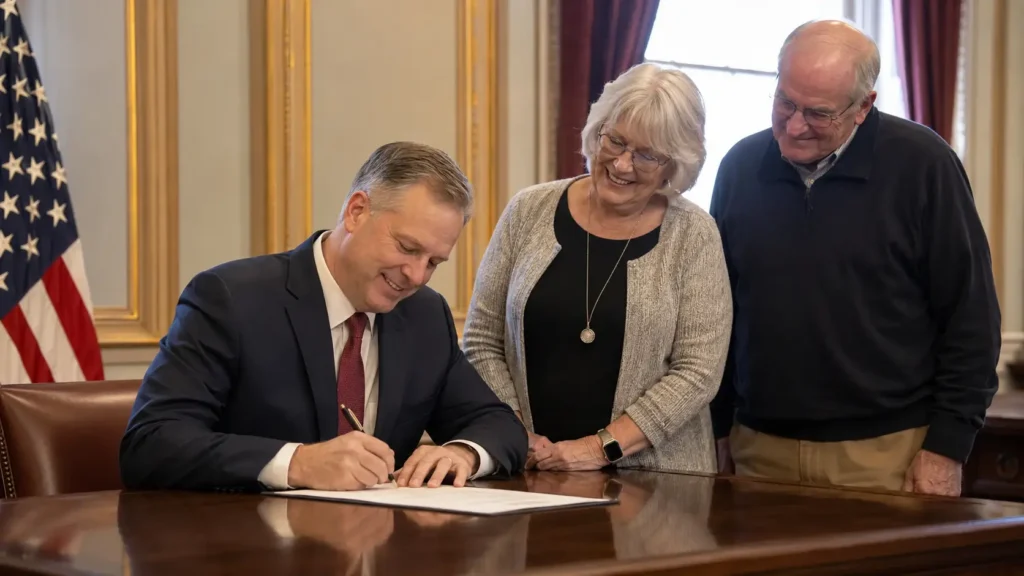
The Minnesota grandparents happy hour bill became law on 21 April 2026, creating a limited liquor-licensing exemption for qualifying nursing homes, boarding care homes and assisted-living facilities.
The exemption is due to take effect on 1 August 2026.
It will allow eligible facilities to provide complimentary alcoholic drinks during organised, resident-focused events without obtaining a conventional retail liquor licence, provided they notify the relevant state commissioner and continue to meet applicable care and alcohol-safety requirements.
The legislation does not permit unrestricted drinking, public alcohol sales or commercial happy-hour operations. It also does not require care providers to organise these events, while existing rules covering intoxication, underage access, storage, inspections and enforcement will remain in place.
Key Highlights:
- The bill was approved and enacted on 21 April 2026.
- The licensing exemption takes effect on 1 August 2026.
- It applies to qualifying nursing homes, boarding care homes and assisted-living facilities.
- Alcohol may be provided only during resident-focused events held on the facility’s property.
- Drinks must be complimentary and cannot be sold or exchanged for payment.
- Invited guests must remain physically accompanied by a resident.
- Facilities must notify the relevant state commissioner before using the exemption.
- Authorities retain inspection, enforcement and corrective-action powers.
- A ceremonial event held on 14 July 2026 publicised the law but did not mark its legal enactment.
As of now, the Minnesota grandparents happy hour bill had been enacted but had not yet reached its 1 August commencement date.
What Does the Minnesota Grandparents Happy Hour Bill Do?
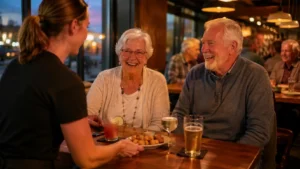
The law adds a new exemption to Minnesota’s liquor rules for nursing homes, boarding care homes and assisted-living facilities.
The official text of Chapter 48 states that a qualifying facility does not need an ordinary liquor licence or permit merely to serve alcohol on its premises when all statutory conditions are met.
Core changes introduced by the law
- Eligible facilities can serve intoxicating liquor during activities organised primarily for residents and their invited guests.
- Drinks can be provided inside the licensed facility or elsewhere on the facility’s property.
- Residents and their physically accompanied guests can be served without the facility obtaining a standard retail liquor licence.
- Alcohol cannot be sold, offered for sale or exchanged for money, fees or any other consideration.
- Facilities must notify the responsible commissioner before relying on the exemption.
- All other compatible state alcohol laws and regulations continue to apply.
The statute uses the term “intoxicating liquor”, which is broader than headlines referring only to beer or wine. Its practical effect is nevertheless narrow because it covers private resident events rather than commercial or public alcohol service.
The measure also does not require every eligible provider to participate. Each facility can decide whether to organise such events and what additional internal controls may be appropriate.
When Was the Bill Passed and When Does It Start?
The happy-hour provision forms part of Senate File 2511, a wider omnibus liquor bill containing several unrelated licensing and local alcohol-policy measures.
The full legislative history for SF2511 records a 129–1 House vote on 13 April 2026 and a 56–10 Senate vote on the amended bill on 14 April. It was presented to the governor on 20 April, approved on 21 April and filed as Chapter 48 on the same date.
Legislative and implementation timeline
| Date | Development | Significance |
| 17 March 2026 | A House committee supported the care-facility proposal as part of the omnibus bill | The exemption moved into the broader legislative package |
| 13 April 2026 | The House passed the amended bill by 129–1 | The revised package advanced with strong support |
| 14 April 2026 | The Senate concurred and repassed it by 56–10 | The legislature completed final passage |
| 21 April 2026 | The governor approved the bill and it was filed as Chapter 48 | The measure legally became an enacted law |
| 14 July 2026 | A ceremonial signing event was held in Champlin | The event publicised the change |
| 1 August 2026 | The care-facility exemption takes effect | Eligible facilities can begin using the exemption |
Chapter 48 gives some local licensing provisions their own commencement arrangements, but it does not assign a separate date to the care-facility section.
Under Minnesota’s standard effective-date rule, a non-appropriation act normally begins on the next 1 August unless lawmakers specify another date.
The most accurate description is therefore that the provision was enacted on 21 April 2026, ceremonially highlighted on 14 July and becomes operational on 1 August.
Why Was the Law Introduced?
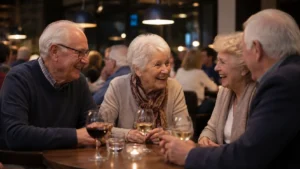
The proposal developed after staff at an assisted-living community in Champlin discovered they could not coordinate a resident happy hour without an appropriate liquor permit.
Reporting from the state legislature said the city did not offer a permit that properly matched the facility’s circumstances.
Resident Anita LeBrun became a leading supporter. During committee proceedings, she told lawmakers:
“Just because we’re older and live in assisted living doesn’t mean that we should have fewer freedoms than anyone else.”
Supporters framed the proposal as an issue of independence, dignity and ordinary social interaction.
They argued that residents should be able to share a complimentary drink during a supervised social event without their home having to operate under a licence designed for alcohol retailers.
Representative Danny Nadeau, who sponsored the narrower proposal, described it as a “narrow exception” rather than a general relaxation of Minnesota’s liquor laws.
He said the purpose of liquor regulations remained valid but acknowledged that such rules could sometimes extend too far.
Governor Tim Walz later said:
“This bipartisan bill increases independence and safety under clear regulations, while ensuring residents are treated with the respect and dignity they deserve.”
The legislation received broad support, although the complete omnibus bill was not unanimous.
Some lawmakers expressed concern about expanding alcohol availability amid wider alcohol-related health harms, illustrating the tension between personal choice and safeguarding in regulated care environments.
What Safeguards Must Care Facilities Follow?
The Minnesota grandparents happy hour law is not an unconditional exemption. It places qualifying facilities under inspection and enforcement arrangements similar to those applying to licence or permit holders.
Conditions facilities must meet
- The facility must notify the relevant commissioner that it intends to allow alcohol service.
- It must hold the health licence required for its category of care facility.
- Alcohol can be served only to or by residents and their invited guests.
- A guest must remain physically accompanied by a resident throughout alcohol service.
- Events must be organised primarily for residents and take place on the facility’s property.
- Alcohol must not be sold or provided in exchange for payment or another benefit.
- The facility must permit inspections during reasonable hours.
- Existing compatible alcohol rules remain enforceable.
Authorities can act against facilities for serving an obviously intoxicated person, unlawful alcohol provision, underage access, unlawful possession or unsafe storage.
Regulators can prohibit further service and require a corrective action plan or mandatory staff training before activities resume.
A pattern of unsafe service, alcohol-related health risk or non-compliance may also be referred to the health commissioner for investigation. Criminal enforcement against a facility or individual remains possible where the evidence supports it.
The exemption therefore changes one licensing requirement without displacing the wider regulatory framework. In practice, providers will still need to align events with existing care, health, safeguarding and operational responsibilities.
What the Law Changes and What It Does Not?

Some headlines have suggested that Minnesota previously banned grandparents or care-home residents from drinking alcohol.
That description is too broad because the problem concerned facilities organising and supplying alcohol at events without a suitable licence, not a universal criminal ban on every resident consuming alcohol in every circumstance.
Scope of the new exemption
| The Law Changes | The Law Does Not Change |
| Removes the ordinary liquor-licence requirement for qualifying resident events | Does not create a public bar or commercial drinks service |
| Allows complimentary alcohol to be served under defined conditions | Does not permit facilities to sell alcohol under the exemption |
| Covers residents and physically accompanied invited guests | Does not allow unaccompanied members of the public to attend for drinks |
| Creates a notification-based route for eligible care facilities | Does not automatically enrol every nursing or assisted-living facility |
| Preserves inspection and enforcement powers | Does not remove rules on intoxication, minors, possession or storage |
The nickname is also broader than the legal eligibility test. A resident does not need to be a grandparent, parent or member of any particular family group because coverage depends on the facility and event, not family status.
The phrase “Grandparents’ Happy Hour” is therefore best understood as a memorable political label for a care-facility licensing exemption contained within a much larger liquor-policy law.
Why the Story Matters to UK Readers?
The legislation has no direct legal effect in England, Scotland, Wales or Northern Ireland. UK care providers must continue following the alcohol-licensing, health, safeguarding and regulatory obligations applying in their own jurisdiction.
Its wider significance lies in the policy balance it attempts to strike. Residential care settings are both regulated environments and people’s homes, meaning providers must protect residents without unnecessarily removing everyday choices.
Minnesota’s approach addresses that tension through a narrow exemption rather than complete deregulation. It removes a licence designed for retail alcohol activity but retains notification, supervision, inspection and enforcement controls.
The case may interest UK care operators and small businesses because it demonstrates how generally sensible regulation can create an unintended burden when applied to an organisation with a different purpose.
A narrowly drafted exception can sometimes resolve that mismatch without abandoning the protection behind the original rule.
The story also shows why businesses should distinguish between legal permission and individual suitability.
Even when a provider is permitted to organise an activity, participation may still depend on residents’ wishes, existing care arrangements and relevant health considerations.
What Happens Next?
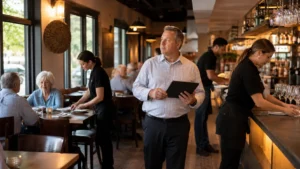
The exemption becomes effective on 1 August 2026, after which eligible Minnesota facilities can begin relying on it if they have completed the required notification and satisfy the law’s conditions.
Questions residents and families can ask
- Does the facility intend to hold resident happy hours or occasional celebration events?
- Has the provider submitted the required notification?
- Who will supervise service and monitor compliance?
- How will invited guests be registered and accompanied?
- What rules will apply to quantities, storage and intoxication?
- How will individual care requirements be considered?
- What process will staff follow if alcohol service becomes unsafe?
Providers are not required to introduce happy hours immediately or at all. Some may organise regular social gatherings, while others may allow alcohol only at occasional celebrations or decide that the exemption does not suit their residents.
Implementation will show how widely the option is adopted and whether regulators issue additional practical guidance.
The enforcement powers written into the law mean facilities will remain accountable for the way alcohol is stored, supplied and supervised.
Conclusion
The Minnesota grandparents happy hour bill removes a specific liquor-licensing barrier for qualifying care facilities while preserving important safety and enforcement rules.
It permits complimentary alcohol at private, resident-focused events but does not authorise public sales, unrestricted drinking or automatic participation by every facility.
Official records show that the legislation was approved on 21 April 2026, despite renewed coverage surrounding a July ceremonial event.
Its operational date is 1 August 2026, when eligible providers can begin using the exemption after meeting its notification and compliance requirements.
For UK readers, the law is primarily an international example of regulation being adjusted to recognise both resident autonomy and provider responsibility.
Its central policy question is not simply whether older people can drink, but how care systems can preserve ordinary choices without weakening safeguards.
Frequently Asked Questions
What Is the Minnesota Grandparents Happy Hour Bill?
It is an informal name for a liquor-law provision covering certain nursing homes, boarding care homes and assisted-living facilities.
The measure allows eligible facilities to serve complimentary alcohol at resident events without a conventional retail liquor licence.
When Does the Minnesota Happy Hour Law Start?
The care-facility exemption takes effect on 1 August 2026. The legislation was legally approved and filed on 21 April 2026.
Can Minnesota Care Homes Sell Alcohol?
No, alcohol provided under this exemption cannot be sold or exchanged for payment or another form of consideration. A facility would need separate legal authority for commercial alcohol sales.
Can Members of the Public Attend These Events?
The exemption is designed for residents and their invited guests rather than the general public. Guests must remain physically accompanied by a resident throughout alcohol service.
Does Every Assisted-Living Facility Have to Offer Happy Hour?
No, the law gives eligible facilities an option rather than imposing a requirement. Each provider can decide whether and how to organise resident events.
Can Facilities Serve an Intoxicated Resident?
No, authorities can take enforcement action for service to an obviously intoxicated person. They can stop alcohol service and require corrective measures or staff training.
Does the Minnesota Law Apply in the UK?
No, the legislation applies only within the US state of Minnesota. UK providers remain subject to the licensing and care regulations applicable in their own nation and local area.
Meta description
Learn what the Minnesota grandparents happy hour bill changes, when it starts, who it covers and the safeguards care facilities must follow.
Note: This article was reviewed against official Minnesota legislative records to confirm the law’s approval date, commencement date and key conditions. The 14 July 2026 event was ceremonial; the bill was formally enacted on 21 April 2026.

Jennifer contributes business-focused articles covering modern business trends, digital growth, entrepreneurship, and practical insights designed to support startups and SMEs.
I Am a Gen Z Man. Are Nivea Body Lotions Better Than Vaseline for Dry Skin?
If you're a Gen Z man wondering whether Nivea body lotions are better than Vaseline for dry skin, the short answer is that Nivea is often the better…

I Am a College Student. Are La Roche-Posay Products Better for Acne-Prone Skin Than Neutrogena?
Acne-prone skin can be challenging for college students, especially when balancing skincare effectiveness with a limited budget. When comparing La Roche-Posay and Neutrogena, La Roche-Posay is generally considered…
Insights for the Modern
UK Small Business.
Join 15,000+ owners receiving tactical analysis on finance, marketing, and technology. No clutter.
Zero spam. Unsubscribe in one click.