Royal Mail Second-Class Changes and UK Postal Shake-Up | Latest Postal Updates

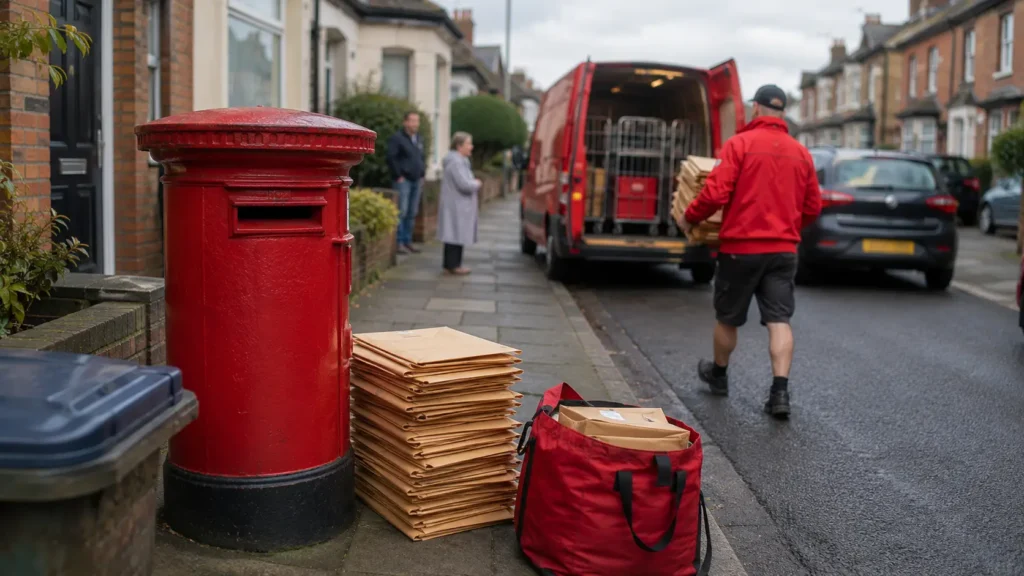
Royal Mail Second-Class changes mean Second Class letters will be delivered every other weekday (Monday to Friday), with no routine Saturday delivery.
The delivery aim remains within three weekdays, while First Class continues Monday to Saturday and parcels up to seven days a week, making it important for businesses to plan ahead.
Key highlights:
- Alternate weekday delivery for Second Class
- No regular Saturday delivery for non-First Class letters
- Three-weekday delivery aim remains
- First Class and parcels largely unchanged
Overall, businesses should allow extra time for non-urgent post and adjust communication timelines accordingly.
What Are the Royal Mail Second-Class Changes?
The Royal Mail Second-Class changes affect how often Second Class and other non-First Class letters are delivered.
Under the new model, these letters will be delivered every other weekday, Monday to Friday, instead of being delivered six days a week, as outlined in Royal Mail’s official update on the future of letter deliveries.
This means routine Saturday delivery for Second Class letters is being removed. Royal Mail says the delivery aim for Second Class mail remains within three weekdays.
In practice, however, the day a letter is posted may matter more than before, especially if it is sent near a weekend or Bank Holiday.
For UK small businesses, this change matters because many routine documents are still sent by post. These may include invoices, customer reminders, appointment notices, membership letters, local marketing materials, account statements and formal updates.
What Does the UK Postal Shake-Up Mean for Letter Deliveries?
The postal shake-up means Royal Mail is changing the operating model for some letters, rather than scrapping letter post entirely. First Class and Second Class services remain available, but they will no longer work in exactly the same way.
First Class letters are expected to continue with a next-day aim and delivery Monday to Saturday. Second Class letters will be delivered on alternate weekdays.
Parcels are not affected by the letter-delivery reform and Royal Mail says parcels will continue to be delivered up to seven days a week.
This distinction is important because some headlines may make the change sound broader than it is. The reform is mainly about the frequency of non-First Class letter delivery.
It is not an end to all Saturday Royal Mail deliveries and it is not a direct change to parcel delivery.
Why Is Royal Mail Changing Second-Class Deliveries?
Royal Mail and Ofcom link the changes to a long-term fall in letter volumes and the rising cost of maintaining a six-day letter network.
Ofcom says the number of letters sent each year has more than halved since 2011, while the cost of delivering each letter has increased as fewer letters are carried on each round.
Businesses can review Ofcom’s explanation in its official update on reforming the postal service so it delivers what people need.
The main reasons behind the changes include:
- A sustained decline in traditional letter use as more communication moves online
- Higher operational costs linked to delivering fewer letters across the same routes
- Pressure to maintain the universal postal service without increasing inefficiency
- The need to modernise delivery patterns to reflect current demand
Ofcom’s position is that reform is needed to protect the universal postal service and make it more sustainable.
In its official statement, Natalie Black, Ofcom’s Group Director for Networks and Communications, said:
“urgent reform of the postal service is necessary to give it the best chance of survival.”
For small businesses, the key issue is reliability. A slower but more predictable Second Class service may be workable for non-urgent mail, but it is less suitable for:
- Tight deadlines or time-sensitive documents
- Legal notices or formal correspondence
- Urgent customer communications
- Paperwork linked to payment dates or compliance
Understanding these reasons can help businesses adapt their communication strategies and choose the right postal service for each situation.
What Confirmed Facts Should UK Businesses Know About the Royal Mail Changes?
The confirmed facts help businesses separate practical updates from confusion or speculation. Royal Mail says Second Class and other non-First Class letters will be delivered every other weekday, Monday to Friday, with a delivery aim of within three weekdays.
Businesses can check Royal Mail’s own explanation in its official update on the future of letter deliveries.
Second Class Letters Will Move to Alternate Weekday Delivery
Second Class letters are moving to a weekday-only alternate delivery pattern. This means a Second Class letter will not necessarily be delivered on the next weekday after it enters the network.
Will First Class Letters Still Be Delivered on Saturdays?
Yes. Royal Mail says First Class letters will continue to be delivered six days a week, Monday to Saturday. This makes First Class more relevant for businesses that need faster letter delivery.
Parcels and Business Bulk Mail
Parcels are not affected by this specific letter-delivery reform. Royal Mail says parcels will continue up to seven days a week.
However, standard bulk business letters, used for items such as bills and statements, will move to a three-day delivery aim aligned with Second Class.
These facts should guide how businesses choose between Second Class, First Class, tracked services and digital communication.
When Will Second-Class Letters Be Delivered Under the New Timetable?
Royal Mail has published examples showing when Second Class mail may be due under the new posting-day pattern.
The delivery aim remains within three weekdays, but weekends and Bank Holidays can affect how that feels in practice.
Second Class delivery timing example:
| Day posted | New delivery-due day |
| Monday | Thursday |
| Tuesday | Friday |
| Wednesday | Monday |
| Thursday | Tuesday |
| Friday | Wednesday |
| Saturday | Thursday |
| Sunday | Thursday |
A Friday posting date is especially important for businesses to understand. Royal Mail says a Second Class letter posted on a Friday would typically be due by the following Wednesday under the new pattern.
Bank Holidays may affect delivery days, so businesses should leave extra time around public holidays.
This means small firms should avoid setting customer response deadlines that assume a Second Class letter will be read immediately after the weekend.
How Could Royal Mail Second-Class Changes Affect UK Small Businesses?
The Royal Mail Second-Class changes could affect businesses most where paper communication is still used for admin, compliance, customer service or payments.
The change may not create a problem for every firm, but it does make planning more important.
Invoices, Statements and Payment Reminders
Businesses that send invoices or payment reminders by Second Class post may need to adjust payment follow-up timings.
A letter posted late in the week may arrive several working days later, which could delay customer action.
What About Appointment Letters and Customer Notices?
Clinics, accountants, legal firms, trades, salons, care providers and local service businesses often send appointment letters, policy updates or customer notices.
These businesses may need to post earlier or use email, SMS or phone reminders alongside letters.
Direct Mail, Local Marketing and Seasonal Campaigns
Direct mail campaigns may need longer lead times. Seasonal offers, event notices and local promotions should be planned around the new weekday pattern, especially where businesses want customers to respond before a specific date.
The practical message is simple: Second Class can still be useful for non-urgent mail, but businesses should not use it where a delay could create a customer-service issue or missed deadline.
What Misinformation Should Readers Avoid About the Postal Shake-Up?

Understanding the facts behind the Royal Mail changes is essential for businesses to avoid confusion and make informed decisions. Below are the most common misconceptions and the correct explanations.
1. Second Class Post Is Being Stopped Completely
This is incorrect. Second Class post is not being discontinued. It will continue to operate, but with a revised delivery schedule. The key change is in delivery frequency, not the availability of the service.
2. Royal Mail Is Ending All Saturday Deliveries
This is also misleading. The change applies specifically to Second Class and other non-First Class letters. First Class letters are still expected to be delivered Monday to Saturday. Parcel deliveries are not affected and will continue up to seven days a week, depending on the service used.
3. “Three Weekdays” Means Three Calendar Days
This is a common misunderstanding. “Three weekdays” refers only to working days and does not include weekends or Bank Holidays. As a result, the actual time it takes for a letter to arrive may be longer, especially if it is posted towards the end of the week.
Key Takeaway:
Businesses should rely on official delivery aims and service details rather than headline summaries. Understanding the differences between service types, posting days and delivery schedules will help avoid delays and miscommunication.
How Do First Class, Second Class, Bulk Business Letters and Parcels Compare Now?

Businesses should choose the postal service based on urgency, evidence needed and customer impact. The cheapest option may not always be the safest option for important documents.
Business service comparison:
| Royal Mail service | Delivery pattern after changes | Saturday delivery? | Best business use |
| First Class letters | Monday to Saturday, next-day aim | Yes | Urgent letters and time-sensitive documents |
| Second Class letters | Every other weekday, Monday to Friday | No routine Saturday delivery | Non-urgent business letters |
| Standard bulk business letters | Three-day delivery aim | Not routine | Bills, statements and planned notices |
| Parcels | Up to seven days a week | Depending on service | E-commerce, returns and product delivery |
This comparison shows why small businesses may need a mixed approach. Second Class may remain suitable for low-urgency letters, while First Class, tracked, signed-for or guaranteed services may be more appropriate for important paperwork.
What Should UK Small Businesses Do Next?
Businesses do not need to panic, but they should review how they use post. A small change in posting schedules may prevent bigger problems with customers, cash flow and missed communication.
Review Letter-based Communication
Small businesses should identify which documents are still sent by post. This may include invoices, statements, reminders, customer notices, appointment letters, contracts and complaint responses.
Separate Urgent and Non-urgent Post
Second Class may still be suitable for non-urgent communication. First Class, tracked, signed-for, Special Delivery or secure digital communication may be better where timing or proof of receipt matters.
Small Business Postal Checklist
To help manage the impact of the Royal Mail Second-Class changes, small businesses can take a few practical steps to keep communication clear and timely.
Practical actions to consider
- Check which letters are currently sent by Second Class.
- Build extra time into customer deadlines.
- Avoid posting time-sensitive letters late in the week.
- Use First Class or tracked services for urgent documents.
- Keep proof of posting for important items.
- Add email or SMS reminders where suitable.
- Update customer communication policies.
- Plan around Bank Holidays and local holidays.
These steps are not legal or financial advice, but they can help businesses reduce avoidable postal delays and improve customer communication.
Conclusion
The Royal Mail Second-Class changes are part of a wider postal reform, not the end of Second Class post.
The main practical change is that Second Class letters will move to delivery every other weekday, Monday to Friday, with no routine Saturday delivery.
For UK small businesses, the biggest lesson is to match the service to the importance of the message.
Non-urgent letters may still work well by Second Class. Urgent, formal or deadline-sensitive documents may need faster postal options or a secure digital alternative.
The change also highlights a wider business issue: customer communication should not depend on one channel where timing matters. A combined approach using post, email, SMS and customer portals may give businesses more control.
FAQs
Can UK businesses still use Second Class post for invoices?
Yes. Businesses can still use Second Class post for invoices, but they should allow extra time for delivery and avoid payment deadlines that assume Saturday delivery.
What happens if a Second Class letter is posted on Friday?
Royal Mail says a Second Class letter posted on Friday would typically be due by the following Wednesday under the new delivery pattern. Bank Holidays may affect this timing.
Do Bank Holidays affect Second Class delivery timing?
Yes. Bank Holidays may affect delivery days. Businesses should build in extra time when sending letters around public holidays or local holidays.
Is proof of posting enough for important business documents?
Proof of posting can help show an item was sent, but important documents may need tracked, signed-for or guaranteed services depending on the risk and deadline.
Should businesses update customer communication timelines?
Yes. Businesses that send appointment letters, reminders, statements or formal notices should review their timelines so customers are not disadvantaged by slower delivery.
Will the changes make business mail cheaper?
The changes do not automatically mean business mail will be cheaper. Ofcom has also said it is reviewing postal affordability amid concerns about stamp prices.
Where should businesses check for the latest Royal Mail updates?
Businesses should check Royal Mail’s official letter-delivery page and Ofcom’s postal regulation updates, especially while the new delivery model is being rolled out.
Editorial Note:
This article is written for UK small business readers who need a clear, practical understanding of the Royal Mail Second-Class changes.
It is intended to explain the confirmed postal updates, business impact and sensible communication steps without exaggerating the risk or presenting speculation as fact.
This is informational content only and should not be treated as financial, legal or regulatory advice.
Businesses dealing with legal notices, contractual deadlines, regulated communications or payment disputes should seek appropriate professional guidance.
How We Checked?
The information in this article was checked against Royal Mail’s official letter-delivery update, Ofcom’s universal postal service reform announcement, and Ofcom’s 2025/26 Royal Mail performance investigation materials.
Ofcom opened an investigation on 1 June 2026 after Royal Mail reported that, in 2025/26, it delivered 75.7% of First Class mail within one working day and 90.2% of Second Class mail within three working days, against the then-applicable targets of 93% and 98.5%.

Jermaine writes informative business content related to entrepreneurship, finance, innovation, operations, and emerging opportunities for growing businesses in the UK.

Does Gross Misconduct Always Lead to Dismissal?
No. Gross misconduct does not always lead to dismissal. It can be serious enough to justify dismissal without notice, including for a first offence, but an employer should…
Andy Burnham Whitehall Job Cuts Begin Under Devolution Push
Andy Burnham’s government has begun the first operational stage of its Whitehall devolution push, with civil servants due to be seconded into regional mayoral authorities from autumn 2026.…
Insights for the Modern
UK Small Business.
Join 15,000+ owners receiving tactical analysis on finance, marketing, and technology. No clutter.
Zero spam. Unsubscribe in one click.