Russell & Bromley Retail Collapse | Closures, Job Losses & Next Deal

Last checked: 8 July 2026
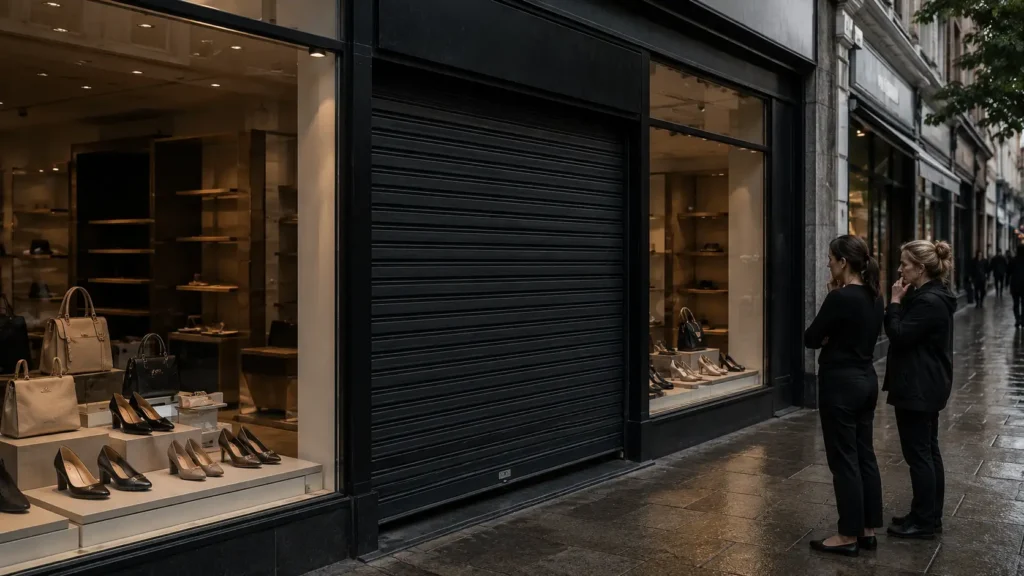
The Russell & Bromley retail collapse is not a simple story of a famous British shoe brand disappearing overnight.
It is a partial rescue story: the previous operating business entered administration, Next acquired the Russell & Bromley brand and selected assets, and most of the former store estate was not included in the deal.
For UK retailers and small businesses, the case matters because it shows how heritage, premium positioning and loyal customers may not be enough when falling demand, rising costs and a store-heavy model put pressure on cash flow.
The brand may continue under Next, but the closures and reported redundancies show the human and commercial cost of administration.
Key highlights:
| Area | Main point |
| Business status | Russell & Bromley Limited is listed as in administration |
| Next deal | Next acquired the brand, intellectual property and three stores |
| Store impact | 33 stores and nine concessions were outside the transaction |
| Job impact | Media reports say around 400 employees were affected |
| Customer impact | Gift cards, loyalty points, refunds and outstanding orders need careful checking |
| Business lesson | Fixed costs, weak sales and late action can turn pressure into crisis |
This article separates confirmed records, official statements and reported figures so readers can understand the Russell & Bromley retail collapse without confusing a brand rescue with a full business rescue.
What Happened in the Russell & Bromley Retail Collapse?
Russell & Bromley entered administration in January 2026, marking a major turning point for one of Britain’s best-known premium footwear retailers.
The old operating business did not continue as normal after administration. Instead, the brand was partly rescued through a deal with Next, while much of the former store estate was left outside the transaction.
The official Companies House administration record lists Russell & Bromley Limited as “In Administration”, confirming that this was a formal insolvency process rather than a routine store-reduction programme.
The main facts are:
- The old Russell & Bromley operator went into administration.
- Next bought the brand and selected assets through an insolvency process.
- Three stores transferred as part of the Next deal.
- The remaining 33 stores and nine concessions were not included.
- Later reporting said the remaining non-transferring stores closed and hundreds of roles were lost.
The important distinction is that the Russell & Bromley name was rescued, but the wider retail business was not rescued in full.
Why Did the Russell & Bromley Collapse Matter to the UK High Street?
The Russell & Bromley collapse matters because it involved a long-established premium retailer with a recognised place on the British high street.
Interpath described Russell & Bromley as a British footwear brand founded in Sussex in 1879, specialising in footwear, bags and accessories, with 36 stores and nine concessions across the UK and Ireland before the deal.
For the UK high street, this is a warning that brand heritage does not remove the need for disciplined trading, flexible costs and strong online performance.
A business can have a respected name but still struggle if sales weaken while rent, staffing, stock and operating costs remain high.
The case is especially relevant for independent retailers. Smaller firms may not have a buyer like Next available if cash flow deteriorates. That makes early cost reviews, supplier communication and realistic trading forecasts essential.
What Did Next Buy in the Russell & Bromley Deal?

Next bought the Russell & Bromley brand through an insolvency process. Reuters reported that Next paid £2.5 million for the brand and a further £1.3 million for some stock.
The deal included the brand, intellectual property and three stores: Oxford Street, King’s Road and Bluewater.
Interpath’s official announcement said the transaction involved the brand, other intellectual property and the transfer of three stores in Chelsea, Mayfair and Bluewater.
The Interpath sale announcement also confirmed that 33 stores and all nine concessions were not included in the transaction.
The Assets Included in the Next Acquisition
The acquired assets included the Russell & Bromley brand name, intellectual property, domain names, some stock and three selected stores.
Next’s customer FAQ says it acquired the brand name, domain names and intellectual property, plus stores in Mayfair, Chelsea and Bluewater.
Why the Deal Did Not Save the Whole Business?
A buyer in an insolvency process may choose valuable assets without taking on every lease, store, employee role or liability.
In this case, Next’s acquisition protected the brand identity and a small part of the store estate, but not the full network.
What the Next Deal May Mean for the Brand’s Future?
Next says the previous operator ceased trading, but the Russell & Bromley brand will be operated by Next in the near future. That means the brand may continue, even though the former business structure and most former locations did not.
Which Russell & Bromley Stores Closed After the Administration?
The three stores included in the Next deal were Mayfair/Oxford Street, Chelsea/King’s Road and Bluewater. The remaining 33 stores and nine concessions were outside the sale, according to both Interpath and Reuters.
Recent media reporting said the non-transferring store closure programme was completed, with the final locations including Edinburgh’s St James Quarter and Glasgow’s Buchanan Street.
The Sun reported that the stores not transferred to Next closed over the following months after the January administration.
This store outcome is why the phrase “Russell & Bromley retail collapse” is commercially accurate, even though the brand itself was acquired by Next.
How Many Russell & Bromley Jobs Were Lost?
The employment impact was substantial. Russell & Bromley employed around 440 people before the deal, according to Interpath and Reuters.
The three transferred stores protected only part of the former estate, while the non-transferring stores were left under administrator control.
Reported job-loss figures changed as the closure process developed:
- Interpath originally said the business employed circa 440 people.
- The Guardian reported in January that about 400 jobs were likely to be lost.
- The Industry reported in May that redundancies had reached 332.
- Later media reports said more than 400 staff had been made redundant after the remaining closures.
These differences are likely due to timing, whether head office and concession roles were counted, and whether the reports covered at-risk roles or confirmed redundancies.
For affected staff, GOV.UK says employees can claim redundancy and other money owed if an employer cannot pay because it is insolvent, subject to eligibility and process requirements.
Why Did Russell & Bromley Struggle Despite Its Heritage?
Russell & Bromley had a strong name, but heritage retail can still become vulnerable when costs rise and demand softens. Later reporting cited falling consumer footfall, rising operating costs and difficult market conditions as factors behind the pressure.
Falling Demand and Weaker Consumer Confidence
Premium footwear and accessories are discretionary purchases. When households become more cautious, customers may delay buying higher-priced shoes, handbags or accessories. That can quickly reduce sales density in stores with expensive locations.
High Fixed Costs and a Store-led Model
A store-led retailer carries fixed costs even when sales fall. Rent, staffing, utilities, business rates, insurance, stock financing and logistics can put pressure on margins.
If footfall declines and online sales do not offset the shortfall, the business can move from trading pressure to insolvency risk.
For small retailers, the lesson is clear: a good brand story helps, but it cannot replace cost control, cash flow forecasting and regular store-by-store profitability checks.
What Should Customers Know About Orders, Refunds and Gift Cards?

Customers should treat pre-administration purchases separately from any future trading under Next.
Next’s FAQ says Russell & Bromley ceased trading after administrators were appointed on 21 January 2026 and directs customers with outstanding orders or refunds to contact the administrators.
Customers should check:
- Whether an order was placed before or after administration.
- Whether any refund, return or faulty-item issue relates to the old operator.
- Whether payment-card purchase protection may apply.
- Whether gift cards or loyalty points are still usable.
Next’s FAQ says Russell & Bromley gift cards and loyalty points can no longer be used and will not be honoured, with queries directed to the administrators.
Customers should avoid relying on social media claims and should check administrator or official brand information before taking action.
What Can Small Businesses Learn from the Russell & Bromley Retail Collapse?
The Russell & Bromley collapse is a practical case study for UK small retailers. It shows that warning signs often appear before a formal administration.
Cash Flow Warning Signs Small Retailers Should Not Ignore
Cash flow issues often appear before a business faces serious financial difficulty. Monitoring these indicators regularly can help retailers identify potential risks and take corrective action at an early stage.
Small businesses should monitor:
- Slower sales conversion.
- Rising stock levels.
- Delayed supplier payments.
- Weak repeat purchases.
- Higher wage, rent or energy costs.
- Dependence on discounting to move stock.
These signs do not automatically mean insolvency, but they should trigger a review before pressure becomes urgent.
Cost Control Lessons From a Store-heavy Business
Retailers should regularly test whether each shop, concession, stock line and supplier contract still supports profit. A store that once worked well may become unviable if footfall falls, rent rises or local customer habits change.
Customer Trust During Financial Pressure
Clear communication matters. Refunds, gift cards, loyalty schemes, return windows and delivery promises can become reputational risks if customers feel misled.
A retailer under pressure should avoid over-promising and should seek professional advice early where solvency is a concern.
What Does the Russell & Bromley Collapse Tell Us About the Future of UK Retail?
The Russell & Bromley retail collapse shows that the UK retail market is becoming more selective.
Brands with recognition may still attract buyers, but buyers may only want the profitable or strategically useful parts of a business.
That points to a future where more retailers may be rescued in pieces rather than saved whole. Brand names, stock, data, intellectual property and selected stores may survive, while weaker locations and legacy costs are left behind.
For small businesses, the message is not to panic, but to plan. Retailers need realistic cash flow forecasts, flexible operations, online resilience and a clear understanding of which parts of the business truly make money.
Conclusion
The Russell & Bromley retail collapse shows how even a historic British brand can face serious pressure when falling demand, rising costs and a store-heavy model collide.
Next’s deal may preserve the brand, but it did not save the wider business or all former stores.
For UK small businesses, the case is a clear reminder to monitor cash flow, control fixed costs, protect customer trust and act early when trading conditions begin to weaken.
FAQs
Is Russell & Bromley still open online?
The previous Russell & Bromley operator ceased trading after administrators were appointed. Next says the brand will be operated by Next in the near future, so customers should check current official channels before placing any order.
Are all Russell & Bromley shops closed?
No. Three stores were included in the Next deal, while 33 stores and nine concessions were outside the transaction. Later reporting said the non-transferring stores closed.
Who are the administrators for Russell & Bromley?
Companies House records name Christopher Robert Pole and William James Wright as practitioners for Russell & Bromley Limited’s administration.
What happens to Russell & Bromley creditors?
Creditors are generally dealt with through the administration process. Customers, suppliers or other creditors should follow administrator guidance and seek professional advice where needed.
Can former employees claim redundancy pay?
Employees may be able to claim redundancy and other money owed if their employer is insolvent and cannot pay. GOV.UK says the insolvency practitioner or official receiver provides a case reference needed for claims.
Why would Next buy only part of Russell & Bromley?
A buyer may acquire valuable assets such as a brand name, intellectual property, stock or selected stores without taking on the whole estate. This can preserve brand value while limiting commercial risk.
What should other UK retailers take from this case?
Retailers should review cash flow, fixed costs, leases, stock discipline, online capability and customer communication before financial pressure reaches a crisis point.
Editorial Note:
This article is written for UK small business readers from a professional business-news perspective.
It is informational, not financial/legal advice. Customers, employees, creditors and business owners should check official administrator guidance, Companies House records and relevant professional advice before making decisions.
No invented spokesperson quotes have been used. One official statement used in reporting came from Andrew Bromley, CEO of Russell & Bromley, who said the sale was “the best route to secure the future for the brand”. Interpath also said the deal would “preserve the brand”.
How We Checked?
This article was checked on 8 July 2026 against official and authoritative sources, including Companies House, Interpath, Next customer information, Reuters and GOV.UK. Reported redundancy and debt figures were treated as media-reported unless confirmed in official records available at the time of checking.
The article separates confirmed facts, official statements, reported figures and business analysis because administration stories can change as administrators publish further updates.

Jermaine writes informative business content related to entrepreneurship, finance, innovation, operations, and emerging opportunities for growing businesses in the UK.

Does Gross Misconduct Always Lead to Dismissal?
No. Gross misconduct does not always lead to dismissal. It can be serious enough to justify dismissal without notice, including for a first offence, but an employer should…
Andy Burnham Whitehall Job Cuts Begin Under Devolution Push
Andy Burnham’s government has begun the first operational stage of its Whitehall devolution push, with civil servants due to be seconded into regional mayoral authorities from autumn 2026.…
Insights for the Modern
UK Small Business.
Join 15,000+ owners receiving tactical analysis on finance, marketing, and technology. No clutter.
Zero spam. Unsubscribe in one click.