Tesco, Waitrose and Morrisons Food Recalls 2026: Products to Check

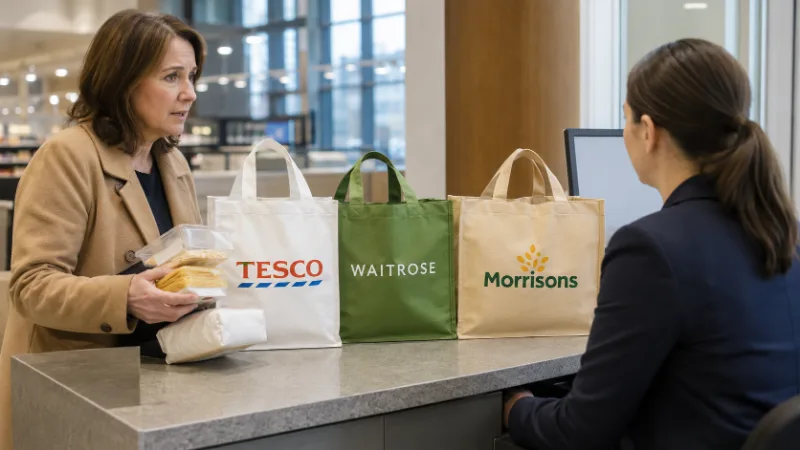
Food recall warnings affecting products sold by Tesco, Waitrose and Morrisons have been issued for several different safety concerns.
These include undeclared allergens, possible glass contamination, potential E. coli contamination and possible Listeria contamination.
Not every pack or product sold by these supermarkets is affected. Shoppers should match the exact product name, pack size, batch code, lot number and date shown on the packaging with the details in the recall notice.
The most relevant long-dated and recently issued recalls are summarised below.
| Product | Retailer | Affected Details | Recall Reason | What to Do |
| Tesco Finest Caesar and Smoked Bacon Coleslaw | Tesco | 270g, use by 4 September 2026 | Undeclared mustard | Do not eat if allergic to mustard and return it for a refund |
| Gü Double Sea Salted Caramel Frozen Dessert | Tesco and Waitrose | 2x85g, lot 126135, best before 30 June 2027 | Undeclared hazelnuts and soya | Do not eat if affected by these allergens |
| Waitrose Rhubarb Crumble | Waitrose | 500g, use by 19 August 2026 | Undeclared oats containing gluten | Check the freezer and return the product if affected |
| Bonne Maman Raspberry Conserve | Waitrose | 30g, batches K154 and K155, best before June 2028 | Possible glass contamination | Do not consume and return it for a refund |
| Morrisons Savers Salted Cashews | Morrisons | 125g, five specified best-before dates | Possible glass contamination | Do not eat and return the packet |
| Filippo Berio Hot Chilli Pesto | Morrisons and other retailers | 190g, batch LR319, best before 15 May 2028 | Undeclared fish | Do not eat if allergic to fish |
These warnings relate to separate products and safety issues. There is no indication that they are part of one connected supermarket-wide incident.
Last Reviewed: 4 September 2026
Tesco Food Recalls to Check
Tesco’s product recall notices cover specific products and dates. Customers should not assume that other products from the same range are affected.
Tesco Finest Caesar and Smoked Bacon Coleslaw
Tesco recalled a specific date code of Tesco Finest Caesar and Smoked Bacon Coleslaw because some packs may contain Tesco Finest Four Cheese Potato Salad.
The incorrectly packed potato salad contains mustard, but mustard is not declared on the coleslaw label.
| Detail | Recall Information |
| Product | Tesco Finest Caesar and Smoked Bacon Coleslaw |
| Pack Size | 270g |
| Use By | 4 September 2026 |
| Allergen | Mustard |
| Recall Date | 3 September 2026 |
The product presents a possible health risk to people with a mustard allergy. Anyone with a mustard allergy who bought the affected pack should not eat it.
The item can be returned to a Tesco store for a full refund without a receipt. As it has a short use-by date, the warning is particularly relevant to people who bought or consumed the coleslaw immediately before 4 September.
Gü Double Sea Salted Caramel Frozen Dessert
Gü recalled a specific lot of its Double Sea Salted Caramel Frozen Dessert after a small number of packs may have contained the wrong dessert.
The incorrectly packed dessert may contain hazelnuts and soya, neither of which appears on the intended product label.
| Detail | Recall Information |
| Product | Gü Double Sea Salted Caramel Frozen Dessert |
| Pack Size | 2x85g |
| Lot Code | 126135 |
| Best Before | 30 June 2027 |
| Allergens | Hazelnuts and soya |
The manufacturer believed fewer than ten units may have been affected. However, the entire identified lot was recalled as a precaution because undeclared allergens can cause serious reactions.
This remains an important recall because the product is frozen and has a long best-before date. Customers may still have the affected desserts in their freezers.
People with an allergy or intolerance to hazelnuts, nuts or soya should not eat the identified product. Tesco customers can return it for a full refund without a receipt.
Recent Tesco Mozzarella and Pesto Orzo Salad Recall
Tesco also recalled Tesco Finest Mozzarella Pearls and Pesto Orzo Salad because of possible contamination with Shiga toxin-producing E. coli, commonly known as STEC.
The recall applied to 215g packs with use-by dates of 25, 26 and 27 August 2026. Those dates have passed, so this should be treated as a recent recall rather than a current shelf warning.
The information may still matter to someone who ate the salad and subsequently became unwell. STEC can cause severe diarrhoea, bloody diarrhoea, stomach pain, vomiting and dehydration.
Waitrose Food Recalls to Check
Waitrose has issued separate warnings covering allergens and possible physical contamination. Some affected products have long dates or may have been frozen, so they could still be stored at home.
Waitrose Rhubarb Crumble
Waitrose recalled its 500g Rhubarb Crumble because it contains oats with gluten that are not declared on the label.
| Detail | Recall Information |
| Product | Waitrose Rhubarb Crumble |
| Pack Size | 500g |
| Use By | 19 August 2026 |
| Allergen | Oats containing gluten |
| Recall Date | 3 September 2026 |
The use-by date had passed when the recall was announced. However, the packaging contained instructions allowing customers to freeze the crumble and consume it within one month of freezing.
This means shoppers should still check their freezers. The product may pose a health risk to people with an allergy or intolerance to oats or gluten and people with coeliac disease.
Affected customers should not consume it and can return it to a Waitrose branch for a refund.
Bonne Maman Raspberry Conserve
Waitrose also recalled miniature 30g jars of Bonne Maman Raspberry Conserve because of possible glass contamination.
The warning covers batches K154 and K155 with a best-before date of June 2028. Because of this long date, affected jars may remain in homes, hospitality stockrooms or gift collections.
Possible glass contamination creates a risk for any consumer, not only those with allergies.
Anyone with an affected jar should not open or consume it. The jar should be packaged carefully and returned to a Waitrose branch for a refund.
Waitrose Chocolate Chip Brioche Rolls
Packs of eight Waitrose Chocolate Chip Brioche Rolls were previously recalled because they may have contained pieces of hard plastic and metal.
The recall covered batch B26177 with a best-before date of 26 July 2026. Although this date has passed, someone may still have the rolls in a freezer.
Any matching product that remains stored at home should not be eaten. It should be packaged securely and returned to the retailer.
Morrisons Food Recalls to Check
The Morrisons recalls include products with dates extending into late 2026 and 2028. These warnings therefore remain relevant even though they were first issued several months ago.
Morrisons Savers Salted Cashews
Morrisons Savers Salted Cashews were recalled because some packets may contain glass.
| Detail | Recall Information |
| Product | Morrisons Savers Salted Cashews |
| Pack Size | 125g |
| Best Before | 9 August 2026 |
| Best Before | 6 September 2026 |
| Best Before | 26 September 2026 |
| Best Before | 28 September 2026 |
| Best Before | 9 October 2026 |
Shoppers should check every date carefully because only the specified packets are included in the notice.
Possible glass makes the product unsafe for anyone to consume. An affected packet should not be opened or eaten and can be returned to Morrisons for a full refund without a receipt.
Filippo Berio Hot Chilli Pesto
Filippo Berio recalled a specific batch of Hot Chilli Pesto because it contains fish that is not declared on the label.
| Detail | Recall Information |
| Product | Filippo Berio Hot Chilli Pesto |
| Pack Size | 190g |
| Batch Code | LR319 |
| Best Before | 15 May 2028 |
| Allergen | Fish |
The incorrect back label creates a possible health risk for anyone with a fish allergy. Because the jar has a 2028 best-before date, it could remain in cupboards for a considerable time.
People with a fish allergy should not eat the affected pesto. Customers can return the jar to the store where it was purchased for a full refund.
Recent Morrisons Chicken and Bacon Pasta Recall
Morrisons Chicken and Bacon Pasta was included in an August recall after possible Listeria monocytogenes contamination was identified.
The notice covered a 300g pack with product code 5010251790587 and a use-by date of 7 August 2026. The date has passed, but people who froze the product should still check their freezers.
Listeria can cause a high temperature, muscle aches, chills, sickness and diarrhoea. In rare cases, it can lead to serious complications such as meningitis.
People over 65, pregnant women and their unborn babies, babies under one month old and people with weakened immune systems face a higher risk from Listeria infection.
How to Tell Whether Your Product Is Affected?

A shared brand or similar product name does not automatically mean an item is part of a recall. Check each identifier separately.
- Confirm the Exact Name: Look for the complete product name, including the flavour or variety.
- Check the Pack Size: A recall may cover one size while other pack sizes remain unaffected.
- Find the Batch or Lot Code: These details are usually printed near the date, barcode, lid or back label.
- Match the Date: Check whether the notice uses a use-by date or a best-before date.
- Check the Retailer: A branded product may have been distributed through several supermarkets.
- Inspect Frozen Stock: A date-passed product may still be relevant if it was frozen before its use-by date.
If one identifier does not match, the product may not be included. Customers who remain uncertain should contact the retailer or manufacturer before consuming it.
What Should You Do With a Recalled Product?
The correct response depends on the instructions in the individual notice, but shoppers should generally take the following steps:
- Stop Eating Or Using It: Do not continue consuming a product that matches the recall details.
- Keep It Separate: Place the product away from other food, particularly if its packaging is damaged.
- Retain The Packaging: The label contains the batch, lot and date information needed to confirm the recall.
- Package It Carefully: Use an additional bag or container when the warning involves glass, metal, plastic or leaking contents.
- Follow The Refund Instructions: Return the product or dispose of it according to the retailer’s notice.
- Clean Affected Surfaces: Wash hands and clean surfaces that have touched leaking or potentially contaminated food.
Do not taste the product to decide whether it is safe. Allergens, bacteria and small foreign objects may not be visible.
What If You Have Already Eaten the Product?
Eating a recalled product does not automatically mean that someone will become ill. The correct action depends on the reason for the recall and whether symptoms develop.
After Eating a Product With an Undeclared Allergen
People without the relevant allergy or intolerance may not face the same risk. Anyone with the identified allergy should monitor for symptoms such as itching, hives, swelling, wheezing, vomiting or breathing difficulty.
Severe breathing problems, throat or tongue swelling, collapse or signs of anaphylaxis require emergency medical help.
After Eating a Product Linked to STEC
Symptoms may include severe diarrhoea, blood in the stool, abdominal pain, vomiting and dehydration. Anyone with bloody diarrhoea, persistent vomiting or signs of dehydration should seek urgent medical advice.
People experiencing vomiting or diarrhoea should remain away from work, school or nursery until they have been symptom-free for at least 48 hours.
After Eating a Product Linked to Listeria
Listeria symptoms can resemble flu or gastroenteritis. Higher-risk people, including pregnant women, older adults and those with weakened immune systems, should seek medical advice if symptoms develop after consuming an affected product.
After Possible Glass, Metal or Plastic Exposure
Seek urgent medical advice if there is choking, mouth injury, severe pain, bleeding or concern that a foreign object has been swallowed. Do not attempt to make someone sick.
Can Recalled Food Be Returned Without a Receipt?
Refund conditions can differ between retailers and individual notices.
| Retailer | General Recall Position |
| Tesco | Relevant notices commonly provide a full refund without a receipt |
| Morrisons | The cashew and pesto notices state that no receipt is required |
| Waitrose | The notices offer a refund at a local branch, but receipt wording can vary |
Customers should follow the instructions attached to the individual product recall rather than relying on the supermarket’s normal returns policy.
What Should Food Businesses Do With Recalled Stock?
Cafés, convenience stores, restaurants, caterers and other food businesses may hold affected products in cupboards, freezers or storerooms.
Businesses should:
- Stop Sale And Service Immediately: Do not sell, prepare or serve the affected product.
- Isolate The Stock: Clearly separate and label it to prevent accidental use.
- Record The Details: Keep the product name, quantity, supplier, batch code and date.
- Check Sales Records: Establish whether any affected stock has already been supplied or served.
- Contact The Supplier: Follow the instructed return, collection or disposal process.
- Inform Staff: Make sure kitchen, stockroom and customer-facing teams understand the restriction.
- Follow Regulatory Instructions: Contact the local authority or relevant food safety team when required.
A business should not remove packaging or dispose of stock before recording the traceability information it may need.
How Can Shoppers Find the Latest Recall Notices?

Recall information changes throughout the year. Consumers can check the Food Standards Agency’s alerts service, retailer recall pages, in-store customer notices and manufacturer announcements.
People with food allergies can also sign up for food-safety alerts by email. This is particularly useful for products with long best-before dates that may remain in cupboards or freezers months after a recall was announced.
Conclusion
The Tesco, Waitrose and Morrisons food recalls cover specific products rather than entire supermarket ranges. Shoppers should compare the product name, pack size, batch or lot code and date with the official notice.
Long-dated items such as frozen desserts, pesto, conserve and cashews may still be stored at home. If a product matches the recall, stop using it and follow the retailer’s return or disposal instructions.
Frequently Asked Questions
What Food Has Tesco Recalled in 2026?
Relevant notices include Tesco Finest Caesar and Smoked Bacon Coleslaw, Gü Frozen Double Sea Salted Caramel Dessert and Tesco Finest Mozzarella Pearls and Pesto Orzo Salad. Each recall applies only to specified dates or lots.
What Food Has Waitrose Recalled in 2026?
Waitrose notices include Rhubarb Crumble, miniature Bonne Maman Raspberry Conserve and Chocolate Chip Brioche Rolls. The Gü frozen dessert recall also affected products sold through Waitrose.
What Food Has Morrisons Recalled in 2026?
Relevant products include Savers Salted Cashews, Filippo Berio Hot Chilli Pesto and a recent Morrisons Chicken and Bacon Pasta notice. Shoppers should check the exact dates and codes.
Is Every Pack of the Recalled Product Affected?
No. Most recalls apply only to a particular pack size, batch, lot or date code rather than every product in the range.
Can Recalled Food Be Returned Without a Receipt?
Many Tesco and Morrisons recall notices allow returns without a receipt. Waitrose customers should follow the refund wording in the individual notice.
Should I Check Food That Has Been Frozen?
Yes. A short use-by date may have passed, but the affected food could remain in a freezer if it was frozen before that date.
What Should I Do If I Have Already Eaten Recalled Food?
Monitor for symptoms connected to the stated risk and seek medical advice when necessary. Severe allergic reactions, breathing problems, bloody diarrhoea, significant pain or suspected foreign-object ingestion require urgent attention.

Jennifer contributes business-focused articles covering modern business trends, digital growth, entrepreneurship, and practical insights designed to support startups and SMEs.

Does Gross Misconduct Always Lead to Dismissal?
No. Gross misconduct does not always lead to dismissal. It can be serious enough to justify dismissal without notice, including for a first offence, but an employer should…

Andy Burnham Whitehall Job Cuts Begin Under Devolution Push
Andy Burnham’s government has begun the first operational stage of its Whitehall devolution push, with civil servants due to be seconded into regional mayoral authorities from autumn 2026.…
Insights for the Modern
UK Small Business.
Join 15,000+ owners receiving tactical analysis on finance, marketing, and technology. No clutter.
Zero spam. Unsubscribe in one click.