UNISON Pay Rise 2026: Pay Increase Demands, Offers and Union Response


The UNISON pay rise 2026 is not a single increase for all members, as pay depends on the worker’s sector. NHS staff on Agenda for Change contracts have a 3.3% award from 1 April 2026, while council and school unions are demanding £3,000 or 10%, whichever is greater.
Police staff are seeking 9% or £2,700, and higher education staff have received a 2% offer, which UNISON recommends rejecting. The union says public service pay must rise because wages have fallen behind living costs, inflation and workforce pressures.
Key takeaways:
- NHS staff: 3.3% from April 2026
- Council and school staff: £3,000 or 10% claim
- Police staff: 9% or £2,700 claim
- Higher education: 2% offer rejected by UNISON
- Main issue: low pay, inflation and retention challenges
What Is the UNISON Pay Rise 2026?

The UNISON pay rise 2026 refers to a range of pay awards, offers and demands affecting different groups of public service workers. Unlike a national minimum wage increase or a single government-wide pay announcement, UNISON pay negotiations are handled differently across each sector.
This means NHS workers, council staff, school support workers, police staff and higher education employees may all face separate pay processes, even though they may belong to the same union.
Why the 2026 Pay Rise Differs by Sector?
UNISON represents workers in many areas of public service. Each sector has its own employer body, pay structure and bargaining process. For example, NHS workers on Agenda for Change contracts are not covered by the same pay claim as local government workers on National Joint Council terms.
That is why one UNISON member may be looking at a confirmed percentage award, while another may still be waiting for an employer response or ballot outcome.
Main Sectors Covered by UNISON Pay Negotiations
| Sector | 2026/27 Position | UNISON Response |
| NHS Agenda for Change | 3.3% from 1 April 2026 | Criticised as too low |
| Council and school staff | Claim for £3,000 or 10% | Unions seeking improved pay |
| Police staff | Claim for 9% or £2,700 | Demand includes wider conditions |
| Higher education | 2% offer | Rejection recommended |
The table shows why the UNISON pay rise 2026 cannot be explained through one figure. Workers need to check the position for their own sector, employer and pay agreement.
What Is the 2026/27 UNISON Pay Award for NHS Staff?
For NHS staff on Agenda for Change contracts, UNISON says the 2026/27 pay award is 3.3% from 1 April 2026. This applies to NHS workers covered by Agenda for Change, which includes many nurses, healthcare assistants, porters, cleaners, administrative staff, paramedics and other health service employees.
Agenda for Change 3.3% Pay Award from April 2026
The 3.3% award gives NHS staff a pay increase from the start of the 2026/27 financial year. However, the value of that increase depends on the worker’s current pay band, hours and deductions.
| Example NHS Position | Pay Arrangement | 2026/27 Update |
| Healthcare assistant | Agenda for Change | 3.3% award |
| Admin and clerical worker | Agenda for Change | 3.3% award |
| Porter or domestic worker | Agenda for Change | 3.3% award |
| Nurse or clinical staff member | Agenda for Change | 3.3% award |
For many NHS employees, the main question is whether the 3.3% award is enough to keep up with everyday costs such as rent, mortgage payments, food, transport and energy bills.
UNISON’s Response to the NHS Pay Award
UNISON has criticised the NHS 2026/27 award as too low. The union’s argument is that a 3.3% increase may not feel like a real improvement if inflation rises or living costs continue to increase.
A healthcare pay adviser described the issue clearly:
“I often see staff focus on the headline percentage first, but the real question is what it means after inflation, pension deductions, tax and travel costs. A 3.3% award may look straightforward, but many workers will judge it by whether their monthly pay actually stretches further.”
This insight reflects a wider concern in the NHS pay debate. The issue is not only the percentage increase, but whether public service workers feel financially better off after years of cost-of-living pressure.
What Pay Rise Are Council and School Staff Asking for in 2026?
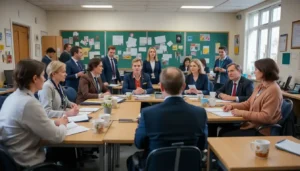
Council and school staff in England, Wales and Northern Ireland are covered by a separate pay claim. UNISON, GMB and Unite have submitted a 2026/27 claim asking for at least £3,000 or 10%, whichever is greater, on every pay point.
This is one of the most significant parts of the UNISON pay rise 2026 discussion because it affects a wide range of local government and school support roles.
£3,000 or 10% Pay Increase Demand
The claim is designed to provide a stronger increase for lower-paid workers while still giving a meaningful rise across the pay structure. Asking for £3,000 or 10%, whichever is greater, means the increase would not work in the same way for everyone.
| Current Pay Level | What the Claim Means | Likely Impact |
| Lower-paid worker | £3,000 may be higher than 10% | Bigger percentage uplift |
| Middle pay point | Depends on salary level | Either £3,000 or 10% |
| Higher pay point | 10% may be higher than £3,000 | Larger cash increase |
This approach supports the union’s aim to improve wages at the bottom of the pay scale while also addressing wider pay pressures.
£15 Minimum Hourly Rate and Better Working Conditions
The claim is not only about headline pay. It also includes a demand for a £15 minimum hourly rate, a shorter working week, one additional day of annual leave and paid term-time leave for school support staff.
The main demands include:
- A pay rise of at least £3,000 or 10%, whichever is greater
- A £15 minimum hourly rate
- A shorter working week
- One extra day of annual leave
- Paid term-time leave for school support staff
These demands show that the pay claim is linked to wider concerns about working conditions, workload and long-term staff retention.
What Is the UNISON Pay Claim for Police Staff in 2026?
For police staff in England and Wales, the 2026 claim asks for 9% or £2,700, whichever is greater. It also includes a £15 minimum hourly rate and improvements to allowances, annual leave and overtime rights.
Police staff are not police officers, but they play a major role in keeping police services running. They can include call handlers, detention officers, crime scene staff, administrative workers, control room staff and many other support roles.
| Police Staff Claim Area | 2026 Demand |
| Pay increase | 9% or £2,700, whichever is greater |
| Minimum hourly rate | £15 |
| Allowances | Improvements requested |
| Annual leave | Improvements requested |
| Overtime rights | Improvements requested |
The police staff claim reflects a similar argument to other UNISON pay campaigns: support staff are essential to public services, but many roles have not kept pace with rising living costs.
What Has Been Offered to Higher Education Staff for 2026/27?

For higher education staff, UNISON says employers have offered 2% on all pay points for 2026/27. UNISON’s Higher Education Service Group Executive has recommended that members reject the offer.
Higher education staff include workers in universities and related institutions. They may work in administration, libraries, catering, cleaning, technical support, student services, security, maintenance and other essential roles.
The 2% offer is likely to be controversial because it is below the pay demands seen in other sectors and may be viewed as insufficient during a period of high living-cost pressure.
| Higher Education Pay Issue | 2026/27 Position |
| Employer offer | 2% on all pay points |
| UNISON recommendation | Reject the offer |
| Main concern | Offer may not match cost pressures |
| Worker groups affected | University and higher education support staff |
A university workplace representative explained the concern in practical terms:
“I hear staff say the same thing every year: the offer sounds official, but it does not match the bills landing at home. I do not think people are only asking for more money; they are asking for pay that reflects the value of the work they already do.”
This kind of response explains why a low percentage offer can lead to frustration, especially where workers feel their pay has fallen behind over several years.
Why Is UNISON Criticising Public Sector Pay Offers?
UNISON is criticising public sector pay offers because it believes many workers have faced real-terms pay cuts, rising bills and increasing workloads. The union argues that pay must be improved to protect living standards and keep experienced staff in public services.
Inflation, Living Costs and Real-Terms Pay Cuts
A pay rise does not always mean workers are better off. If inflation is higher than the pay increase, wages can still fall in real terms. That is why UNISON often compares pay offers against living costs rather than looking only at the headline percentage.
For example, a worker receiving a 2% or 3.3% increase may still feel worse off if rent, childcare, transport and food costs rise faster than pay.
Recruitment and Retention Problems in Public Services
Pay is also linked to recruitment and retention. When public service wages fall behind, employers may struggle to attract new staff or keep experienced workers.
This affects public services in several ways:
- Vacancies can remain open for longer
- Existing staff may face heavier workloads
- Service quality can be affected
- Workers may move to better-paid sectors
UNISON’s position is that better pay is not only important for employees, but also for the public services that rely on them.
How Does the UNISON Pay Rise 2026 Affect Different Workers?

The effect of the UNISON pay rise 2026 depends on the worker’s sector, pay grade, contract type and location. Some workers may already have a confirmed award, while others may be waiting for negotiations, consultations or ballots.
For NHS staff, the key figure is the 3.3% award from 1 April 2026. For council and school staff, the focus is on the claim for £3,000 or 10%, whichever is greater.
For police staff, the claim is 9% or £2,700, whichever is greater. For higher education staff, the current issue is the 2% offer and UNISON’s recommendation to reject it.
| Worker Group | What They Should Check |
| NHS staff | Agenda for Change band and 3.3% award |
| Council staff | NJC pay claim updates |
| School support staff | Term-time pay and local government claim |
| Police staff | Police staff council claim and allowances |
| Higher education staff | Employer offer and union consultation |
Workers should also check whether any increase is backdated, when it will appear in pay, and whether it affects overtime, allowances or pension contributions.
What Could Happen Next in the UNISON Pay Negotiations?
The next stage depends on the sector. In some areas, workers may be consulted on an offer. In others, negotiations may continue between unions and employers.
If members reject an offer, unions may return to employers, escalate the campaign or consider industrial action ballots.
The process usually involves several stages:
- Pay claim submitted
- Employers respond with an offer
- Union considers the offer
- Members are consulted or balloted
- Offer is accepted, rejected or challenged further
Industrial action is not automatic. It usually follows a formal process and depends on member support, legal thresholds and the union’s strategy.
FAQs
When does the NHS 2026/27 pay award start?
For NHS staff on Agenda for Change contracts, UNISON says the 2026/27 pay award is 3.3% from 1 April 2026. Workers should check official NHS and UNISON updates for payment dates and any payroll details.
What does Agenda for Change mean for NHS pay?
Agenda for Change is the NHS pay system covering many non-medical NHS staff. It sets pay bands, terms and conditions for roles such as nurses, healthcare assistants, porters, cleaners, administrative staff and other NHS workers.
Are council and school staff guaranteed a 10% rise?
No, council and school staff are not guaranteed a 10% rise at this stage. UNISON, GMB and Unite have submitted a claim asking for at least £3,000 or 10%, whichever is greater, but a claim is not the same as an agreed settlement.
Could UNISON members take industrial action over pay?
Industrial action could happen only if the required process is followed and members support it through the appropriate ballot. Rejection of a pay offer does not automatically mean strike action, but it can lead to further campaigning or escalation.
Why is UNISON asking for a £15 minimum hourly rate?
UNISON is asking for a £15 minimum hourly rate because it argues that lower-paid public service workers need stronger protection from rising living costs. The demand is also linked to recruitment, retention and fair pay across public services.
What happens if members reject a pay offer?
If members reject a pay offer, the union may return to employers, request an improved offer, continue negotiations or consider further action. The next step depends on the sector, the strength of member support and the employer’s response.

Jermaine writes informative business content related to entrepreneurship, finance, innovation, operations, and emerging opportunities for growing businesses in the UK.
Can PIP Be Stopped Without Notification?
Yes, a PIP payment can appear to stop before you receive or notice a letter, but the DWP should normally give you written notice when it makes an…

Crypto Tax Warning Letters HMRC: 81,000 Investors Targeted
HMRC has sent 81,000 warning letters to cryptocurrency holders over the past 12 months, according to new figures reported by the BBC, as the tax authority increases scrutiny…
Insights for the Modern
UK Small Business.
Join 15,000+ owners receiving tactical analysis on finance, marketing, and technology. No clutter.
Zero spam. Unsubscribe in one click.