What Part of the Car Does the Law Require You to Keep in Good Condition?

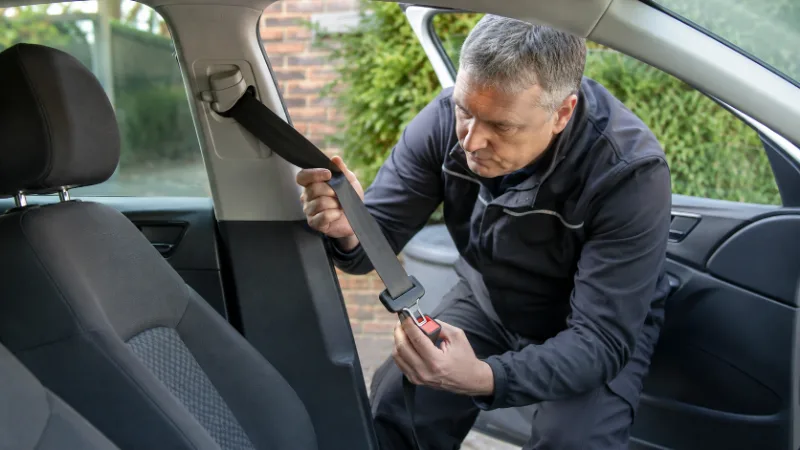
When the question asks, “What part of the car does the law require you to keep in good condition?”, the expected theory test answer is seat belts.
The usual answer options are:
| Answer Option | Correct or Incorrect | Reason |
| Seat Belts | Correct | Required seat belts must remain safe and functional |
| Gearbox | Incorrect | It is not the intended answer to this theory test question |
| Transmission | Incorrect | It is not the specified safety component |
| Door Locks | Incorrect | They are not the intended legal maintenance answer |
This is a theory test question about an important occupant safety system. In everyday driving, the legal responsibility extends beyond seat belts to the overall condition of the vehicle.
Last Updated: 04.09.2026
Why Seat Belts Are the Correct Theory Test Answer?
Seat belts are designed to restrain the driver and passengers during sudden braking or a collision. Their effectiveness depends on the webbing, buckle, retractor and anchorage points working together correctly.
A belt may be present but still unsafe if it:
- Has Torn Or Frayed Webbing
- Does Not Latch Securely
- Releases Without The Button Being Pressed
- Fails To Retract
- Has A Loose Anchorage Point
- Shows Signs Of Stretching
- Has A Deployed Pretensioner
- Is Obstructed Or Incorrectly Fitted
The legal requirement is not satisfied simply because a belt is installed. It must be maintained so that it can perform its intended function.
This should also be distinguished from the separate duty to wear a seat belt. Under the UK’s seat belt law, drivers and passengers must normally wear one when it is fitted, unless a recognised exemption applies.
What Does Keeping a Seat Belt in Good Condition Mean?
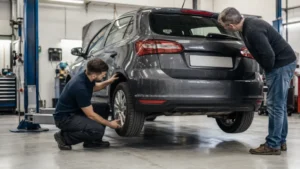
A seat belt in good condition should fasten securely, adjust properly and restrain its user without showing signs of serious damage.
Seat Belt Webbing
The webbing is the fabric section that passes across the occupant’s body. It should not have cuts, heavy fraying, burns, stretching or chemical damage.
Small marks may not necessarily make a belt unsafe, but damage that weakens the material can prevent it from handling the forces produced during a collision.
Buckles and Latches
The metal tongue should lock securely into the buckle. It should not release when pulled and must release normally when the button is pressed.
A buckle that sticks, opens unexpectedly or fails to latch is defective.
Retractors
The retractor removes loose webbing and allows the belt to sit correctly against the occupant. It should wind in the excess material and lock when the belt is pulled sharply.
A belt that remains loose, jams repeatedly or fails to lock may not provide proper protection.
Anchorage Points
Seat belt anchorages attach the restraint system to the car’s body or seat structure. They must remain secure and free from serious corrosion or structural damage.
A functioning belt cannot provide proper protection if its anchorage could detach during an accident.
Pretensioners and Load Limiters
Many modern cars use pretensioners to tighten the belt immediately during a collision. Load limiters then help manage the force placed on the occupant.
A deployed, missing or obviously damaged pretensioner can result in an MOT failure. Seat belt or airbag warning lights may also indicate a fault in the supplementary restraint system.
Are Seat Belts Checked During an MOT?
Yes. An MOT inspection includes the security, fitment and condition of required seat belts.
The current DVSA MOT inspection requirements cover visible seat belt webbing, buckles, retractors, anchorage points, pretensioners and associated warning systems.
| Seat Belt Problem | Likely MOT Classification |
| Required Seat Belt Missing | Major |
| Webbing Significantly Damaged Or Weakened | Major |
| Seat Belt Not Functioning As Intended | Major |
| Buckle Missing Or Defective | Major |
| Retractor Not Functioning Properly | Major |
| Anchorage Point Loose | Major |
| Anchorage Likely To Detach In A Collision | Dangerous |
| Original Pretensioner Missing Or Deployed | Major |
| Restraint-System Warning Light Showing A Fault | Major |
A major defect means the vehicle fails its MOT and should be repaired immediately. A dangerous defect represents a direct and immediate risk and the car must not be driven until it has been repaired.
An MOT only confirms the condition of the belt on the day of the test. The buckle, retractor or webbing could become damaged later, so the driver should continue checking the system between MOTs.
Who Is Responsible for Wearing a Seat Belt?
Responsibility depends on the age of the person travelling and whether a suitable child restraint is required.
| Person Travelling | Requirement | Who Is Responsible? |
| Driver | Must Wear A Seat Belt Unless Exempt | Driver |
| Child Under 12 Or Below 135cm | Normally Needs The Correct Child Restraint | Driver |
| Child Aged 12 Or 13 | Must Wear A Seat Belt When Required | Driver |
| Passenger Aged 14 Or Over | Must Wear A Seat Belt When Required | Passenger |
A child must normally use the correct car seat until reaching 135cm in height or their 12th birthday, whichever comes first. After that, a seat belt must usually be worn.
There are limited exemptions, including certain medical exemptions and specific driving situations. Pregnancy does not automatically provide an exemption.
Maintaining the belt and wearing it are two different legal duties. A driver may be committing an offence by not wearing a working belt. A vehicle can also be defective when a required belt is damaged, even if that particular seat is unoccupied.
What Should You Do If a Seat Belt Is Damaged?
Do not ignore damage simply because the belt still clicks into its buckle.
Stop using the affected seat and arrange an inspection if:
- The Webbing Is Cut, Burnt Or Badly Frayed
- The Buckle Does Not Lock Securely
- The Belt Releases Unexpectedly
- The Retractor Does Not Remove Slack
- The Belt Does Not Lock When Pulled Sharply
- An Anchorage Point Is Loose Or Corroded
- The Seat Belt Warning Light Remains On
- The Pretensioner Has Deployed
- The Belt Has Been Heavily Loaded In A Collision
Seat belts are safety components, so repairs should be completed using suitable parts and accepted methods. Sewing damaged webbing, fitting an unsuitable second-hand component or interfering with a pretensioner may leave the system unsafe.
Do Seat Belts Need Checking After a Collision?
A seat belt should be professionally inspected after a collision if it restrained an occupant or the vehicle’s restraint system was activated.
The belt may look normal while containing stretched webbing or a deployed pretensioner. Its anchorage points and the surrounding vehicle structure may also have been damaged.
Warning signs include:
- An Airbag Or Seat Belt Warning Light
- A Belt That No Longer Retracts Properly
- Visible Stretching Or Distortion
- A Buckle That Feels Different
- Damage Around The Seat Or Anchorage
- A Belt That Remains Locked
The inspection should cover the entire restraint system rather than only the visible section of webbing.
What Other Car Parts Must Be Kept Roadworthy?
Seat belts are the correct answer to the theory test question, but UK law requires the wider vehicle to remain safe and roadworthy.
| Car Part | What Must Be Maintained |
| Tyres | Legal Tread Depth, Correct Pressure And No Dangerous Damage |
| Brakes | Safe And Effective Operation |
| Steering | Proper Control Without Dangerous Play Or Defects |
| Lights | Required Lamps Working, Clean And Correctly Adjusted |
| Windscreen | Clear View Without Serious Damage Or Obstruction |
| Wipers And Washers | Effective Windscreen Clearing |
| Mirrors | Adequate And Unobstructed Rearward Visibility |
| Suspension | Safe Handling, Stability And Tyre Contact |
| Exhaust | Secure System Without Dangerous Leaks Or Excessive Noise |
| Emissions Equipment | Correct Operation Without Illegal Removal Or Tampering |
| Number Plates | Clean, Legible And Correctly Displayed |
| Vehicle Structure | Free From Dangerous Damage Or Corrosion |
Cars, light vans and light trailers must have at least 1.6mm of tyre tread across the central three-quarters of the tyre and around its full circumference.
Drivers should also check that lights, brakes, mirrors, windows and number plates are safe and functional before travelling.
Does a Valid MOT Mean the Car Is Roadworthy All Year?
No. An MOT records whether the vehicle met the required standards at the time of inspection. It does not guarantee that every component will remain safe until the next test.
A vehicle can become unroadworthy shortly after passing if:
- A Seat Belt Buckle Stops Working
- A Tyre Becomes Illegal
- A Brake Light Fails
- A Windscreen Crack Spreads
- A Steering Fault Develops
- A Suspension Component Breaks
- An Anchorage Point Becomes Unsafe
The driver remains responsible for the vehicle’s condition every time it is used. An MOT is also different from a service. It does not provide a complete assessment of the engine, clutch, gearbox or the vehicle’s general mechanical condition.
What Happens If a Car Fails Its MOT?
A vehicle fails its MOT when it receives a major or dangerous defect.
A dangerous defect means the vehicle must not be driven until repaired. Driving it could result in a fine, penalty points and a driving ban.
A vehicle with a major defect may sometimes be taken away when:
- Its Existing MOT Is Still Valid
- No Dangerous Defect Has Been Recorded
- It Still Meets Minimum Roadworthiness Standards
This does not mean every vehicle with a major defect is safe to drive. The nature of the fault must be considered, and repairs should be arranged immediately.
Minor defects do not cause an MOT failure, but they should still be fixed. Advisory items should be monitored because they may become more serious before the next test.
What Are the Penalties for an Unsafe Vehicle or Seat Belt Offence?
A driver who fails to wear a seat belt when required can be fined up to £500. The driver may also face a fine if a child under 14 is not using the correct restraint.
Driving a vehicle in a dangerous condition can lead to:
- A Fine Of Up To £2,500
- Three Penalty Points
- A Driving Ban
- Prosecution In More Serious Circumstances
The exact penalty depends on the defect and how much danger it creates. Separate rules and penalties can apply to tyres, brakes, steering, lighting, number plates and other vehicle components.
An insurer may also investigate the condition of a vehicle if a defect contributed to a collision. This does not mean every maintenance issue automatically invalidates insurance, but failing to keep a vehicle roadworthy can affect how a claim is handled.
What Must Businesses Check on Company and Grey-Fleet Vehicles?
Businesses have additional responsibilities when employees drive as part of their work.
These responsibilities can cover:
- Company Cars
- Company Vans
- Leased Vehicles
- Pool Cars
- Employee-Owned Cars Used For Business
- Vehicles Provided Through Cash-Allowance Schemes
Employee-owned cars used for work are often described as grey-fleet vehicles. Employers should not assume that maintenance is solely the employee’s private responsibility when the vehicle is being used for business purposes.
The HSE’s work vehicle safety guidance recommends recorded vehicle checks, preventative maintenance, prompt repairs and clear procedures for reporting defects.
A practical business vehicle policy should require drivers to:
- Complete And Record Regular Safety Checks
- Report Seat Belt And Other Vehicle Defects
- Stop Using Vehicles With Serious Safety Problems
- Keep MOT, Servicing And Repair Records Current
- Check Privately Owned Vehicles Used For Work
- Confirm That Appropriate Business Insurance Is In Place
- Secure Loads And Avoid Overloading
- Follow The Manufacturer’s Maintenance Schedule
The employee driving the vehicle still has a personal responsibility to make sure it is safe before setting off. An employer, owner or manager may also face consequences if they cause or permit an unsafe vehicle to be used.
Conclusion
Seat belts are the correct answer to the driving theory test question about which part of a car the law requires you to keep in good condition. The webbing, buckle, retractor, pretensioner and anchorage points must all work properly.
The wider legal responsibility remains equally important. Every car must be safe and roadworthy whenever it is driven, even when it has a current MOT certificate.
Frequently Asked Questions
What Part of the Car Does the Law Require You to Keep in Good Condition?
The expected theory test answer is seat belts. More broadly, the entire vehicle must remain legal and roadworthy.
Can You Drive With a Broken Seat Belt?
A required seat belt must be maintained in proper working condition. Stop using the affected seat and arrange a professional inspection or repair before relying on the vehicle.
Will a Frayed Seat Belt Fail an MOT?
It can. Webbing that is significantly damaged, stretched or weakened is normally classified as a major defect.
Does Every Seat Belt Have to Work to Pass an MOT?
Required seat belts and the visible parts of fitted belts must function correctly. A missing statutory belt, defective buckle or faulty retractor can cause an MOT failure.
Who Is Responsible for a Child’s Seat Belt?
The driver is responsible for ensuring that children under 14 use the correct child restraint or seat belt.
Can You Be Fined for Not Wearing a Seat Belt?
Yes. A driver or passenger who does not wear a seat belt when required can be fined up to £500.
Does a Current MOT Prove That a Car Is Roadworthy?
No. An MOT only confirms the vehicle’s condition at the time of the test. The driver must keep it roadworthy afterwards.
Who Is Responsible for the Condition of a Company Car?
The driver must make sure the vehicle is safe before using it. Employers and vehicle operators also have responsibilities for inspections, maintenance, defect reporting and work-related road risks.

Jermaine writes informative business content related to entrepreneurship, finance, innovation, operations, and emerging opportunities for growing businesses in the UK.

Does Gross Misconduct Always Lead to Dismissal?
No. Gross misconduct does not always lead to dismissal. It can be serious enough to justify dismissal without notice, including for a first offence, but an employer should…

Andy Burnham Whitehall Job Cuts Begin Under Devolution Push
Andy Burnham’s government has begun the first operational stage of its Whitehall devolution push, with civil servants due to be seconded into regional mayoral authorities from autumn 2026.…
Insights for the Modern
UK Small Business.
Join 15,000+ owners receiving tactical analysis on finance, marketing, and technology. No clutter.
Zero spam. Unsubscribe in one click.