How to Start Digital Marketing From Home?

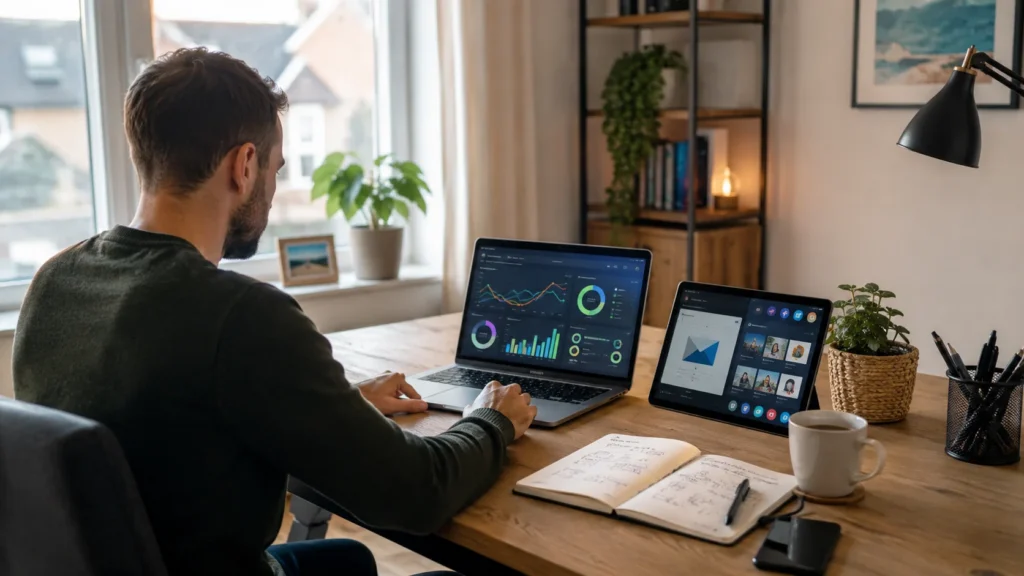
Starting digital marketing from home means learning practical online marketing skills, choosing one focused service, practising on real or sample projects, and building a portfolio that proves ability.
For UK beginners in 2026, the best way to begin is with free or low-cost courses, simple tools, and consistent practice in areas such as SEO, content creation, social media, email marketing, paid ads, analytics, and AI-supported workflows.
Key takeaways:
- Digital marketing can be started from home with a laptop, internet connection, and practical skills.
- Beginners should learn the basics before choosing one specialisation.
- Personal projects help build experience without a formal job.
- A clear portfolio is essential for finding clients or remote roles.
- AI tools can improve productivity, but human review remains important.
What Does It Mean to Start Digital Marketing From Home?
To start digital marketing from home means learning how to promote a business, product, service, or personal brand through online channels while working remotely.
It is a practical career path because most digital marketing tasks can be completed with a laptop, internet connection, online tools, and clear marketing knowledge.
Digital marketing can include search engine optimisation, content creation, social media management, email marketing, paid advertising, analytics, copywriting, and online brand development.
A person working from home may help a business improve its Google visibility, write blog content, manage social media posts, run email campaigns, or review website traffic data.
For a beginner in the UK, the most important point is that digital marketing should not be treated as one single skill. It is a group of connected skills that help businesses attract attention, communicate clearly, and turn online visitors into customers.
Someone learning how to start digital marketing from home does not need to master every area immediately. A better approach is to understand the basics, practise one or two areas, then specialise.
A beginner usually starts with:
- Learning basic digital marketing skills
- Choosing one practical specialisation
- Creating sample work from home
- Building a simple portfolio
- Finding small freelance or remote opportunities
| Digital Marketing Area | What It Means | Home-Based Example |
| SEO | Improving website visibility in search engines | Optimising a local service page for UK searches |
| Content marketing | Creating useful written, visual, or video content | Writing blog posts that answer customer questions |
| Social media marketing | Building awareness and engagement on platforms | Planning posts for Instagram or LinkedIn |
| Email marketing | Sending targeted messages to subscribers | Creating a customer newsletter |
| Paid advertising | Running online adverts to attract traffic or leads | Managing a small Google Ads campaign |
| Analytics | Measuring marketing performance | Reviewing website traffic and enquiries |
Why Is Digital Marketing a Good Home-Based Career in 2026?
Digital marketing is a good home-based career in 2026 because businesses rely heavily on online visibility. Customers often search online before contacting a company, booking a service, visiting a shop, or buying a product.
This means businesses need strong websites, useful content, active social media, positive search visibility, and clear online communication.
For people in the UK who want a flexible career, digital marketing offers a practical way to work from home. It can suit career changers, students, parents, freelancers, small business owners, and people who want remote work.
The entry cost is lower than many traditional business routes because beginners can start learning with free or affordable resources.
Growing Demand From UK Small Businesses
Many UK small businesses understand that digital marketing matters, but they do not always have the time, confidence, or budget to manage it properly.
A local business owner may be excellent at providing a service but may struggle with writing website content, posting on social media, improving Google visibility, or tracking enquiries.
This creates opportunities for beginners who can offer clear, focused, and reliable support. A small business may not need a large agency. It may only need someone to improve its service pages, create monthly posts, write helpful blog content, or explain what is happening on its website.
A digital marketing consultant described this clearly:
“I often meet business owners who know they need online marketing, but they do not know where to begin. I usually tell them to focus on one clear goal first, such as more website enquiries or better local search visibility, instead of trying to be everywhere at once.”
Low Start-Up Costs for Beginners
A major advantage of learning how to start digital marketing from home is that the start-up cost can be low. A beginner does not need an office, stock, expensive machinery, or a large team. They can start with a computer, internet access, free learning platforms, and practical projects.
Useful starting resources include:
- A laptop or desktop computer
- Reliable internet connection
- Free learning platforms
- Basic design and writing tools
- A simple project to practise on
Many useful tools are free at the beginning. Google Analytics, Google Search Console, Canva, Google Trends, Google Docs, Meta Business Suite, and several email marketing platforms can help beginners practise without large monthly costs. Paid tools can be added later when there is a real need.
Flexible Work and Freelance Opportunities
Digital marketing can be shaped around different work goals. Some people start as freelancers. Some apply for remote junior roles. Some use digital marketing to grow their own small business. Others begin with a side project and slowly move into full-time work.
However, flexibility also requires self-discipline. Working from home means the person must manage their own learning, schedule, communication, deadlines, and client expectations. The people who progress are usually those who practise regularly, build proof, and keep improving their skills.
| Benefit | Why It Matters | Practical Example |
| Low cost to start | Beginners can learn without major investment | Using free courses and free tools |
| Remote-friendly work | Most tasks can be completed online | Managing content for a client from home |
| Business demand | Companies need online visibility | Helping a local service business improve enquiries |
| Flexible career path | Can lead to freelance or remote employment | Starting part-time and growing gradually |
What Digital Marketing Skills Should Beginners Learn First?
Beginners should first learn the main skills that appear across most digital marketing work. These include SEO, content creation, copywriting, social media management, email marketing, paid advertising, and analytics. A person does not need to become an expert in every area at the start, but they should understand how each one supports business growth.
Search Engine Optimisation
Search engine optimisation helps websites appear more clearly in search results. It includes keyword research, page titles, headings, meta descriptions, internal links, content quality, page speed, and technical structure.
SEO is valuable for anyone learning how to start digital marketing from home because many businesses want more organic traffic. A beginner can practise SEO by creating a small website or blog, writing useful pages, optimising headings, and checking performance through Google Search Console.
Content Creation and Copywriting
Content creation focuses on producing helpful material for an audience. This can include blog posts, guides, social media content, videos, case studies, newsletters, and website resources. Copywriting focuses more on persuasive words that encourage action.
A beginner can practise copywriting from home by rewriting poor website pages, creating mock landing pages, drafting email campaigns, or writing product descriptions. Copywriting is useful because every digital marketing channel needs clear communication.
Social Media Management
Social media management involves planning, creating, scheduling, publishing, and reviewing content on platforms such as Instagram, Facebook, LinkedIn, TikTok, and X. It also includes understanding audience behaviour and maintaining a consistent brand voice.
For UK small businesses, social media can help build trust and familiarity. A local café, tradesperson, beauty business, estate agent, or consultant may use social media to show work, share updates, answer questions, and stay visible.
Email Marketing
Email marketing helps businesses communicate directly with people who have shown interest. Unlike social media, where algorithms control visibility, email gives businesses a more direct connection with their audience.
A beginner should learn how to write subject lines, structure newsletters, create welcome sequences, segment audiences, and track opens and clicks.
Paid Advertising and PPC
Paid advertising helps businesses reach people quickly through platforms such as Google Ads, Meta Ads, LinkedIn Ads, and TikTok Ads. This can be powerful, but it should be approached carefully because real money is involved.
Before managing client budgets, beginners should understand:
- Campaign objectives
- Audience targeting
- Ad copy and creative testing
- Landing page quality
- Budget control and reporting
Data Analytics and Reporting
Analytics helps digital marketers understand whether their work is producing results. Without analytics, marketing becomes guesswork. A beginner should learn how to read traffic sources, conversions, search queries, engagement, click-through rates, and campaign performance.
| Skill | Why It Matters | Beginner Practice Idea |
| SEO | Helps websites gain organic visibility | Optimise a personal blog post |
| Copywriting | Improves enquiries and conversions | Rewrite a service page |
| Social media | Builds brand awareness | Create a 30-day content calendar |
| Email marketing | Nurtures interested users | Draft a welcome email sequence |
| Paid ads | Brings targeted traffic | Study campaign structures before spending |
| Analytics | Measures what works | Review traffic in Google Analytics |
How Can Someone Learn Digital Marketing From Home?
Someone can learn digital marketing from home by combining structured courses with real practice. Watching tutorials is useful, but progress comes from applying what has been learned.
A beginner can start with recognised platforms such as Google Digital Garage, HubSpot Academy, Semrush Academy, Meta Blueprint, and Google Skillshop. These resources help explain the foundations of SEO, analytics, advertising, email marketing, and content strategy.
The learning process should be practical. After studying keyword research, the person should choose keywords for a sample blog. After learning social media planning, they should create a one-month content calendar. After learning analytics, they should connect a website to tracking tools and review the data.
A simple learning routine can include:
- Study one topic at a time
- Practise the topic on a real or sample project
- Save examples for a portfolio
- Review results and improve the work
| Learning Stage | Focus Area | Practical Task |
| Week 1 to 2 | Digital marketing basics | Understand channels and customer journeys |
| Week 3 to 4 | SEO and content | Write and optimise two blog articles |
| Week 5 to 6 | Social media | Create a content calendar and sample posts |
| Week 7 to 8 | Email and copywriting | Draft a welcome email sequence |
| Week 9 to 10 | Analytics | Track website or social performance |
| Week 11 to 12 | Portfolio | Build case studies and service examples |
Which Digital Marketing Specialisation Should a Beginner Choose?
A beginner should choose a specialisation based on their strengths, interests, and the needs of the market. Trying to offer every digital marketing service at once can make the learning process confusing. A focused service is easier to practise, explain, and sell.
Social Media Management
Social media management is a good option for people who enjoy planning, creativity, brand voice, and audience engagement. It can include content calendars, captions, post designs, scheduling, and simple performance reports.
Copywriting
Copywriting suits people who enjoy writing clearly and persuasively. Businesses need copy for homepages, landing pages, service pages, email campaigns, product descriptions, and adverts.
Content Marketing
Content marketing suits people who enjoy research and education. It is useful for businesses that want to build authority, answer customer questions, and improve organic visibility.
SEO Services
SEO is suitable for analytical learners who enjoy research, structure, and long-term results. Beginners can start with keyword research, on-page optimisation, local SEO, and content improvement.
Paid Ad Campaign Management
Paid advertising is useful for people who enjoy testing, numbers, and performance tracking. It can become a high-value skill, but it needs careful practice because budgets are involved.
| Specialisation | Best Personality Fit | Common Beginner Service | Long-Term Opportunity |
| Social media management | Creative and organised | Monthly post planning | Brand management |
| Copywriting | Strong communicator | Website copy and emails | Conversion copywriting |
| Content marketing | Research-focused | Blog writing | Content strategy |
| SEO | Analytical and patient | Page optimisation | SEO consulting |
| Paid ads | Data-focused | Small ad campaigns | PPC management |
How Can Beginners Build Experience Without a Job?

Beginners can build experience without a formal job by creating their own projects, supporting small organisations, and offering simple services at a beginner level. Experience does not always need to come from employment. It can come from proof of work.
A person could start a blog around a niche topic, build a simple website, create a social media page, or help a local charity improve its online content. These projects allow them to test ideas, make mistakes safely, and learn how digital marketing works in real situations.
For example, a beginner interested in SEO could create a small blog and track keyword rankings over time. Someone interested in social media could grow a niche Instagram or LinkedIn page. A person interested in paid ads could practise by promoting a small personal product with a very limited budget.
Practical ways to gain experience include:
- Creating a personal blog or website
- Managing a sample social media page
- Helping a local charity or small business
- Writing mock website copy or adverts
- Building a small case study from a test project
A small business owner explained this need clearly:
“I did not need someone with ten years of agency experience. I needed someone who could look at my website, explain what was missing, and help me make simple improvements that brought more enquiries.”
The key is to document everything. A beginner should record the starting point, the actions taken, and the results. Even small improvements can become useful case studies.
What Tools Are Needed to Start Digital Marketing From Home?
The tools needed to start digital marketing from home depend on the chosen specialisation, but beginners should start with simple and affordable options. Expensive tools are not required at the beginning.
For SEO, Google Search Console, Google Analytics, Google Trends, and free keyword research tools can be enough to practise. For content and design, Canva, Google Docs, Grammarly, and WordPress can support beginner projects. For social media, Meta Business Suite and native platform analytics are useful. For planning, tools such as Trello, Notion, and Google Sheets can help organise tasks.
AI tools can also support productivity. ChatGPT can help with content ideas, outlines, customer personas, headline variations, and first drafts. However, the final work should always be checked and improved by a human.
| Tool Type | Beginner Tool Examples | Main Use |
| Analytics | Google Analytics, Search Console | Track traffic and search performance |
| Design | Canva | Create social posts and simple graphics |
| Planning | Trello, Notion, Google Sheets | Organise campaigns and tasks |
| Content | Google Docs, Grammarly | Write and edit copy |
| Social media | Meta Business Suite, platform insights | Schedule and review posts |
| AI and automation | ChatGPT, Make.com | Speed up research and workflows |
How Can Someone Build a Digital Marketing Portfolio From Home?
A digital marketing portfolio should show skill, thinking, and results. It does not need to be large or complicated. A beginner can build a simple portfolio using a website, Notion page, PDF, or Google Drive folder.
The portfolio should include a short introduction, selected services, sample work, project summaries, and contact information. Each sample should explain the problem, the work completed, and the result or expected improvement.
A beginner portfolio may include:
- A content calendar
- An SEO audit
- A rewritten homepage
- A blog article
- An email sequence
- A social media campaign plan
For example, a case study could explain that a beginner created four SEO articles for a personal blog, optimised the titles and headings, connected Search Console, and tracked impressions over eight weeks. Even if the numbers are small, the process shows understanding.
A strong portfolio is not just a collection of designs or documents. It should show how the marketer thinks. Clients and employers want to know whether the person understands goals, audience, messaging, and measurement.
How Can Beginners Find Digital Marketing Clients?
Beginners can find clients through local outreach, freelance platforms, LinkedIn, referrals, community groups, and direct networking. The best method depends on the service being offered and the type of client being targeted.
Freelance platforms such as Upwork and Fiverr can help beginners understand what clients ask for, but competition can be strong. Local outreach can be more effective for UK small businesses because many owners prefer working with someone approachable and clear.
A beginner should avoid sending vague messages. A better approach is to identify a specific problem and offer a simple solution. For example, they could mention that a business has no recent blog content, unclear service pages, weak page titles, or inactive social media.
The first client does not need to be large. A small project can lead to a testimonial, referral, or case study. It is better to deliver one clear service well than to promise a complete marketing strategy without enough experience.
| Client-Finding Method | Best For | Beginner Tip |
| Local outreach | UK small businesses | Mention one specific improvement |
| Professional services | Share helpful posts and examples | |
| Freelance platforms | Remote project work | Start with focused services |
| Referrals | Trust-based work | Ask early contacts for introductions |
| Community groups | Local visibility | Offer simple, helpful advice |
How Much Can a Home-Based Digital Marketer Earn in the UK?
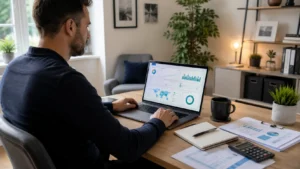
A home-based digital marketer in the UK can earn different amounts depending on skill level, experience, service type, and client base. Beginners often start with smaller fixed-fee projects, while experienced marketers may charge monthly retainers or higher project rates.
Simple services such as social media post creation, blog writing, basic SEO checks, and email setup may be easier for beginners to sell. More advanced services such as paid ads, SEO strategy, conversion copywriting, and analytics consulting may command higher fees once results are proven.
A beginner should not focus only on income at the start. The first goal is to build competence, confidence, and proof. Once a person can show clear examples and results, they can increase pricing gradually.
Monthly retainers are often attractive because they provide more predictable income. For example, a client may pay each month for content creation, SEO support, reporting, or social media management.
What Mistakes Should Beginners Avoid When Starting Digital Marketing From Home?
Beginners should avoid trying to learn every digital marketing channel at the same time. This often leads to shallow knowledge and slow progress. A better approach is to learn the basics, choose one area, and build practical experience.
Another mistake is buying too many tools too early. Tools can help, but they do not replace strategy or skill. A beginner should first understand what problem they are solving.
Beginners should avoid these common mistakes:
- Promising guaranteed rankings or instant sales
- Copying competitor content too closely
- Ignoring analytics and reports
- Offering too many services too early
- Spending money on tools before learning the basics
Poor communication is another issue. Clients value updates, clarity, and honesty. If something is delayed or unclear, it should be explained professionally.
How Can AI Help With Digital Marketing From Home in 2026?
AI can help beginners work faster and improve productivity when used carefully. It can support research, content planning, idea generation, reporting, automation, and campaign organisation.
For someone learning how to start digital marketing from home, AI can make practice easier. It can suggest blog outlines, create customer persona drafts, generate social media ideas, summarise analytics data, and produce variations of ad copy.
However, AI should not be used without review. AI-generated content can be inaccurate, generic, or unsuitable for a specific audience. A digital marketer must check facts, improve tone, add human insight, and make sure the final work fits the business.
AI can help with:
- Drafting content ideas
- Creating campaign outlines
- Summarising reports
- Generating ad copy variations
- Automating repetitive workflows
In 2026, marketers who understand both AI and human behaviour are likely to have an advantage. Businesses do not only need faster content. They need better decisions, clearer messaging, and stronger customer understanding.
What Is the Best Step-by-Step Plan to Start Digital Marketing From Home?

The best plan is to move from learning to practice, then from practice to proof, and from proof to paid work. A beginner should avoid waiting until they feel fully ready. Digital marketing improves through action.
In the first month, the person should learn the basics of SEO, content, social media, email, paid ads, and analytics. The aim is to understand how each area works and how businesses use them.
In the second month, they should choose one specialisation and build a project around it. For example, someone choosing SEO could create a small blog and optimise several pages. Someone choosing social media management could build a complete content plan for a sample brand.
In the third month, they should turn the project into a portfolio. This should include samples, screenshots, explanations, and any early results. After that, they can begin reaching out to small businesses, applying for freelance projects, or looking for remote junior roles.
Simple Beginner Roadmap:
| Timeframe | Main Focus | Output |
| Days 1 to 30 | Learn the foundations | Notes, course certificates, basic understanding |
| Days 31 to 60 | Choose a specialisation | Personal project or sample campaign |
| Days 61 to 90 | Build proof | Portfolio, case studies, service page |
| After 90 days | Find opportunities | Outreach, freelance profiles, applications |
This step-by-step approach keeps the process realistic. Instead of asking how to start digital marketing from home as one large question, the beginner can treat it as a series of small decisions and actions.
The most important step is to begin with one clear skill, practise it properly, and use real work to prove ability. Once the first service becomes strong, other skills can be added gradually.
Conclusion
Starting digital marketing from home is worth considering for people who want a flexible, practical, and skill-based career.
It does not require a large budget, a formal office, or a marketing degree, but it does require patience, consistent learning, and real practice.
For UK beginners in 2026, the strongest route is to learn the basics, choose one specialisation, build personal projects, create a portfolio, and offer useful services to small businesses or clients.
Skills such as SEO, content creation, copywriting, social media management, paid advertising, analytics, and AI-assisted productivity can all support a long-term digital marketing career.
The key is to start small, prove ability through action, and improve with every project. Anyone researching how to start digital marketing from home should focus less on knowing everything and more on building practical skills that solve real business problems.
FAQs
Can digital marketing be started from home with no experience?
Yes, digital marketing can be started from home with no experience. A beginner can learn through free courses, practise with personal projects, and build a portfolio before applying for jobs or finding freelance clients.
How long does it take to learn digital marketing from home?
A beginner can understand the basics within a few months, but becoming confident usually takes longer. With regular practice, someone may be ready to offer simple services within 60 to 90 days.
Is digital marketing suitable for UK small business owners?
Yes, digital marketing is useful for UK small business owners because it can help improve online visibility, attract local customers, generate enquiries, and build trust through content and social media.
Which digital marketing skill is easiest for beginners?
Social media management and copywriting are often easier starting points because they are practical and simple to practise. SEO and paid ads may require more technical understanding and testing.
Does someone need a degree to work in digital marketing?
A degree is not essential for many digital marketing roles. Employers and clients often care more about practical skills, examples of work, results, communication, and the ability to solve marketing problems.
What free tools are useful for beginner digital marketers?
Useful free tools include Google Analytics, Google Search Console, Canva, Google Trends, Meta Business Suite, Google Keyword Planner, and basic project management tools such as Trello or Notion.
Can digital marketing become a full-time career from home?
Yes, digital marketing can become a full-time home-based career. A person can work remotely for a company, freelance for multiple clients, or build a small digital marketing service business.

John covers a wide range of business topics including technology, productivity, startups, digital transformation, and business development for modern companies.
When is the Social Media Ban Happening in UK? | Under-16 Restrictions
The UK government is expected to introduce some form of social media restrictions for under-16s by summer 2026 following a national consultation that closes on 26 May 2026.…
Insights for the Modern
UK Small Business.
Join 15,000+ owners receiving tactical analysis on finance, marketing, and technology. No clutter.
Zero spam. Unsubscribe in one click.