Oil Price Hits 100 Dollars as US-Iran Tensions Shake Global Markets

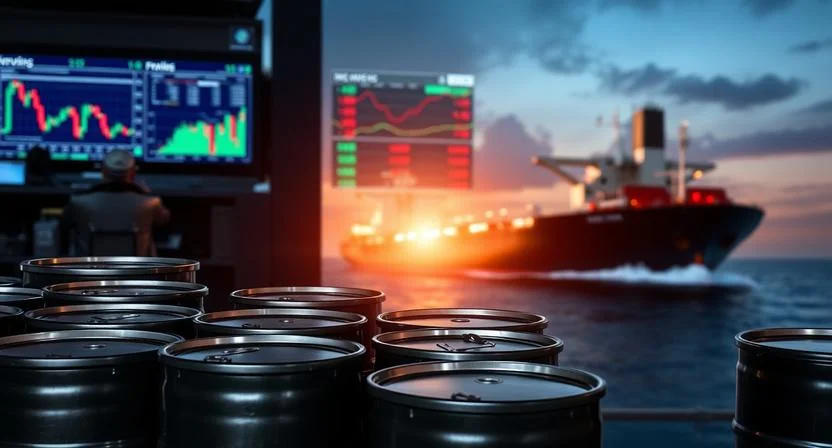
Oil price hits 100 dollars as US-Iran tensions raise fears of disruption to global energy supplies, especially around the Strait of Hormuz. Brent crude has climbed as traders reassess the risk of conflict, weaker peace hopes and possible pressure on shipping routes. For the UK, the impact could be seen in fuel costs, inflation, transport expenses and business confidence.
Key takeaways:
- Brent crude has moved back towards $100 a barrel.
- US-Iran tensions are increasing geopolitical risk.
- Strait of Hormuz disruption remains a major market concern.
- UK petrol, diesel and transport costs could face pressure.
- Global stock markets are reacting unevenly.
Why Has the Oil Price Hit 100 Dollars Again?

Oil price hits 100 dollars as renewed US-Iran tensions raise fears of supply disruption, wider Middle East instability and further pressure on global energy markets.
Brent crude climbed by around 3.5 per cent on Tuesday morning after a brief dip over the bank holiday weekend, as optimism around a possible US-Iran peace deal faded.
The direct answer is simple: oil markets are pricing in geopolitical risk again. Investors had hoped that talks between Washington and Tehran could ease pressure on the Strait of Hormuz, one of the world’s most important oil shipping routes.
However, confirmation of US “self-defence” strikes in southern Iran weakened confidence and pushed traders back towards a risk premium on crude oil.
Key points shaping the market include higher Brent crude prices, uncertainty over US-Iran negotiations, concerns about the Strait of Hormuz, mixed stock market performance and lower UK borrowing costs.
For UK households and businesses, the main concern is whether a $100 oil price feeds into petrol, diesel, transport, food and wider inflation.
US-Iran tensions and the return of geopolitical risk
Oil traders react quickly when military action threatens oil-producing regions or major shipping lanes. Even when supply has not been physically disrupted, the possibility of disruption can be enough to push prices higher.
| Market factor | Current impact | Why it matters |
| Brent crude oil | Near $100 a barrel | Sets a global benchmark for oil pricing |
| US-Iran tensions | Higher risk premium | Traders price in potential supply shocks |
| Strait of Hormuz | Renewed concern | A vital route for global oil shipments |
| UK stocks | FTSE 100 stronger | Energy and defensive shares can benefit |
| UK gilt yields | Falling | Suggests demand for safer assets |
Strait of Hormuz concerns and global oil supply pressure
The Strait of Hormuz remains central to the oil market reaction. If flows through the route are delayed, restricted or threatened, global crude oil prices can rise sharply. That is why even cautious comments from officials can move markets.
A market analyst described the uncertainty clearly:
“I am not treating this as a settled peace story yet. Oil fell when traders hoped for a breakthrough, but the unresolved issues around sanctions, uranium, regional security and Strait of Hormuz flows mean I still see a clear risk premium in crude.”
How Are Global Markets Reacting to the Oil Price Surge?
Global markets are reacting unevenly. The UK’s FTSE 100 was up by about 0.6 per cent to 10,526, while France’s Cac 40 fell by around 1 per cent and Germany’s Dax index slipped by about 0.7 per cent. This shows that rising oil prices do not affect every market in the same way.
Energy stocks can benefit from higher crude prices, while airlines, transport firms, manufacturers and consumer-facing companies can come under pressure. Investors also tend to move towards safer assets when geopolitical uncertainty rises.
Mixed performance across UK and European stock markets
| Index/asset | Movement mentioned | Possible explanation |
| FTSE 100 | Up around 0.6% | Energy exposure and defensive positioning |
| Cac 40 | Down around 1% | European risk sentiment weaker |
| Dax | Down around 0.7% | Industrial shares sensitive to energy costs |
| 30-year UK gilts | Yield down about 5 basis points | Investors seeking safety |
| 10-year UK gilts | Yield down about 5 basis points | Lower risk appetite in bond markets |
Investor Confidence, Volatility and Safe-haven Mo
The market mood has been described as “messy” because oil, equities and bonds are moving in different directions. Oil is rising on supply risk, UK shares are gaining support, and government borrowing costs are easing from recent highs.
This kind of trading pattern usually means investors are not confident enough to take a single strong view. They are watching negotiations closely but are also preparing for sudden changes if the situation escalates.
What Does Brent Crude Near $100 Mean for the UK Economy?
A Brent crude price near $100 matters to the UK because oil is built into many parts of everyday life. It influences fuel prices, delivery costs, business expenses, aviation, farming, logistics and manufacturing.
Higher Petrol, Diesel and Transport Costs
For UK motorists, the effect is not always immediate, but sustained oil strength can eventually appear at the pump. Petrol and diesel prices depend on crude oil, refining costs, currency movements, wholesale margins and taxes.
| Area of UK economy | Likely pressure from $100 oil | Possible result |
| Motorists | Higher wholesale fuel costs | Petrol and diesel could rise |
| Haulage | Higher diesel expenses | Delivery costs may increase |
| Airlines | Higher jet fuel costs | Ticket prices may face pressure |
| Retail | Higher transport bills | Goods may become more expensive |
| Households | Wider inflation risk | Disposable income may tighten |
Inflation Pressure and Household Spending Concerns
Higher oil prices can make inflation stickier. If businesses face higher transport and energy-linked costs, some of those costs may be passed to consumers. That could complicate the outlook for the Bank of England, especially if inflation remains above target.
An energy market consultant explained the consumer risk in direct terms:
“I would not expect every household to feel a $100 oil price overnight, but I would watch fuel stations, delivery-heavy retailers and travel costs first. If crude stays high for several weeks, the pressure becomes much harder for businesses to absorb.”
Could US-Iran Negotiations Calm Energy Markets?
US-Iran negotiations could calm energy markets if they create a credible path towards reduced military tension and normalised shipping flows. However, traders are unlikely to fully remove the risk premium until there is clear progress on the most difficult issues.
Those issues include sanctions, nuclear activity, regional security and the safety of shipping through the Strait of Hormuz. A ceasefire extension or positive political statement may help in the short term, but markets usually need evidence that oil supply routes are secure.
At present, traders appear to be balancing two possibilities: diplomacy could reduce risk, or a breakdown in talks could send prices even higher. That uncertainty is why oil prices remain volatile.
Why Is the Strait of Hormuz So Important for Oil Traders?
The Strait of Hormuz is important because it is a narrow waterway linking major oil producers to global buyers. Any threat to shipping through the route can affect global supply expectations, even if actual production remains unchanged.
For oil traders, the Strait is not only a shipping route. It is a risk signal. When tensions rise near the Gulf, market participants often reassess how much oil could be delayed or disrupted.
Only a few factors can move crude oil as quickly as a threat to major supply routes:
- Military escalation near key oil infrastructure
- Sanctions affecting major producers
- Shipping disruption in strategic waterways
- Sudden changes in OPEC production policy
How Are UK Borrowing Costs Moving During the Oil Market Shock?
UK borrowing costs are easing despite the oil market shock. The yield on 30-year UK Government bonds, known as gilts, fell by around five basis points to 5.53 per cent. Ten-year gilt yields also fell by around five basis points to 4.86 per cent.
This is notable because long-term borrowing costs had recently reached their highest level for 28 years. Falling gilt yields suggest investors may be moving towards safer government debt as uncertainty rises.
| UK bond measure | Movement | What it suggests |
| 30-year gilt yield | Down to about 5.53% | Safety demand increased |
| 10-year gilt yield | Down to about 4.86% | Investors reassessing risk |
| Recent long-term yields | Previously near 28-year highs | Borrowing pressure remains significant |
| Market interpretation | Risk-off behaviour | Bonds attract defensive flows |
Lower yields may help calm some pressure on government financing, but they do not remove the wider economic challenge. If oil prices remain elevated, inflation expectations could become more difficult to manage.
What Could Happen Next If Oil Prices Stay Around $100?

If oil prices stay around $100, the impact will depend on duration. A short spike may unsettle markets but have limited lasting effect. A prolonged period at this level could affect inflation, consumer spending and company margins.
Businesses with heavy fuel use may face the sharpest pressure. Logistics, airlines, construction, food distribution and manufacturing are especially sensitive to energy costs. For consumers, the biggest visible impact would likely be petrol, diesel and travel prices.
Markets will now watch several signals closely: whether US-Iran talks continue, whether shipping routes remain open, whether OPEC responds, and whether central banks view higher oil as a temporary shock or a longer inflation risk.
How Should Businesses and Consumers Prepare for Higher Oil Prices?
Businesses and consumers should prepare carefully rather than panic. A $100 oil price does not automatically mean a crisis, but it does increase cost risk.
For businesses, the practical response is to review transport costs, supplier contracts, delivery pricing and fuel exposure. For consumers, it may mean watching fuel prices, budgeting for travel and avoiding unnecessary energy waste.
A sensible preparation plan may include:
- Reviewing fuel-heavy expenses
- Comparing supplier and logistics costs
- Monitoring petrol and diesel price changes
- Building flexibility into travel and delivery budgets
What Is the Wider Outlook for Global Oil Markets?

The wider outlook remains uncertain. Oil price hits 100 dollars because traders are responding to risk, not only current supply levels. If negotiations improve and shipping confidence returns, crude could ease. If tensions worsen, prices may climb further.
For the UK, the key issue is whether the oil surge becomes temporary market noise or a lasting cost shock. A short-term move may be manageable. A longer period near $100 could challenge inflation, business costs and household budgets.
Conclusion
Oil price hits 100 dollars as US-Iran tensions shake global markets and renew concerns about the Strait of Hormuz. Brent crude’s rise reflects fear, uncertainty and the possibility of supply disruption rather than a simple demand story.
For the UK, the immediate picture is mixed. The FTSE 100 has shown strength, European markets have weakened, and UK gilt yields have eased. Yet the longer-term concern remains clear: if oil stays near $100, petrol prices, transport costs, inflation and business margins could all come under pressure.
Markets are now waiting for clarity from US-Iran negotiations. Until then, crude oil is likely to remain sensitive to every diplomatic update, military development and signal from global energy traders.
FAQs
Why does the oil price rise during geopolitical tension?
Oil prices rise during geopolitical tension because traders fear supply disruption. Even if oil is still flowing, the risk of blocked shipping routes, sanctions or damaged infrastructure can push prices higher.
How does a $100 oil price affect UK petrol prices?
A $100 oil price can increase UK petrol prices if it remains high long enough to affect wholesale fuel costs. Pump prices also depend on taxes, refining costs, exchange rates and retailer margins.
Can higher oil prices increase inflation in Britain?
Yes, higher oil prices can increase inflation because fuel and transport costs affect many goods and services. If businesses pass higher costs to customers, consumer prices can rise.
Why do traders watch Brent crude oil prices?
Traders watch Brent crude because it is a major global benchmark. It helps price oil across international markets and is especially relevant for Europe, including the UK.
What role does the Strait of Hormuz play in global energy supply?
The Strait of Hormuz is a key route for oil shipments from the Gulf. Any disruption or threat in the area can create concern about global supply and push crude prices higher.
Could oil prices fall again if peace talks improve?
Oil prices could fall if peace talks produce credible progress and reduce fears of supply disruption. However, traders may remain cautious until shipping routes and regional security look stable.
How can UK businesses manage rising fuel costs?
UK businesses can manage rising fuel costs by reviewing delivery routes, renegotiating supplier terms, improving energy efficiency and adjusting pricing strategies where necessary.
Blog Post Schema:

John covers a wide range of business topics including technology, productivity, startups, digital transformation, and business development for modern companies.

Can PIP Be Stopped Without Notification?
Yes, a PIP payment can appear to stop before you receive or notice a letter, but the DWP should normally give you written notice when it makes an…

Crypto Tax Warning Letters HMRC: 81,000 Investors Targeted
HMRC has sent 81,000 warning letters to cryptocurrency holders over the past 12 months, according to new figures reported by the BBC, as the tax authority increases scrutiny…
Insights for the Modern
UK Small Business.
Join 15,000+ owners receiving tactical analysis on finance, marketing, and technology. No clutter.
Zero spam. Unsubscribe in one click.