Andy Burnham Bus Pass Funding Plan Brings 24-Hour Free Travel for Disabled People

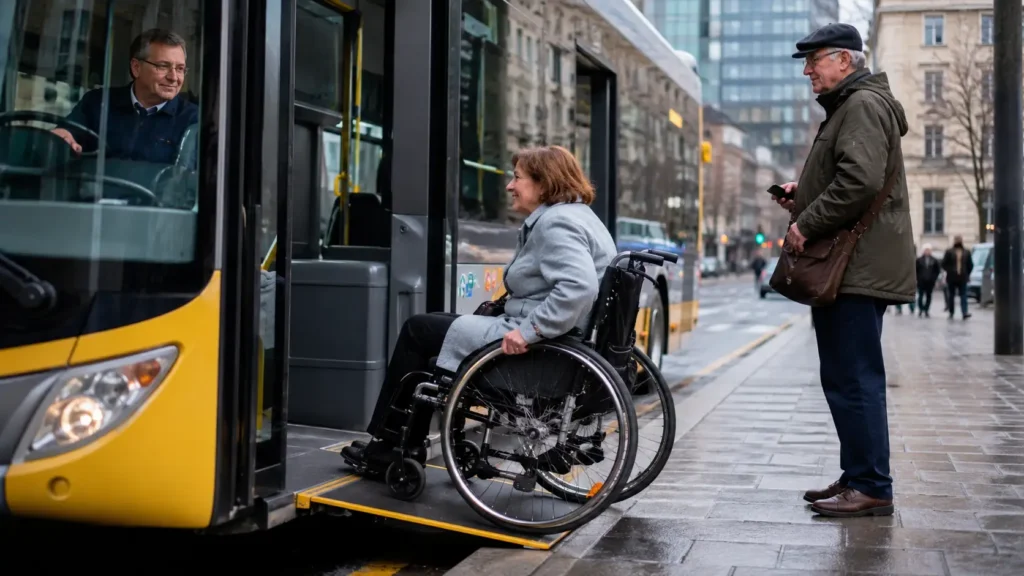
Prime Minister Andy Burnham has announced that eligible disabled bus pass holders in England will be able to travel free at any time of day from 1 April 2027.
The change removes the national weekday time restriction that currently limits most passes to 9.30am–11pm, unless a local authority funds extra concessions. The plan is backed by £60 million from existing government budgets.
→ Start date: 1 April 2027, when the government says the national time restriction will be removed.
→ Funding: £60 million — £40 million from the Department for Work and Pensions (DWP) and £20 million from the Department for Transport (DfT).
The announcement forms part of the government’s wider focus on transport affordability and household costs. Recent cost of living measures have also included transport support alongside other interventions aimed at reducing everyday expenses.
What Has Andy Burnham Announced?
Under the current national rules in England, eligible disabled bus passes can generally be used free of charge between 9.30am and 11pm Monday to Friday, as well as throughout Saturdays, Sundays and bank holidays.
Councils can choose to provide more generous local concessions.
The government’s 24-hour bus travel announcement changes that position from 1 April 2027. Eligible disabled pass holders will be able to use their passes without the national time-of-day restriction.
That distinction matters: the announcement does not make every concessionary bus pass unrestricted. It specifically concerns people who qualify for a disabled person’s bus pass.
The BBC report supplied for this article estimates that about one million people could benefit from the change.
Why Is the Government Removing the 9.30am Restriction?
The main argument is that disabled people do not necessarily travel only during traditional off-peak hours.
Someone starting an early shift, attending morning training or travelling to a healthcare appointment can need a bus before 9.30am. Evening employment and social activities can also extend beyond traditional working hours.
The government says removing the restriction should improve access to workplaces, education, training and other opportunities while reducing some transport costs.
It presents the measure as removing a practical barrier rather than as a guarantee that employment levels will rise.
This employment angle also connects with wider debates around disability support. Recent PIP claimant feedback has highlighted issues including employment, mobility, workplace support and barriers faced by disabled people.
How Will the £60 Million Bus Pass Plan Be Funded?
The Andy Burnham bus pass funding commitment totals £60 million.
| Funding source | Contribution |
| Department for Work and Pensions | £40 million |
| Department for Transport | £20 million |
| Total | £60 million |
The government has confirmed that the money will come from existing DWP and DfT budgets, rather than being presented as an entirely separate new departmental allocation.
That funding method has attracted political criticism.
In the BBC report supplied for this article, a Conservative Party spokesman characterised the measure as moving money around existing departmental budgets and questioned how the government’s expanding policy commitments would be financed.
The confirmed fact is narrower: £40 million is being contributed by DWP and £20 million by DfT. Debate over whether that represents the best use of departmental budgets is a political judgement rather than a change to the announced funding arrangement.
Who Will Get 24-Hour Free Bus Travel?
The change applies to people who hold an eligible disabled person’s bus pass in England.
Eligibility is not automatic simply because someone has a medical condition or identifies as disabled. The statutory categories are set out under the Transport Act 2000, and local authorities assess applications.
Who Qualifies for a Disabled Bus Pass?
The government lists seven statutory categories, including people who are:
- blind or partially sighted;
- profoundly or severely deaf;
- without speech;
- unable or virtually unable to walk because of a disability;
- without arms or unable to use both arms;
- living with a qualifying learning disability; or
- likely to be refused a driving licence on specified medical grounds, excluding drug or alcohol misuse.
People who are unsure whether they qualify can use the government’s disabled bus pass service to find the relevant local council.
When Does 24-Hour Free Bus Travel Start?
The national change is scheduled to take effect on 1 April 2027. Until then, existing national rules continue unless a council or transport authority already provides a more generous concession.
That means pass holders should not assume that the announcement itself immediately removes the 9.30am restriction.
Where travel before 9.30am is needed before April 2027, passengers should check their local authority’s current rules.
Transport-related problems can also affect benefit commitments; guidance around Universal Credit appointments explains how genuine transport disruption and disability-related barriers may be relevant in individual cases.
Greater Manchester Already Removed the Restriction
Burnham’s national announcement follows an earlier policy introduced while he was Mayor of Greater Manchester.
Greater Manchester permanently removed its pre-9.30am restriction for older and disabled concessionary pass holders from 1 March 2026, allowing round-the-clock free travel on Bee Network buses for qualifying local pass holders.
That local change followed an earlier trial and gave the government a recent example of unrestricted concessionary travel operating within a major English city region.
The England-wide policy is nevertheless a national change rather than simply an extension of the Bee Network scheme.
What Could the Change Mean for Disabled Workers?
For some disabled workers, the biggest practical difference could be the ability to use a concessionary pass for shifts that fall outside traditional office hours.
That could matter in sectors such as hospitality, retail, healthcare, cleaning, logistics and other businesses where employees may start before 9.30am or finish late in the evening.
For example, an eligible pass holder whose shift begins at 8am may currently have to pay for the journey to work even though the same pass provides free travel later in the day. From 1 April 2027, the government’s plan would remove that national timing barrier.
The effect will vary by individual, route availability and local bus services. Free travel does not solve problems such as inaccessible stops, unreliable routes or a lack of early and late services.
What Does the Bus Pass Change Mean for Small Businesses?
For small employers, the policy does not create a new payroll subsidy or direct business grant. Its importance is more indirect.
Businesses employing eligible disabled staff could find that some workers have lower commuting costs and greater flexibility to reach early or late shifts.
It may also remove one practical obstacle for candidates who previously faced additional transport costs outside concessionary hours.
Employers should not, however, assume that free bus travel removes the need to discuss accessibility individually.
Under UK equality rules, employers must make reasonable adjustments where required so disabled workers or workers with health conditions are not substantially disadvantaged.
Adjustments can include changes to working arrangements, equipment or the workplace itself. The government’s reasonable adjustments guidance explains the employer duty.
A transport policy can remove one barrier; it does not replace wider workplace accessibility responsibilities.
How Have Disability Groups Responded?
Disability and passenger organisations have broadly welcomed the announcement.
Scope said unrestricted bus travel could put money back into people’s pockets while removing barriers to work, education and healthcare. Mencap linked the change to equal opportunities for disabled people to work and participate in society.
Bus Users UK argued that national rules would also reduce differences caused by varying local concession policies.
The supplied BBC report also quotes Transport for All describing the decision as a significant win for disabled people and highlighting the confusion created when travel-pass rules differ by area.
The positive response reflects a wider point: the value of the policy is not just the price of an individual journey, but whether people can make that journey at the time they actually need to travel.
How Does England Compare With the Rest of the UK?
Transport concessions are devolved, so arrangements differ across the UK.
In Scotland, eligible disabled people can use a National Entitlement Card for free travel on qualifying local and long-distance bus services at any time of day.
In Wales, eligible disabled people can receive free bus travel through the national concessionary system.
Northern Ireland operates a different SmartPass structure. Registered blind people and war disablement pensioners can qualify for free travel, while several other disability categories receive half-fare concessions.
England’s April 2027 change therefore brings its national disabled bus concession closer to the unrestricted approach already used in Scotland.
What Should Disabled Bus Pass Holders Do Next?
No immediate change is required simply because the announcement has been made.
Existing pass holders should:
- Keep using their current pass under existing rules until the national change comes into force.
- Check local concessions, because some councils already allow travel outside the standard national hours.
- Check the pass expiry date and renew through the usual local authority process where necessary.
- Look for implementation updates before April 2027, particularly from the local council or transport authority.
- Check individual services before travelling, especially where early-morning or late-night bus availability is limited.
Conclusion
The Andy Burnham bus pass funding plan is a significant change to England’s concessionary travel rules for disabled people.
From 1 April 2027, eligible disabled bus pass holders are due to gain free bus travel without the current national weekday time restriction, backed by £60 million split between DWP and DfT.
For disabled workers, the practical benefit could be easier access to early shifts, evening work, training and appointments without having to pay simply because the journey falls outside concessionary hours.
For small businesses, it may remove one commuting barrier for some existing and prospective employees.
But transport affordability is only one part of accessibility, and employers should continue considering individual working arrangements and reasonable adjustments where required.
FAQs
Is disabled bus travel becoming free 24 hours a day in England?
Yes. The government has announced that eligible disabled bus pass holders in England will be able to use their passes free at any time of day from 1 April 2027.
When does 24-hour free bus travel start?
The national change is scheduled to start on 1 April 2027. Until then, the existing national weekday restriction generally remains unless a local authority provides an additional concession.
Who qualifies for the new free bus travel rules?
The change applies to holders of eligible disabled person’s bus passes. Eligibility is based on statutory disability categories and applications are administered by local authorities.
How is Andy Burnham’s bus pass plan funded?
The £60 million funding package consists of £40 million from the Department for Work and Pensions and £20 million from the Department for Transport, drawn from existing departmental budgets.
Will the 9.30am disabled bus pass restriction be removed?
Yes. The government says the national weekday time restriction will be removed for eligible disabled bus pass holders from 1 April 2027. Councils that already offer wider concessions can continue to have different arrangements before that date.

Jennifer contributes business-focused articles covering modern business trends, digital growth, entrepreneurship, and practical insights designed to support startups and SMEs.
Can PIP Be Stopped Without Notification?
Yes, a PIP payment can appear to stop before you receive or notice a letter, but the DWP should normally give you written notice when it makes an…

Crypto Tax Warning Letters HMRC: 81,000 Investors Targeted
HMRC has sent 81,000 warning letters to cryptocurrency holders over the past 12 months, according to new figures reported by the BBC, as the tax authority increases scrutiny…
Insights for the Modern
UK Small Business.
Join 15,000+ owners receiving tactical analysis on finance, marketing, and technology. No clutter.
Zero spam. Unsubscribe in one click.