Armed Forces Pay Rise 2026/27 Confirmed: New Salaries And Backpay


The Armed Forces pay rise for 2026/27 is 3.6%. The Government accepted the Armed Forces’ Pay Review Body recommendations in full, with the increase applying retrospectively from 1 April 2026.
Starting pay for Other Ranks has risen to £27,282, while the average Armed Forces salary is now approximately £45,710.
| Key Detail | Confirmed 2026/27 Position |
| Armed Forces Pay Rise | 3.6% |
| Effective Date | 1 April 2026 |
| Announcement Date | 9 June 2026 |
| Other Ranks Starting Salary | £27,282 |
| Officer Starting Salary | Approximately £35,925 |
| Average Armed Forces Salary | Around £45,710 |
| Previous Pay Rise | 4.5% in 2025/26 |
| Backdated Pay | Owed From 1 April 2026 |
| Government Decision | Recommendations Accepted In Full |
The award covers basic pay and is accompanied by increases to several specialist payments, retention incentives and compensatory allowances.
However, changes to accommodation charges mean the effect on disposable income will differ between personnel.
Last Updated: 04.09.2026
What Is The Confirmed Armed Forces Pay Rise For 2026/27?
Members of the UK Armed Forces covered by the Armed Forces’ Pay Review Body received a 3.6% increase in base pay for 2026/27. The Government accepted the independent review body’s recommendations in full.
The new rates apply from 1 April 2026, even though the decision was formally announced on 9 June 2026. This means eligible personnel are entitled to the difference between their previous and updated pay rates from the beginning of the financial year.
The settlement is the third consecutive above-inflation Armed Forces pay award. It follows a 6% increase in 2024 and a 4.5% increase in 2025.
The Government describes the combined headline awards across these three pay rounds as a cumulative 14.1%. This figure adds together the three headline percentages.
An individual’s actual salary growth may differ because of promotions, incremental progression, trade supplements and specialist payments.
How Has The Armed Forces Pay Rise Changed From 2025 To 2026?
The Armed Forces pay rise decreased from 4.5% in 2025/26 to 3.6% in 2026/27. This represents a reduction of 0.9 percentage points in the annual headline award, although personnel still received an increase in their basic salary.
| Pay Round | Headline Increase | Effective Date | Main Context |
| 2024/25 | 6% | 1 April 2024 | High living costs and serious recruitment pressures |
| 2025/26 | 4.5% | 1 April 2025 | Falling inflation but continued financial and retention concerns |
| 2026/27 | 3.6% | 1 April 2026 | Lower inflation, moderating wage settlements and workforce shortages |
Why Did The Pay Rise Fall From 4.5% To 3.6%?
The lower percentage largely reflects changes in inflation and wage growth.
When the 2026 report was completed, Consumer Prices Index inflation was around 3%, while CPIH inflation was approximately 3.2%. These rates were lower than those influencing earlier pay rounds.
The review body also considered median pay settlements of approximately 3.2% across the wider economy. However, it concluded that matching this lower figure could weaken the fragile recovery in military recruitment and retention.
Several factors supported the final 3.6% recommendation:
- Lower Inflation Than In Previous Pay Rounds
- Moderating Private-Sector Pay Settlements
- Continuing Shortfalls In Trained Personnel
- Competition For Technical And Specialist Workers
- Increased Operational Demands
- Pressure On The Defence Budget
- The Need To Protect Recruitment Progress
- Ongoing Concerns About Morale And Retention
A smaller headline percentage does not mean military salaries have fallen. The 3.6% increase is applied to the updated 2025/26 pay rates, giving personnel a higher basic salary for 2026/27.
How Much More Will Armed Forces Personnel Receive?
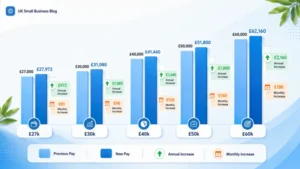
The exact increase depends on a person’s existing salary. A 3.6% rise provides an additional £36 a year for every £1,000 of eligible annual basic pay.
| Previous Annual Pay | Annual Gross Increase | Monthly Gross Increase | New Annual Pay |
| £27,000 | £972 | £81 | £27,972 |
| £30,000 | £1,080 | £90 | £31,080 |
| £40,000 | £1,440 | £120 | £41,440 |
| £50,000 | £1,800 | £150 | £51,800 |
| £60,000 | £2,160 | £180 | £62,160 |
These examples are illustrations rather than official military pay points. Official salaries depend on rank, increment level, trade supplement and eligibility for additional payments.
The monthly figures are also gross amounts. The increase reaching a person’s bank account may be lower after deductions such as Income Tax, National Insurance, accommodation charges, student loan repayments and other authorised deductions.
What Are The New Armed Forces Salaries For 2026/27?
The updated pay scales include a 3.6% increase across the AFPRB remit group. Different rates apply according to rank, length of service, trade and position on the relevant pay scale.
Starting Salary For Other Ranks
The starting salary for Other Ranks has increased from £26,334 to £27,282. This is an annual rise of £948 and benefits approximately 14,250 junior personnel.
The figure applies to the most junior sailors, soldiers and aviators beginning a full-time Armed Forces career. It also helps keep military starting pay aligned with the National Living Wage.
Starting Salary For Officers
The starting salary for junior officers has risen to approximately £35,925, an increase of around £1,250 a year.
Progression through the officer pay scale depends on rank, experience and increment level. An officer who is promoted or moves to another increment may receive an increase that differs from the 3.6% headline figure.
Average Armed Forces Salary
The Government estimates that the average Armed Forces salary has increased by approximately £1,650 to around £45,710.
This is an average across the Armed Forces and should not be treated as the salary received by a typical person at every rank. Junior personnel may earn considerably less, while senior officers and personnel receiving specialist supplements may earn more.
Who Receives the 3.6% Armed Forces Pay Rise?
The award applies to all personnel within the 2026 AFPRB remit group. For the first time, this remit also includes senior military officers who were previously considered separately.
Those covered include:
- Royal Navy Personnel
- Royal Marines
- British Army Personnel
- Royal Air Force Personnel
- Senior Military Officers
- Eligible Regular Personnel
- Eligible Reserve Personnel
- Personnel Receiving Qualifying Specialist Payments
The 3.6% award should not be assumed to cover everyone working within defence. MOD civil servants, private contractors and Royal Fleet Auxiliary employees are subject to separate employment and pay arrangements.
Veterans who are no longer serving do not receive the serving-personnel pay award. Armed Forces pensions already in payment are covered by a separate pension uprating process.
When Will The Armed Forces Pay Rise Be Backdated?
The new salary rates took effect from 1 April 2026. Because the award was announced on 9 June, eligible personnel became entitled to arrears covering the difference between their old and new rates from the effective date.
The date on which arrears appear may depend on payroll implementation. Personnel should check their payslips and official internal pay communications rather than assuming the payment will arrive in a particular month.
Backpay can be estimated using the following calculation:
Previous Monthly Basic Pay × 3.6% × Number Of Eligible Months
For example, someone previously earning £3,000 a month would receive a gross monthly increase of £108. If two complete months of arrears were owed, the estimated gross backpay would be £216.
The actual amount paid could differ because of payroll dates, tax, National Insurance, changes in rank and other deductions.
Which Military Payments And Allowances Also Increased?
The 2026/27 settlement is broader than the headline increase in basic pay. Several targeted payments and compensatory allowances also increased by 3.6% from 1 April 2026.
These include:
- Recruitment And Retention Payments
- Volunteer Reserves’ Training Bounty
- Defence Clinical Impact Awards
- Trainer Pay And Associate Trainer Pay
- Cyber Skills Payments
- Engineering Supplement Payment
- Defence Human Intelligence Skills Payment
- Eligible Skills Based Supplements
- Professional Supplement For Aircrew
- Nuclear Skills Supplements
- Compensatory Allowances
These payments are not available to every member of the Armed Forces. Eligibility usually depends on a person’s role, qualifications, duties, operational requirements or length of service.
What Changed For Military Nurses And Submariners?
Military nurses and eligible submariners received additional measures designed to address shortages in specialist roles.
New Military Nursing Pay Structure
A Nursing Professional Pay Spine is being introduced from 1 October 2026 for nursing ranks up to and including OF3. A separate Senior Nursing Officer Pay Spine will apply to eligible nurses at OF4 to OF6.
The aim is to create a military nursing pay structure that better recognises professional qualifications, skills and career progression.
The Recruitment and Retention Payment for nursing is scheduled to be removed 12 months after the new nursing pay spines are introduced.
Military nursing pay will then move to a three-year review cycle, with the next specific review planned for the 2029 pay round.
Increased Nurses’ Golden Hello
The nurses’ Golden Hello has increased to £50,000 from 1 April 2026. It is intended to attract eligible direct entrants into nursing specialisms experiencing workforce shortages.
The £50,000 payment is not an automatic bonus for every military nurse. Applicants must meet the relevant entry, role and eligibility requirements.
Additional Submariner Retention Payment
A second retention payment has been introduced for specified submariner groups. It applies to eligible OR7 submariners with between 14 and 16 years of service and certain OF3 Warfare and Engineer Officers with 12 years of service.
This targeted measure is intended to retain experienced personnel in roles where replacing specialist knowledge can be difficult and expensive.
How Are Service Accommodation Charges Changing?
Some personnel will face higher Service Family Accommodation or Single Living Accommodation charges alongside the pay rise.
| Accommodation Type | 2026/27 Increase | Backdated |
| SFA CAAS Bands A To F | 3.8% | No |
| SFA CAAS Bands G And Below | No Increase | No |
| SLA Grade 1 | 3.8% | No |
| SLA Grade 2 | 2.5% | No |
| SLA Grade 3 | 1.3% | No |
| SLA Grade 4 | No Increase | No |
| Furniture Charges | No Increase | No |
Unlike the basic-pay award, these accommodation increases are not backdated.
The different rates reflect the condition and grading of the accommodation.
Personnel in the lowest SFA bands or Grade 4 SLA will not face an increase, while those living in higher-grade accommodation may see part of their gross pay increase offset by higher charges.
The review body continued to raise concerns about inconsistent accommodation standards, including reported problems involving mould, heating, hot water and maintenance delays.
Higher charges therefore remain a sensitive issue for personnel whose accommodation has not improved.
Does The 3.6% Rise Apply To Total Military Earnings?
The headline 3.6% award applies to base pay. A person’s total military remuneration may include several additional elements.
These can include:
- X-Factor
- Trade Supplements
- Specialist Skills Payments
- Recruitment And Retention Payments
- Operational Allowances
- Compensatory Allowances
- Rank Or Increment Progression
Official military salary tables generally include X-Factor where applicable. The full X-Factor rate is 14.5% for eligible full-time UK Regular personnel, with other rates applying according to commitment and seniority.
X-Factor recognises disadvantages and demands associated with military service, including separation, restrictions on personal freedom, operational risk and the possibility of being required to work irregular hours.
Personnel should therefore use their official pay scale and payslip when checking their new salary rather than applying 3.6% to every item they receive.
Is The 2026/27 Armed Forces Pay Rise Above Inflation?
The Government described the 3.6% settlement as an above-inflation award. When the AFPRB completed its assessment, CPI inflation was approximately 3% and CPIH was around 3.2%.
The award was therefore above both measures at the point the recommendation was made.
However, inflation can rise or fall during the financial year. The 3.6% settlement does not guarantee that military pay will remain ahead of inflation throughout the entire 2026/27 period.
The review body decided that an award closer to the wider-economy median of 3.2% could undermine recruitment and retention. It therefore recommended a slightly higher increase while recognising the financial limits affecting the defence budget.
Why Did The AFPRB Recommend A 3.6% Increase?

Recruitment and retention were central to the decision. Although intake figures had begun to improve, the Armed Forces continued to experience shortages in trained personnel and specialist roles.
The review body considered:
- The Number Of Personnel Joining And Leaving
- Shortfalls In Trained Strength
- Competition With Civilian Employers
- Inflation And Household Costs
- Pay Settlements Across The Wider Economy
- Operational Demands
- International Security Risks
- Service Morale
- Defence Budget Affordability
- The Wider Military Employment Package
Pay was not viewed as the only factor affecting retention. Accommodation quality, family support, training opportunities, workload and access to welfare services also influence whether personnel remain in service.
Nevertheless, the review body considered pay an important way to recognise military service and prevent the recent improvement in recruitment from being reversed.
Are Armed Forces Pensions Increasing In 2026?
Eligible public-service pensions already in payment increased by 3.8% from 6 April 2026. This is separate from the 3.6% Armed Forces pay award for serving personnel.
A pension that had been in payment for a full year generally received the complete 3.8% increase. A pension in payment for less than a year may receive a proportionate adjustment based on the number of eligible months.
The pension increase should not be combined with the serving-personnel award. One changes eligible pensions already being paid, while the other changes the pay rates of current Armed Forces personnel.
A higher pensionable salary may also affect the future pension benefits earned by serving members, depending on the rules of their Armed Forces pension scheme.
What Happens After The 2026/27 Pay Award?
The 2026/27 award is no longer under review. The Government has made its decision, the updated rates apply from 1 April 2026 and the focus has moved to payroll implementation.
Personnel should review:
- Their Updated Basic-Pay Rate
- Any Backdated Salary Included
- Changes To Specialist Payments
- Accommodation Charge Adjustments
- Tax And National Insurance Deductions
- Promotion Or Increment Changes
The 2027 pay round is a separate process. The 3.6% settlement does not determine or guarantee the percentage that may apply in the following financial year.
Conclusion
The Armed Forces pay rise for 2026/27 is a confirmed 3.6%, backdated to 1 April 2026. Starting pay for Other Ranks has increased to £27,282, while the average military salary is now around £45,710.
Several specialist payments and allowances also increased, with additional changes introduced for nurses and submariners. However, accommodation charges and payroll deductions mean the improvement in take-home income will vary between personnel.
FAQs
Is The Armed Forces Pay Rise Confirmed For 2026/27?
Yes. The Government accepted the AFPRB recommendation for a 3.6% increase in base pay.
When Did The Armed Forces Pay Rise Take Effect?
The new rates apply retrospectively from 1 April 2026, although the award was announced on 9 June 2026.
Will Armed Forces Personnel Receive Backdated Pay?
Yes. Eligible personnel are entitled to the difference between their old and new rates from 1 April 2026.
What Is The New Starting Salary For Other Ranks?
The starting salary for Other Ranks increased to £27,282 for 2026/27.
Does The 3.6% Pay Rise Apply To Reservists?
Eligible Reserve payments are included, with the Volunteer Reserves’ Training Bounty also increasing by 3.6%.
Are Military Accommodation Charges Increasing?
Some charges have increased. SFA Bands A to F and SLA Grade 1 rose by 3.8%, while lower-grade accommodation received smaller or no increases.
Did Armed Forces Pensions Increase By 3.6%?
No. Eligible public-service pensions already in payment increased separately by 3.8% from 6 April 2026.
Will Every Service Member Receive An Extra £1,650?
No. The £1,650 figure is the estimated increase in the average Armed Forces salary. Each person’s increase depends on their basic pay and circumstances.

Jennifer contributes business-focused articles covering modern business trends, digital growth, entrepreneurship, and practical insights designed to support startups and SMEs.

Does Gross Misconduct Always Lead to Dismissal?
No. Gross misconduct does not always lead to dismissal. It can be serious enough to justify dismissal without notice, including for a first offence, but an employer should…

Andy Burnham Whitehall Job Cuts Begin Under Devolution Push
Andy Burnham’s government has begun the first operational stage of its Whitehall devolution push, with civil servants due to be seconded into regional mayoral authorities from autumn 2026.…
Insights for the Modern
UK Small Business.
Join 15,000+ owners receiving tactical analysis on finance, marketing, and technology. No clutter.
Zero spam. Unsubscribe in one click.