Is BrewDog Going Bust? | Collapse of a £1bn Beer Giant

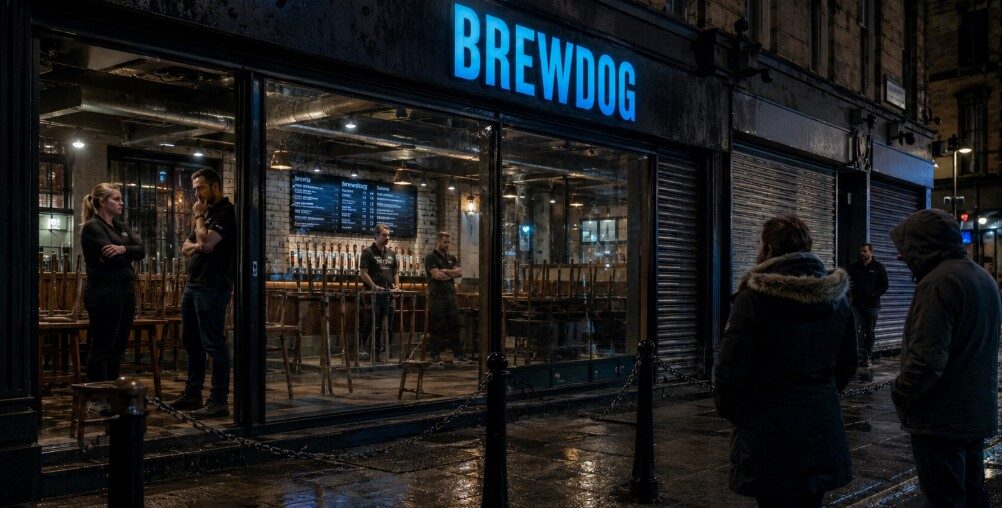
Yes, BrewDog has entered administration in 2026, but the company has not completely disappeared. Parts of the business, including the Ellon brewery and selected bars, were acquired by Tilray, while dozens of locations closed and hundreds of employees lost their jobs.
For many customers and investors, the collapse marks the end of BrewDog’s rapid-growth era and raises serious questions about how one of the UK’s biggest craft beer success stories unravelled so quickly.
Key takeaways:
- BrewDog entered administration after years of financial pressure
- Tilray purchased key assets, including the brewery and some bars
- Hundreds of jobs were lost during restructuring
- Equity Punk investors may receive little or no return
- Rapid expansion and rising hospitality costs worsened losses
- Workplace controversies also damaged public trust in the brand
- The BrewDog brand may survive under new ownership, but in a smaller form
How Did BrewDog Go From Craft Beer Success Story to Financial Crisis?
BrewDog’s rise was once viewed as one of the biggest modern success stories in British business. Founded in Scotland in 2007 by James Watt and Martin Dickie, the company transformed from a small craft brewery into a globally recognised beer brand.
The company gained attention through bold marketing, anti-corporate branding, and the popularity of Punk IPA. BrewDog positioned itself as a rebellious alternative to mainstream beer companies and quickly built a loyal following across the UK.
Several factors helped fuel its rapid growth:
- Aggressive social media and publicity campaigns
- Expansion into bars, hotels, and international markets
- The “Equity for Punks” crowdfunding model
- Strong demand for craft beer during the 2010s
- A brand identity built around disruption and exclusivity
Beer writer Melissa Cole previously said BrewDog “shook up an industry that needed shaking up,” while also warning that the company eventually “started to believe its own hype.”
As BrewDog expanded globally, operational complexity increased significantly. The business moved beyond brewing into hospitality, accommodation, spirits, and entertainment ventures. While the brand continued generating headlines, profitability began slowing well before the 2026 collapse.
The ambition that once made BrewDog successful gradually became one of its biggest risks.
Why Did BrewDog Start Struggling Financially?
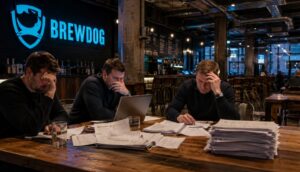
BrewDog’s financial problems developed over several years rather than appearing suddenly in 2026. While the company continued promoting ambitious expansion plans publicly, mounting debt, operational costs, and slowing profits created increasing pressure behind the scenes.
The business became heavily exposed to hospitality market instability at the same time consumer spending across the UK weakened. Combined with expensive growth strategies and investor obligations, the company eventually reached a breaking point.
Did Rapid Expansion Become BrewDog’s Biggest Problem?
Rapid expansion became one of the clearest contributors to BrewDog’s downfall. The company opened bars across the UK, Europe, Australia, and the United States while also investing in hotels, distilleries, and large flagship venues.
Many of these projects required significant capital and long-term operational spending. Even when venues generated strong sales, profitability often remained inconsistent because running hospitality businesses became increasingly expensive.
Some of the company’s biggest challenges included:
- High commercial rent and staffing costs
- Expensive international expansion projects
- Large flagship locations with high maintenance costs
- Diversification into hotels and spirits
- Ongoing borrowing and financing obligations
Andrew Morgan, one of BrewDog’s early investors, criticised the scale of expansion and said:
“James is a clever guy but he didn’t always make good decisions. £50m is going to change you. Pre-TSG he is fighting the good fight, but afterwards the spending became excessive.”
As growth slowed, many bars reportedly failed to generate the returns expected during BrewDog’s aggressive expansion phase. Instead of stabilising operations, the company continued pursuing larger projects even during difficult economic periods.
How Did the TSG Investment Deal Change BrewDog?
The 2017 investment deal with private equity firm TSG Consumer Partners became a major turning point in BrewDog’s history. TSG invested more than £100 million into the company while founders James Watt and Martin Dickie personally sold shares worth around £50 million each.
At the time, the deal was celebrated as proof BrewDog had become a billion-pound “unicorn” business. However, financial analysts later argued that the agreement placed enormous pressure on the company to maintain aggressive annual growth targets.
The structure of the investment reportedly included strong return protections for TSG. This meant BrewDog needed extremely high valuations and sustained growth for smaller investors to benefit financially.
Several concerns emerged after the deal:
- Increased pressure for rapid global growth
- Higher investor expectations
- Aggressive valuation targets
- Greater corporate oversight from external investors
- Reduced flexibility during economic downturns
Financial analyst Nick Hyett reportedly suggested the expected growth targets were unrealistic and eventually became unsustainable.
The company’s identity also appeared to shift after the investment. BrewDog originally marketed itself as anti-corporate and independent, but critics argued the TSG partnership weakened that image. For many long-term supporters, the business increasingly looked like the type of corporate company it once criticised publicly.
Did the Pandemic and UK Hospitality Crisis Make Things Worse?
The COVID-19 pandemic significantly worsened BrewDog’s financial position. Hospitality businesses across the UK struggled with lockdowns, restricted trading, staffing shortages, and changing consumer habits.
Although BrewDog attempted to adapt through online sales and takeaway services, the business remained heavily dependent on physical venues. Large bars and hospitality-focused investments became particularly difficult to sustain during prolonged economic uncertainty.
The wider UK hospitality sector also faced growing financial pressure from:
- Rising inflation
- Increased energy bills
- Higher National Insurance costs
- Business rate pressures
- Reduced consumer spending
- Supply chain disruption
At the same time, the craft beer market became more competitive. Independent breweries across Britain faced similar challenges as customers reduced discretionary spending during the cost-of-living crisis.
Another issue was timing. BrewDog continued opening expensive venues even while the hospitality market weakened. Critics argued the company underestimated how quickly economic conditions were changing.
Beer entrepreneur Andrew Morgan later described the final situation as “an absolute mess” and said responsibility ultimately “has to stop with James Watt.”
Even environmental initiatives became financially difficult to maintain. BrewDog’s heavily promoted sustainability projects, including its Scottish forest investment, reportedly failed to deliver the operational or branding advantages originally expected.
By the final years before administration, the company faced debt obligations, slowing growth, declining investor confidence, and rising operating costs simultaneously. The business model that once drove BrewDog’s success no longer matched the realities of the UK hospitality market in 2026.
What Happened to BrewDog’s Equity Punks Investors?
The Equity for Punks scheme played a major role in BrewDog’s rise by allowing customers and supporters to buy shares directly in the company. Over time, more than 200,000 investors contributed over £100 million through multiple fundraising rounds.
Many investors joined because they believed in the BrewDog brand rather than expecting large financial returns. The programme created a strong sense of community and loyalty among customers who felt personally connected to the company’s success.
However, the administration process placed those investments at serious risk. Larger institutional lenders and secured investors are typically prioritised during financial restructuring, meaning smaller shareholders may receive little or nothing back.
Some investors also became frustrated with later funding rounds and valuation claims, especially after BrewDog’s growth slowed. Questions emerged over whether smaller investors fully understood the financial risks involved.
Despite the losses, many Equity Punk members viewed their investment as emotional support for the brand rather than a traditional long-term financial asset.
Were BrewDog’s Workplace Controversies Part of the Decline?
BrewDog’s financial problems were not the only factor behind the company’s collapse. Public controversies surrounding workplace culture and leadership also damaged trust in the brand over several years.
As criticism increased, BrewDog faced growing scrutiny from former employees, media organisations, and parts of the craft beer community itself.
What Were the Main Allegations Against BrewDog Leadership?
In 2021, a group called “Punks With Purpose” published an open letter accusing BrewDog of fostering a toxic workplace culture. Former employees described allegations involving fear-based management, poor treatment of staff, and aggressive leadership behaviour.
The controversy gained national attention after BBC investigations examined additional claims linked to company leadership and internal practices. James Watt strongly denied wrongdoing, but the allegations created lasting reputational damage.
Key criticisms included:
- Alleged toxic management culture
- High-pressure working conditions
- Public criticism from former staff
- Questions about marketing authenticity
- Concerns over leadership behaviour
Melissa Cole later described BrewDog as becoming “a cult that James was happy to be the head of,” reflecting wider concerns about leadership culture inside the company.
The situation became particularly damaging because BrewDog had built its public identity around community, rebellion, and ethical branding.
Did Public Reputation Damage the BrewDog Brand?
Public trust gradually weakened as controversies continued appearing in headlines. For a company built heavily on customer loyalty and emotional branding, reputational damage became financially significant.
Some long-term supporters felt BrewDog’s image no longer matched the company’s internal culture or business decisions. Critics also accused the brand of abandoning its original anti-corporate identity after receiving major private equity investment.
The reputational impact included:
- Negative media coverage
- Reduced customer goodwill
- Growing criticism across social media
- Loss of trust among some investors
- Recruitment and retention concerns
Although BrewDog attempted to introduce workplace reforms and improve employee conditions, the controversies continued overshadowing the business during its later years.
Combined with financial struggles, the reputational decline weakened one of BrewDog’s biggest strengths: its loyal community-driven identity.
What Exactly Happened During the 2026 Administration Process?
BrewDog officially entered administration in 2026 after failing to manage its financial obligations. Administrators were appointed to oversee restructuring efforts and identify which parts of the business could still operate or be sold.
Soon after, Tilray acquired BrewDog’s Ellon brewery and a number of bars in a deal reportedly worth around £33 million. However, not all locations survived the restructuring process.
The administration period resulted in major disruption, including:
- Closure of dozens of BrewDog bars
- Hundreds of employee redundancies
- Uncertainty for suppliers and landlords
- Losses for smaller investors
- Reduced operations across several regions
Reports suggested around 38 venues closed during the process, while hundreds of workers lost their jobs. Some international assets and operations also remained uncertain following the initial sale.
James Watt later described the situation as “heartbreaking” and admitted the company had “expanded too fast and diversified too broadly.”
For many customers, the administration process confirmed fears that BrewDog’s aggressive business model had become financially unsustainable.
What Does Tilray’s Acquisition Mean for BrewDog’s Future?
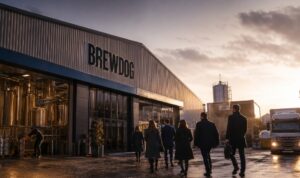
Tilray’s acquisition means BrewDog may continue operating in a smaller and more commercially focused form rather than disappearing entirely. The purchase allowed key brewing operations and selected bars to survive, preserving part of the company’s infrastructure and brand recognition.
However, the future direction of BrewDog will likely look very different from its original expansion strategy. Tilray is expected to prioritise operational stability and profitability instead of aggressive global growth.
The acquisition may also reshape how the BrewDog brand is marketed. The rebellious “punk” identity that originally defined the company became harder to maintain after years of controversy and financial losses.
For remaining staff and customers, the takeover provides some short-term stability, but uncertainty still exists around future closures, restructuring decisions, and long-term branding changes.
Whether BrewDog fully recovers depends largely on whether the new owners can rebuild trust while operating a more sustainable business model.
Could BrewDog’s Collapse Affect the Wider UK Craft Beer Industry?
BrewDog’s collapse has increased concerns across the wider UK craft beer and hospitality industries. Although BrewDog operated at a larger scale than many independent breweries, the financial pressures behind its downfall are affecting businesses throughout the sector.
Many breweries continue facing rising production costs, weaker consumer spending, and difficult trading conditions. Smaller operators are especially vulnerable because they often lack the financial backing available to larger hospitality groups.
The situation also highlights broader industry risks linked to rapid expansion and debt-driven growth strategies.
For many business owners, BrewDog’s collapse serves as a warning about:
- Expanding too quickly
- Relying heavily on investor funding
- Overestimating long-term market demand
- Diversifying beyond core operations
- Managing brand reputation poorly
Despite the difficulties, the UK craft beer market itself is unlikely to disappear. Demand for independent beer remains strong, but businesses may become more cautious about aggressive growth moving forward.
What Can Customers, Staff, and Investors Expect Next?
The immediate future remains uncertain for many people connected to BrewDog. While some bars and brewing operations continue under Tilray ownership, the company now operates on a much smaller scale than before administration.
Customers may notice changes to product ranges, branding, and venue operations as restructuring continues. Some locations could still face closure depending on future financial performance.
For employees, the collapse created significant instability across the hospitality workforce. Hundreds of workers lost their jobs during administration, while remaining staff face uncertainty about long-term restructuring plans.
Several key concerns remain:
- Potential future bar closures
- Changes to BrewDog memberships and loyalty schemes
- Reduced international operations
- Restructuring of remaining venues
- Ongoing uncertainty for investors
Equity Punk investors are among the groups most affected financially. Because shareholder payouts usually come after lenders and institutional creditors, many retail investors may never recover their investments.
At the same time, some supporters continue hoping the BrewDog brand can survive under more disciplined ownership.
James Watt acknowledged mistakes publicly after the collapse and said:
“I would have loved to save every single job and every single equity punk investment. Ultimately, I couldn’t. That will stay with me.”
For many former employees and investors, however, those comments provide limited comfort after years of loyalty to the company.
Is BrewDog Going Bust or Simply Being Rebuilt?
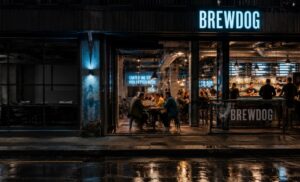
BrewDog is not completely gone, but the original version of the company has clearly collapsed. The administration process ended the high-growth business model that once made BrewDog one of Britain’s most talked-about craft beer brands.
The company now faces a rebuilding phase under new ownership, with a stronger focus on sustainability rather than rapid expansion. While some bars and brewing operations continue, the business is significantly smaller and financially weaker than during its peak years.
The situation also reflects a broader lesson about modern business growth. BrewDog successfully disrupted the beer industry, but aggressive scaling, investor pressure, reputational damage, and changing economic conditions eventually overwhelmed the company.
Its legacy will likely remain divided. Some people still view BrewDog as a revolutionary British success story, while others see it as a warning about ambition growing faster than operational reality.
Key Facts About BrewDog’s 2026 Collapse
BrewDog’s collapse became one of the most discussed business failures in the UK hospitality sector during 2026. The company’s rapid growth, public controversies, and financial struggles created a highly visible downfall that affected employees, investors, and customers alike.
Below is a quick breakdown of the key facts surrounding the situation:
| Topic | Details |
| Founded | 2007 |
| Founders | James Watt and Martin Dickie |
| Headquarters | Ellon, Scotland |
| Main Issue | Administration and financial collapse |
| Key Investor | TSG Consumer Partners |
| Buyer of Assets | Tilray |
| Major Impact | Bar closures and redundancies |
| Investor Concern | Equity Punk shares potentially worthless |
| Industry Impact | UK craft beer and hospitality sector concerns |
The collapse demonstrated how quickly market conditions can change for hospitality businesses heavily reliant on expansion and investor confidence.
Although BrewDog’s brand may continue under Tilray ownership, the original vision that transformed the company into a billion-pound craft beer empire has largely come to an end.
Conclusion
BrewDog’s 2026 collapse marks the end of one of the most ambitious growth stories in the UK craft beer industry. While the company is not completely gone, entering administration and selling major assets to Tilray confirmed that the original BrewDog business model had become financially unsustainable.
Rapid expansion, investor pressure, rising hospitality costs, and workplace controversies all contributed to the company’s downfall over several years.
For customers and Equity Punk investors, the situation remains disappointing because many supported BrewDog as more than just a beer company. At the same time, the brand still holds recognition within the market, which gives it a chance to survive in a smaller and more controlled form under new ownership.
Ultimately, BrewDog’s story is both a warning about unchecked expansion and a reminder of how quickly modern business success can change.
FAQs
Is BrewDog officially bankrupt?
No, BrewDog entered administration rather than full bankruptcy or liquidation. Parts of the business were sold to Tilray, allowing some operations to continue under new ownership.
Why did BrewDog go into administration?
BrewDog struggled with rising operational costs, slowing profits, debt obligations, and expensive expansion projects. The wider UK hospitality crisis and declining consumer spending also increased financial pressure on the business.
Who owns BrewDog now?
Tilray acquired key BrewDog assets during the 2026 administration process, including the Ellon brewery and selected bars. However, some parts of the original business were closed or remain uncertain.
Are BrewDog bars closing permanently?
Several BrewDog bars closed permanently during the restructuring process, while others continue operating under new ownership. Future closures may still happen depending on financial performance and restructuring plans.
What happened to BrewDog investors?
Many Equity Punk investors may receive little or no financial return because lenders and major creditors are prioritised during administration. A large number of supporters invested mainly because they believed in the BrewDog brand and community.
Did James Watt leave BrewDog before the collapse?
Yes, James Watt stepped down as CEO in 2024 before the company entered administration in 2026. Although he remained connected to the business for a period, he was no longer leading day-to-day operations.
Could BrewDog recover in the future?
BrewDog could continue operating in a smaller and more stable form under Tilray ownership. Its recovery will depend on rebuilding customer trust and maintaining sustainable profitability.
How much money did BrewDog lose?
Exact total losses remain unclear because several debts, loans, and restructuring costs are still being assessed. However, reports suggested the company faced hundreds of millions of pounds in financial pressure linked to investments and borrowing.
Is the UK craft beer industry struggling overall?
Yes, many UK craft breweries are facing rising production costs, inflation, and weaker consumer spending. BrewDog’s collapse highlighted wider challenges currently affecting the hospitality and independent brewing sectors.

Jermaine writes informative business content related to entrepreneurship, finance, innovation, operations, and emerging opportunities for growing businesses in the UK.

Does Gross Misconduct Always Lead to Dismissal?
No. Gross misconduct does not always lead to dismissal. It can be serious enough to justify dismissal without notice, including for a first offence, but an employer should…
Andy Burnham Whitehall Job Cuts Begin Under Devolution Push
Andy Burnham’s government has begun the first operational stage of its Whitehall devolution push, with civil servants due to be seconded into regional mayoral authorities from autumn 2026.…
Insights for the Modern
UK Small Business.
Join 15,000+ owners receiving tactical analysis on finance, marketing, and technology. No clutter.
Zero spam. Unsubscribe in one click.