Pay Per Mile Tax Petrol Cars: Who Pays a New Charge in 2028?


Conventional petrol-only cars are not included in the announced Electric Vehicle Excise Duty scheme.
From 1 April 2028, the new mileage-based charge will apply to UK-registered battery-electric, plug-in hybrid and hydrogen fuel-cell cars when their Vehicle Excise Duty is next renewed.
The initial rate will be 3p per mile for fully electric and hydrogen fuel-cell cars, while plug-in hybrids will pay 1.5p per mile. Petrol-only and diesel-only motorists will continue contributing through fuel duty instead of eVED.
Plug-in hybrids are the important exception because they can incur both the reduced eVED charge and fuel duty when petrol or diesel is used.
Key Facts At A Glance
| Vehicle type | eVED position from April 2028 | Initial rate |
| Petrol-only car | Not included | £0 |
| Diesel-only car | Not included | £0 |
| Battery-electric car | Included | 3p per mile |
| Plug-in hybrid car | Included | 1.5p per mile |
| Hydrogen fuel-cell car | Included | 3p per mile |
| Electric van | Not included at launch | £0 |
The policy is confirmed, but supporting legislation, administrative systems and some refund or enforcement details are still being finalised.
Will Petrol Cars Pay A Pay-Per-Mile Tax From April 2028?

No new eVED charge is scheduled for conventional petrol-only cars from April 2028.
These motorists already pay a usage-related tax through fuel duty: travelling further normally requires more fuel, although the amount paid per mile varies according to efficiency, driving conditions and fuel consumption.
Who Will Pay From Launch
- Petrol-only cars will remain outside the announced eVED scope.
- Diesel-only cars will also remain outside the scheme.
- Battery-electric and hydrogen fuel-cell cars will pay 3p per mile.
- Plug-in hybrid cars will pay 1.5p per mile.
- Electric vans, buses, coaches and HGVs will initially remain outside the scheme.
A headline referring broadly to a “pay per mile tax petrol cars” policy can therefore be misleading. The charge concerns electric and plug-in hybrid cars rather than every car capable of using petrol.
What Does “Pay Per Mile Tax Petrol Cars” Actually Mean?
The phrase usually refers to public concern that the UK may extend mileage taxation to all vehicles.
The confirmed measure is narrower: eVED is an additional mileage component within the existing Vehicle Excise Duty framework for specified electric and plug-in vehicle categories.
This differs from universal road pricing. A national road-pricing system might calculate charges according to a journey’s location, road type or time.
The announced eVED design calculates liability from total recorded mileage, without requiring drivers to report where individual journeys took place.
Fuel duty is also different. It is collected through petrol and diesel purchases rather than an annual odometer calculation.
Although it generally rises with vehicle use, two petrol drivers covering the same distance can pay different amounts because their cars may consume different quantities of fuel.
Which Petrol, Hybrid And Electric Vehicles Will Be Charged?
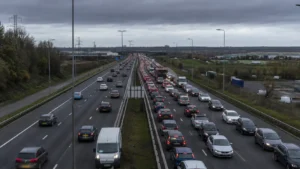
The vehicle’s official classification will determine liability. Marketing descriptions such as “electrified”, “hybrid” or “self-charging” should not be relied upon without checking how the vehicle is registered.
Conventional Petrol-Only And Diesel-Only Cars
Petrol-only and diesel-only cars are not listed among the vehicles affected by the official eVED scope rules. Their keepers will continue paying ordinary VED where applicable, while fuel purchases remain subject to fuel duty.
Which Electric Vehicles Are Included?
Battery-electric cars and hydrogen fuel-cell cars will pay the full 3p-per-mile launch rate. Internal-combustion cars converted to electric power and certain special-purpose vehicles are expected to remain outside the scheme at introduction.
Plug-In Hybrids And Combined Taxation
Plug-in hybrid cars will pay 1.5p per mile across their total recorded mileage. They may also incur fuel duty when their combustion engine consumes petrol or diesel.
The reduced rate recognises that driving patterns differ and that calculating separate electric-mode and petrol-mode mileage would create additional reporting and privacy concerns. Non-plug-in hybrids that rely on petrol or diesel as their sole external energy source are outside the announced eVED scope.
Why Is The Government Introducing A Mileage-Based Car Tax?
The stated purpose is to replace part of the fuel-duty revenue expected to decline as more motorists adopt electric cars. Electric vehicles currently avoid an equivalent usage-based fuel tax, even though they contribute to congestion and road wear.
In the 2025 Budget speech, the Chancellor said the policy would ensure that “drivers are taxed according to how much they drive and not just by the type of car they own”.
The announced electric-car rate was set at approximately half the estimated fuel-duty equivalent for an average petrol or diesel car.
The government also says electric vehicles should remain comparatively attractive. However, eVED alone does not show which powertrain is cheapest.
Electricity prices, public charging costs, fuel efficiency, insurance, maintenance, depreciation, finance and company-car taxation all influence the total cost.
The consultation response described the long-term aim as maintaining a sustainable motoring-tax system in which motorists make an appropriate contribution for the miles they drive.
How Will The Pay-Per-Mile Tax Be Calculated And Collected?
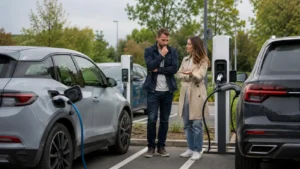
eVED will be connected to the existing VED renewal process. Liability will be based on a current odometer reading and an estimate of the mileage expected during the next licensing period.
Annual Mileage Declarations And Estimates
At renewal, the registered keeper will supply the current mileage and estimate the following year’s distance. The relevant per-mile rate will then be applied to that estimate.
The keeper will be able to increase the estimate during the year and make a top-up payment if travel needs change. This should reduce the risk of receiving a substantial balancing charge later.
How Will MOT Records Verify Mileage?
For cars subject to MOT testing, the verified MOT odometer reading will support reconciliation.
The government decided not to require routine separate mileage checks for newer cars before their first MOT, although an additional check could be ordered where fraud or non-compliance is reasonably suspected.
Payments, Balancing Charges And Credits
The published eVED consultation response confirms monthly, six-monthly and annual payment options. Actual mileage will later be compared with the estimate.
Underestimated mileage can create a balancing payment. Overestimated mileage will normally create a credit carried into the next licensing period, while limited refund provisions will apply in specified circumstances. Final procedures should be rechecked before the scheme starts.
How Much Could Electric And Plug-In Hybrid Drivers Pay?
The amount will depend directly on annual mileage. The following calculations use the announced launch rates and exclude ordinary VED, charging, fuel and other ownership costs.
Illustrative Annual eVED Costs
| Annual mileage | Electric or hydrogen car at 3p | Plug-in hybrid at 1.5p | Petrol-only car eVED |
| 5,000 miles | £150 | £75 | £0 |
| 8,000 miles | £240 | £120 | £0 |
| 10,000 miles | £300 | £150 | £0 |
| 12,000 miles | £360 | £180 | £0 |
| 15,000 miles | £450 | £225 | £0 |
An electric car covering 8,000 miles would therefore face an estimated £240 annual eVED charge. A plug-in hybrid travelling the same distance would face £120, plus any fuel duty included in petrol or diesel purchases.
These are illustrative figures, not permanent prices. The rates are scheduled to increase in 2029–30 and subsequent years in line with Consumer Prices Index inflation.
Will Overseas Mileage, Privacy And GPS Tracking Affect The Charge?

Miles driven abroad in a UK-registered car will count towards eVED. The government ruled out charging according to where a journey occurred, so the system will not normally distinguish between UK roads, overseas roads and other locations recorded by the odometer.
This approach has attracted criticism because an electric-car owner could pay UK eVED on mileage accumulated during a European journey.
The government’s position is that deducting overseas mileage would require more evidence, location data or administrative checking, while overseas travel represents a small proportion of total UK-car mileage.
Mandatory journey-by-journey GPS tracking is not part of the core design. Drivers will report total odometer mileage, with MOT records used for verification where available.
Optional connected-car functionality is being developed. A motorist could choose to allow existing vehicle systems to report mileage more conveniently, but the government says this would be voluntary and limited to information needed for eVED administration.
How Could eVED Affect Small Businesses, Fleets And Company Cars?
Businesses may face additional budgeting, record-keeping and vehicle-handover work. The impact will depend on fleet size, ownership arrangements, annual mileage and whether cars are bought, leased, rented or allocated to employees.
Fleet, Rental And Leasing Administration
Special arrangements are planned for fleet operators, including estimated mileage, bulk licensing and aggregated payments. Larger operators may eventually use application programming interfaces, while smaller fleets may receive web-based options.
What Records Should A Business Retain?
Practical Business Records
- Dated odometer photographs should support opening and closing readings.
- MOT certificates should be retained with vehicle records.
- Lease, rental and vehicle-handover documents should show relevant mileages.
- Driver allocation and business mileage logs should remain consistent.
- eVED estimates, payments, credits and reconciliation notices should be stored.
These records may help resolve discrepancies, although final statutory record-keeping requirements should be checked when detailed guidance is issued.
Company Cars, Expenses And Employee Mileage
The vehicle tax legislation overview confirms that eVED will sit alongside existing VED. It should not be confused with employee mileage reimbursement, company-car Benefit in Kind or fuel and electricity payments.
The consultation response says eVED incurred wholly and exclusively for business purposes will generally follow existing VED treatment.
Businesses using simplified mileage expenses should not claim the same underlying cost twice. Professional advice may be appropriate where ownership or mixed use makes the treatment unclear.
What Should Motorists And Businesses Do Before April 2028?

The main priority is preparation rather than an immediate change of vehicle. Final decisions should consider total ownership costs and operational needs rather than one proposed tax charge.
Preparation Checklist
- Confirm each vehicle’s official powertrain classification.
- Separate petrol-only, non-plug-in hybrid and plug-in hybrid cars.
- Record annual mileage over a representative 12-month period.
- Model low, expected and high-mileage eVED costs.
- Review lease terms and vehicle replacement dates.
- Add mileage readings to handover and disposal procedures.
- Budget for eVED separately from VED, fuel and electricity.
- Monitor final legislation and implementation guidance.
- Avoid relying on headlines that describe eVED as a tax on every petrol car.
The policy will not begin until the vehicle’s relevant VED renewal from 1 April 2028, giving motorists and businesses time to update processes and budgets.
Conclusion
Reports about a pay per mile tax for petrol cars require an important distinction. Conventional petrol-only and diesel-only cars are outside the announced eVED scope, while battery-electric, hydrogen fuel-cell and plug-in hybrid cars will be charged according to mileage.
Plug-in hybrids create the most confusion because they may use petrol but will still pay the reduced 1.5p-per-mile rate. Fully electric and hydrogen cars will initially pay 3p per mile.
For motorists and small businesses, the sensible response is to confirm vehicle classifications, measure realistic annual mileage and follow final official guidance. Vehicle decisions should be based on complete running costs rather than eVED in isolation.
Frequently Asked Questions
Are Self-Charging Hybrid Cars Included In eVED?
A non-plug-in hybrid that uses petrol or diesel as its only external energy source is outside the announced scope. The vehicle’s official registration details should still be checked because marketing terminology can be unclear.
Are Electric Vans, Buses And HGVs Included At Launch?
No. The introductory scheme focuses on qualifying cars. Electric vans, buses, coaches, motorcycles and HGVs are expected to remain outside eVED when it begins.
What Happens To eVED When A Car Is Sold?
The outgoing keeper can settle an outstanding liability through a top-up payment. At launch, prepaid mileage credit will transfer with the car, while more extensive automatic refund arrangements are planned for later development.
Can eVED Be Paid Monthly?
Yes. Monthly, six-monthly and annual payment options are planned, broadly reflecting the choices available for ordinary vehicle tax. Monthly payments may include the applicable Direct Debit surcharge.
Will The 3p And 1.5p Rates Stay Fixed?
No. These are the announced introductory rates. They are scheduled to rise from 2029–30 and in later years in line with CPI inflation.
Does eVED Replace Normal Vehicle Excise Duty?
No. eVED is an additional mileage charge operating alongside existing VED rather than replacing it.
Can A Business Claim eVED As An Expense?
A business that incurs eVED wholly and exclusively for business purposes will generally be able to deduct it under treatment similar to VED. The correct result depends on ownership, business use and the expense method being used, so current tax guidance or professional advice should be checked.
Editorial Note
This article separates confirmed policy from details that remain subject to legislation or further guidance. It does not claim that every petrol car will face a mileage charge in 2028. Costs are illustrative and exclude other vehicle expenses and taxes. This is informational, not financial/legal advice.
How We Checked?
The policy scope, rates and start date were checked against official material published and updated in July 2026.
The consultation response was reviewed for mileage reporting, overseas travel, payment, fleet and privacy rules. Claims appearing in the four supplied news reports were compared with the underlying official documents. Calculations were independently checked by multiplying annual mileage by the announced per-mile rates.

Jennifer contributes business-focused articles covering modern business trends, digital growth, entrepreneurship, and practical insights designed to support startups and SMEs.

DWP Universal Credit Rollout End: Is the Move to Universal Credit Finally Finished?
The DWP Universal Credit rollout has officially finished, ending a programme that began in 2013. DWP completed its exercise to contact remaining legacy-benefit claimants in late March 2026,…

Andy Burnham Cash ISA Rules: What Changes for UK Savers?
Searches for Andy Burnham cash ISA rules centre on a practical question: will savers still be able to put £20,000 a year into tax-free cash savings? Under the…
Insights for the Modern
UK Small Business.
Join 15,000+ owners receiving tactical analysis on finance, marketing, and technology. No clutter.
Zero spam. Unsubscribe in one click.