England Parish Council Tax Increases 2026/27: What the 8.2% Rise Means for Households and Small Businesses

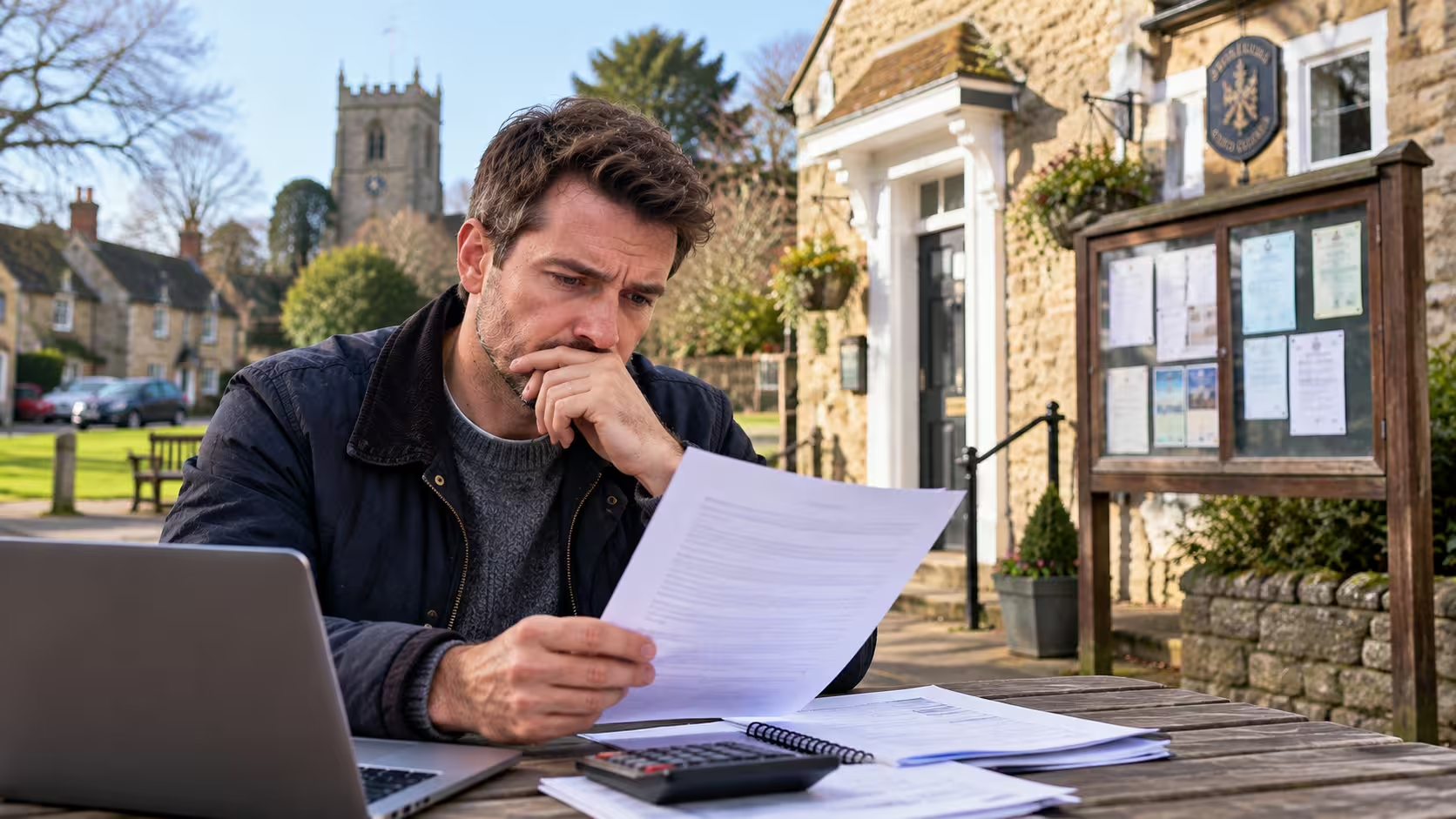
Parish council tax charges across England have increased by an average of 8.2% in 2026/27, adding £7.59 to the annual Band D parish precept.
The average charge now stands at £99.79, while the total amount raised by parish and town councils has reached approximately £942 million.
However, the national average does not tell the whole story. Some communities face substantially larger increases, while others have experienced reductions.
The changes also matter to small business owners, particularly sole traders working from home and businesses relying on local markets, community facilities and high-street investment.
An examination of government statistics, parish budgets and the National Association of Local Councils’ September 2026 analysis reveals how these charges are calculated, why they are increasing and what residents should check before paying.
What Are the England Parish Council Tax Increases in 2026/27?
Parish council tax increases refer to changes in the local precept collected through council tax bills to finance services provided by parish and town councils.
These councils form the most local tier of government in England and may fund playgrounds, recreation grounds, village halls, cemeteries, community events and other neighbourhood facilities.
According to the Ministry of Housing, Communities and Local Government’s 2026/27 statistics, the figures are:
| Measure | 2025/26 | 2026/27 |
| Average Band D parish precept | £92.20 | £99.79 |
| Annual Band D increase | £6.33 | £7.59 |
| Percentage increase | 7.4% | 8.2% |
| Total parish precepts | £858.6m | £941.6m |
| Number of precepting parishes | 8,905 | 8,902 |
The £941.6 million represents approximately 2% of England’s total council tax requirement of £46.8 billion.
Importantly, the 8.2% increase applies to the average parish component, not the entire household council tax bill. The overall average Band D council tax in England has increased by 4.9% to £2,392.
How Much Parish Council Tax Will Each Property Band Pay?
Council tax charges vary according to a property’s valuation band. Band D is used as the standard benchmark, but properties in lower bands pay proportionately less.
Using the 2026/27 national average parish precept of £99.79, the estimated charges are:
| Council tax band | Band D proportion | Annual parish charge |
| A | 6/9 | £66.53 |
| B | 7/9 | £77.61 |
| C | 8/9 | £88.70 |
| D | 9/9 | £99.79 |
| E | 11/9 | £121.97 |
| F | 13/9 | £144.14 |
| G | 15/9 | £166.32 |
| H | 18/9 | £199.58 |
These are illustrative national averages, not fixed charges. Actual bills depend on the precept set by the relevant parish council.
Government statistics show that nearly two-thirds of English dwellings fall within Bands A to C. Consequently, many households face a parish charge below the Band D average.
How Have Parish Council Tax Increases Changed Since 2022?
Parish council funding has grown considerably over the past five financial years.
| Financial year | Total parish precepts | Average Band D charge | Annual increase |
| 2022/23 | £655.0m | £74.79 | 4.1% |
| 2023/24 | £707.6m | £79.12 | 5.8% |
| 2024/25 | £782.8m | £85.87 | 8.5% |
| 2025/26 | £858.6m | £92.20 | 7.4% |
| 2026/27 | £941.6m | £99.79 | 8.2% |
Between 2022/23 and 2026/27, aggregate parish precepts increased by approximately £287 million, equivalent to 44%.
This corrects an apparent discrepancy in earlier reporting suggesting an increase of £654 million. That figure is close to the total collected in 2022/23, rather than the subsequent increase.
During the same period, the average Band D parish charge rose by approximately 33%, compared with approximately 22% for the overall average Band D council tax bill.
The difference indicates that parish charges have grown faster than council tax nationally, although they remain a relatively small component of most bills.
How Is a Parish Council Precept Calculated?
Parish councils decide how much money they need from council tax after considering expenditure, income, available reserves and planned projects.
The billing authority calculates the parish’s council tax base, expressed in Band D equivalent properties.
The calculation is:
Parish precept ÷ Council tax base = Annual Band D parish charge
For example, consider a parish council requiring £250,000 annually from a tax base of 2,500 Band D equivalents.
£250,000 ÷ 2,500 = £100 per Band D property.
If the council increases its precept to £275,000 while the tax base remains unchanged, the Band D charge rises to £110.
However, if the tax base grows to 2,750, the same £275,000 precept produces a £100 Band D charge.
This illustrates why increasing a council’s total precept does not necessarily result in an equivalent increase for individual taxpayers.
Growth in taxable properties can spread costs across a larger base. Conversely, a declining tax base can increase the charge even when the precept remains unchanged.
The distinction helps explain why total parish precepts increased by 9.7% in 2026/27 while the average Band D charge increased by 8.2%. The parish tax base grew by approximately 1.3%.
How Many Households Pay Parish Council Tax in England?
Government figures show a parish tax base of approximately 9.44 million Band D equivalents for 2026/27.
However, this does not mean exactly 9.44 million households pay parish council tax.
The tax base is a standardised measurement that adjusts properties according to valuation bands, discounts, exemptions and council tax support.
England’s total council tax base is approximately 19.57 million Band D equivalents, meaning the parish tax base represents around 48% of the national total.
The actual number of households subject to parish charges is different because one Band D equivalent does not necessarily represent one physical dwelling.
Which Areas Face the Highest Parish Council Tax Charges?
Parish precepts vary considerably depending on local government arrangements and the services provided.
Government figures show the approximate contribution of parish precepts to the average Band D council tax for different authority types:
| Area type | Parish contribution |
| Shire districts | £64 |
| Shire unitary authorities | £77 |
| Metropolitan districts | £10 |
| Inner London boroughs | £1 |
These are averages across the relevant authority categories, including areas without parish precepts.
The figures demonstrate why parish charges are generally more significant within shire authorities than metropolitan districts or London boroughs.
However, geography alone does not determine the bill. A small rural parish could charge relatively little, while a larger town council managing substantial community facilities could require several hundred pounds annually.
Can Parish Councils Increase Council Tax Without a Referendum?
Yes. No council tax referendum principles were set for parish and town councils in England for 2026/27.
This means their precepts are not subject to the same percentage limits applied to principal councils.
For most authorities responsible for adult social care, the general referendum threshold is 5%, comprising up to 3% for core spending and 2% for adult social care.
Exceptions include:
- Bournemouth, Christchurch and Poole: 6.75%.
- Trafford, Warrington, and Windsor and Maidenhead: 7.5%.
- North Somerset, Shropshire and Worcestershire: 9%.
Among the 384 authorities subject to referendum principles, 274 used the maximum permitted flexibility, while another 50 set increases close to their limits.
Parish councils have greater flexibility, but their budgets remain subject to financial reporting, public scrutiny and audit requirements.
Why Are Parish and Town Councils Increasing Their Precepts?
Several financial and operational pressures are contributing to higher parish budgets.
Rising Employment and Operating Costs
Staffing expenditure can increase through salary adjustments, pension contributions and employer National Insurance costs.
Maintenance contracts, insurance, electricity and repairs also affect the cost of providing local facilities.
Expanding Responsibilities
Some parish councils are taking responsibility for services or assets previously managed by district or borough authorities.
These transfers can involve additional staff, maintenance contracts and long-term financial commitments.
Limited Access to Other Funding
Unlike principal authorities, parish councils do not ordinarily receive a direct share of business rates or a general revenue support grant.
Many rely heavily on council tax precepts, supplemented by grants, facility hire income and other local revenue.
The National Association of Local Councils’ September 2026 analysis calls for greater funding flexibility and adequate resources when responsibilities are transferred.
What Do Local Parish Council Tax Increases Look Like?
Individual council budgets reveal differences that national averages cannot capture.
Fair Oak and Horton Heath Parish Council increased its precept from £632,716 to £991,284 for 2026/27.
Its Band D charge increased from £139.47 to £218.13, reflecting additional assets, expanding staffing requirements and improvements to community spaces.
Importantly, the council also identifies reductions in Eastleigh Borough Council’s council tax element associated with transferred assets. This means the net change in the combined bill differs from the parish increase alone.
Faversham own Council set a 2026/27 precept of £973,600, producing a Band D charge of £130.03.
Other examples illustrate considerable variation:
| Parish or town | Reported 2026/27 change or charge |
| Fair Oak and Horton Heath | £78.66 Band D increase |
| Faversham | £130.03 annual Band D charge |
| Chudleigh | Approximately 44% Band D increase |
| Bovey Tracey | Approximately 31% Band D increase |
| Onehouse | £28.87 Band D increase |
Local budget comparisons in Teignbridge also indicate an average parish Band D increase of approximately 12.3%.
However, parish charges do not always rise. Thanet District Council’s 2026/27 figures show Manston’s Band D parish charge decreasing by 3.98%, while Margate’s remained unchanged.
These differences reinforce the importance of checking the individual parish budget rather than relying exclusively on national percentages.
What Does the Latest NALC Analysis Reveal?
The September 2026 analysis provides additional information about the growing scale of parish and town council finances.
Key findings include:
- 8,902 parish and local precepting bodies were recorded nationally.
- 173 parish and town councils raised precepts of at least £1 million, compared with 150 previously.
- 14 councils introduced precepts for the first time.
- Four new parish and town councils were established in previously unparished areas.
- 38 county areas contained at least one council raising £1 million or more.
Swindon and Wiltshire recorded the largest combined precept income at approximately £52 million across 274 councils.
The analysis suggests that some parish councils now operate at a financial scale comparable to considerably larger local organisations.
How Do Parish Council Tax Increases Affect Small Businesses?

Parish precepts do not normally appear directly on commercial business rates bills, but they can still affect entrepreneurs.
Businesses Operating From Commercial Premises
Shops, offices, warehouses and other non-domestic premises generally pay business rates rather than council tax.
Parish councils do not receive a direct allocation of these business rates in the same way they receive parish precepts.
Nevertheless, local spending can support commercial activity through markets, improved public spaces, community events and high-street maintenance.
Sole Traders Working From Home
Home-based entrepreneurs generally continue paying council tax on their residential property.
HMRC allows eligible self-employed people to claim a reasonable business proportion of certain household costs, potentially including council tax.
Claims must reflect genuine business use. Sole traders using actual-cost calculations should maintain appropriate records, while simplified expenses follow separate flat-rate rules.
Where part of a property is adapted or used exclusively for commercial activities, business rates may also become relevant.
Landlords and Holiday-Let Businesses
Residential landlords may encounter parish charges through their properties, although responsibility for council tax generally depends on occupancy and the applicable liability rules.
Qualifying furnished holiday lets may fall under business rates instead of council tax when statutory conditions are satisfied.
Landlords should therefore check how their individual properties are classified rather than assuming every property receives the same treatment.
More broadly, debates about replacing council tax or reforming business rates are reflected in proposals surrounding land taxation and its implications for property owners.
How Can Households Reduce Their Council Tax Bills?
A parish precept increase does not automatically prevent a household from qualifying for council tax support.
Residents should check available reductions, including:
- Single-person discount: Generally 25% where only one countable adult occupies the property.
- Council Tax Reduction: Means-tested support for eligible low-income households, subject to applicable local schemes and national rules.
- Disabled Band Reduction: A reduction where qualifying disability-related accommodation requirements are met.
- Student exemptions: Available in qualifying circumstances.
- Discretionary relief: Additional support that some councils may award in cases of financial hardship.
A qualifying reduction generally affects the overall council tax liability, rather than requiring a separate application against the parish precept.
How Can Residents Question a Parish Council Tax Increase?
Residents can scrutinise the financial decisions behind a precept, even though a large increase does not automatically trigger a referendum.
The first step is to review the annual council tax bill and identify the parish charge.
The next step is to examine the parish council’s published budget, meeting minutes and financial statements.
Residents can then contact the parish clerk or attend a public meeting to ask how the additional revenue will be spent.
During the statutory inspection period, interested persons have rights to inspect accounting records. Registered local electors may also have rights to question the external auditor and make formal objections about eligible accounting matters.
However, an audit objection is not a general right to overturn an unpopular budget. A disagreement over spending priorities should normally be raised through local democratic and council procedures.
Why Do Parish Council Tax Figures Differ Between Reports?
Minor differences often arise from rounding, revisions and the period covered.
For example, £99.79 may be presented as £100, while the £7.59 increase may be rounded to £8.
The revised 2025/26 national average is £92.20, although an earlier figure of £92.22 appeared in previous reporting.
Government tables were revised following corrected data from Medway and North Kesteven.
A more significant distinction concerns the overall council tax requirement. Official figures show an increase of approximately £2.7 billion, from £44.1 billion to £46.8 billion, rather than the £5.6 billion stated in some earlier commentary.
For comparison, parish precepts of £942 million also exceed the £688 million generated by the additional adult social care precept flexibility in 2026/27.
These figures measure different funding categories and should not be confused.
What Is the Outlook for Parish Council Tax Beyond 2026?
Parish councils face continuing pressure to balance local investment with household affordability.
Rising operating costs, growing communities and transferred responsibilities could lead to further precept increases. However, actual changes for 2027/28 will depend on individual council budgets and decisions.
The national figures demonstrate that parish precepts are becoming a more substantial source of local government funding.
For residents, transparency over how funds are allocated remains essential. For businesses, the economic value of parish spending will depend on whether local investment improves amenities, supports commercial activity and strengthens community infrastructure.
Frequently Asked Questions
How much has parish council tax increased in 2026?
The average Band D parish precept increased by 8.2%, or £7.59 annually, reaching £99.79 for 2026/27.
Does every household in England pay parish council tax?
No. Parish charges only apply where a relevant local precept is raised. Some locations have no parish or town council precept.
Can a parish council reduce its annual precept?
Yes. Parish councils can reduce or maintain their precepts depending on their budgets, reserves, income and expenditure requirements.
Are parish council charges included in the main council tax bill?
Yes. Where applicable, the billing authority collects the parish precept alongside other council tax charges.
Do commercial properties pay parish council tax?
Commercial properties generally pay business rates instead. Mixed-use and residential properties may have different liabilities.
Can pensioners receive help with parish council tax?
Eligible pensioners may receive Council Tax Reduction, discounts or exemptions depending on income, household circumstances and other qualifying conditions.

Jermaine writes informative business content related to entrepreneurship, finance, innovation, operations, and emerging opportunities for growing businesses in the UK.

UK Budget Savings Tax Changes 2026: New Rates, ISA Rules and How Much More Savers Could Pay?
The UK Budget savings tax changes announced on 28 October 2026 have introduced significant financial implications for millions of savers, pensioners and small business owners. From 6 April…

DWP Energy Bill Letters Dispatched: Six Million Households Could Get £150 Discount
Millions of UK households are being urged to watch their post as the Department for Work and Pensions (DWP) prepares to distribute letters concerning a £150 reduction in…
Insights for the Modern
UK Small Business.
Join 15,000+ owners receiving tactical analysis on finance, marketing, and technology. No clutter.
Zero spam. Unsubscribe in one click.