How Much Do Deliveroo Drivers Make in the UK?

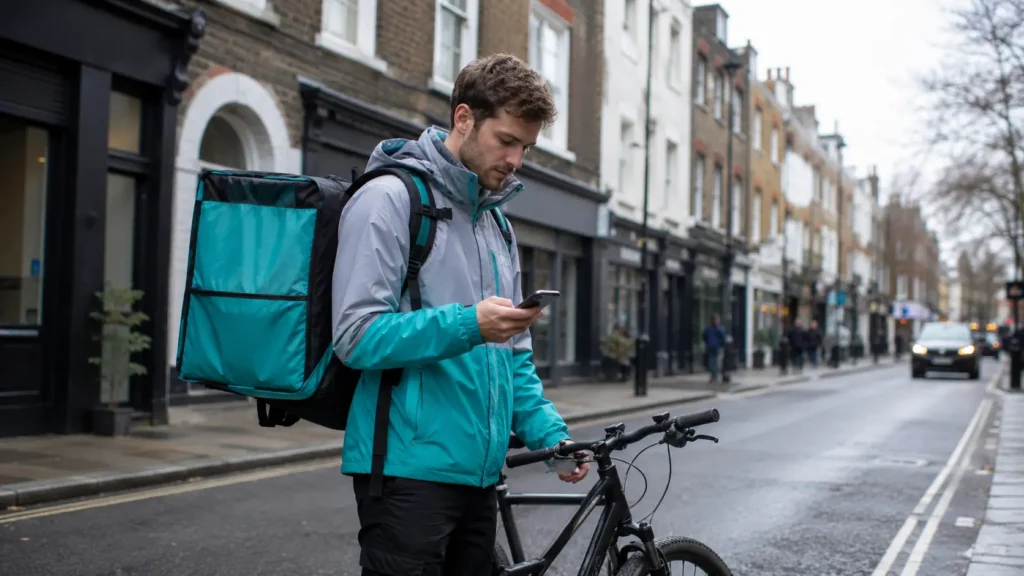
Deliveroo drivers in the UK do not receive one fixed hourly wage or annual salary. They are generally paid a separate fee for each accepted and completed delivery.
From 1 April 2026, Deliveroo’s vehicle-specific minimum fee floor is approximately:
| Registered Vehicle | Minimum Fee Based on Estimated Active Order Time |
| Bicycle | £12.88 per hour |
| Electric bicycle | £12.99 per hour |
| Scooter | £14.40 per hour |
| Car | £17.18 per hour |
These are not guaranteed earnings for every hour a rider remains logged into the app. The fee floor applies to the time Deliveroo estimates a rider will spend completing an accepted order.
Waiting for an order, travelling back to a busy area or remaining online during a quiet period may not be paid. For that reason, a rider’s earnings across their complete logged-in session can be lower than the active-order rate.
As a broad planning estimate, a Deliveroo rider might gross approximately £8 to £16 per total online hour. Some busy sessions may produce more, while quiet periods may produce considerably less.
A rider working 20 hours a week could therefore gross roughly £160 to £320 before deducting fuel, insurance, vehicle maintenance, mobile data, equipment, Income Tax and National Insurance.
How Does Deliveroo Calculate Driver Pay?
Deliveroo calculates a fee for each order and displays it in the rider app before the rider accepts the delivery.
The fee may be influenced by:
- The estimated time required to complete the order.
- The distance between the restaurant and customer.
- The rider’s location when the order is offered.
- The vehicle registered on the account.
- Local demand and the number of available riders.
- Expected restaurant or customer waiting time.
- Any additional fee or boost available at that time.
Deliveroo does not normally use one fixed payment for every collection or one standard rate per mile. A short delivery from a busy restaurant may pay differently from a longer journey involving traffic, parking or a difficult collection point.
The company’s rider fee guidance explains that delivery fees are calculated individually and shown before acceptance. This allows riders to consider the distance, destination and offered fee before deciding whether an order is worthwhile.
How Does the Minimum Fee Floor Work?
The minimum fee floor is based on the amount of time Deliveroo estimates the order should take.
For example, if a bicycle delivery is expected to take 20 minutes, the minimum fee calculation would be approximately:
£12.88 ÷ 60 × 20 = £4.29
That does not necessarily mean the rider will earn £12.88 during a complete hour online. The rider might spend part of that hour waiting for another order or travelling from the customer’s address back to an area with restaurants.
The rider’s effective hourly earnings can also fall when:
- A restaurant takes longer than expected to prepare the food.
- Traffic causes an unexpected delay.
- The customer is difficult to locate.
- The delivery finishes far away from other restaurants.
- Few orders are available after the delivery is completed.
The fee floor should therefore be treated as an active-order calculation, not a guaranteed hourly wage for an entire shift.
How Much Do Deliveroo Drivers Make Per Hour?

There is no single reliable UK-wide hourly average because earnings vary by city, working time, vehicle type and order availability.
A rider can calculate earnings in two different ways.
Active-Order Earnings
This measures delivery income against the time spent completing accepted orders.
For example, a rider who receives £13 for 60 minutes of continuous delivery work has gross active-order earnings of £13 per hour.
Total Online Earnings
This measures income against all the time the rider was logged into the app, including unpaid waiting time.
For example, a rider may earn £13 from 45 minutes of active deliveries but remain online for a full two-hour session.
Their gross earnings across the complete session would be:
£13 ÷ 2 hours = £6.50 per online hour
Total online earnings provide a more realistic measure when deciding whether delivery work is financially worthwhile.
Illustrative Hourly Earnings
The following figures are examples rather than official Deliveroo averages.
| Working Conditions | Possible Gross Earnings Per Online Hour |
| Quiet weekday period | £6–£9 |
| Moderate lunch or dinner period | £9–£13 |
| Busy evening period | £13–£17 |
| Strong demand with boosts and tips | £17–£20+ |
A rider should not assume that every busy session will produce the upper end of the range. Restaurant delays, competition between riders and journeys ending outside busy areas can reduce the final result.
How Much Can Deliveroo Drivers Make Per Week?
Weekly earnings depend on both the number of hours worked and the average return across total logged-in time.
The following table uses a cautious illustrative range of £8 to £16 gross per online hour.
| Online Hours Per Week | Lower Gross Estimate | Higher Gross Estimate |
| 10 hours | £80 | £160 |
| 15 hours | £120 | £240 |
| 20 hours | £160 | £320 |
| 25 hours | £200 | £400 |
| 30 hours | £240 | £480 |
| 40 hours | £320 | £640 |
These figures are gross revenue before business expenses and tax.
A rider who grosses £400 in one week has not necessarily made £400 in profit. Fuel, insurance, bicycle rental, repairs and other operating costs must still be considered.
How Much Can Deliveroo Drivers Make Per Month?
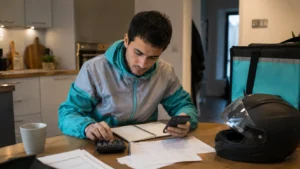
Monthly earnings can be estimated by multiplying average weekly earnings by approximately 4.33.
| Online Hours Per Week | Approximate Monthly Gross Range |
| 10 hours | £346–£693 |
| 20 hours | £693–£1,386 |
| 30 hours | £1,039–£2,078 |
| 40 hours | £1,386–£2,771 |
These calculations should not be treated as guaranteed monthly income.
Order demand can change because of:
- Seasonal customer spending.
- Weather conditions.
- School and university holidays.
- The number of riders working locally.
- Restaurant opening hours.
- Promotions and local events.
- Changes to platform fees or delivery zones.
It is safer to calculate an average across several weeks rather than relying on one unusually profitable weekend.
How Much Do Deliveroo Drivers Make After Expenses?
The amount a rider keeps depends heavily on the vehicle used.
A bicycle rider may have relatively low operating costs, while a car rider may spend a substantial proportion of gross earnings on fuel, commercial delivery insurance and maintenance.
Bicycle Rider Expenses
Common bicycle costs may include:
- Tyres, inner tubes and brake pads.
- Regular servicing and repairs.
- Lights, locks and safety equipment.
- Waterproof clothing.
- Mobile data and phone accessories.
- Replacement delivery equipment.
A bicycle rider earning £250 in a week might spend £15 to £30 on allocated maintenance, mobile costs and equipment. The remaining amount before tax could therefore be approximately £220 to £235.
Electric Bicycle Expenses
An e-bike can allow a rider to cover longer distances and complete more orders with less physical strain.
However, costs may include:
- Weekly or monthly e-bike rental.
- Finance repayments.
- Battery charging.
- Battery replacement.
- Repairs and servicing.
- Secure locks and storage.
An e-bike rider grossing £350 may pay £50 or more for weekly rental, depending on the provider. After other expenses, the rider’s profit before tax could be closer to £275.
Scooter and Car Expenses
Motorised vehicles normally receive a higher active-order fee floor because they have higher running costs.
A scooter or car rider may need to pay for:
- Petrol or electricity.
- Hire-and-reward delivery insurance.
- Standard motor insurance.
- Road tax where applicable.
- Servicing and repairs.
- Tyres and replacement parts.
- MOT testing.
- Parking charges.
- Vehicle depreciation.
Standard social, domestic and pleasure insurance is not normally sufficient for paid food deliveries. A motorised rider must ensure that the insurance policy specifically permits delivery work.
A car rider who grosses £600 in a week could spend £120 to £200 on fuel, insurance and allocated vehicle costs. Actual profit before tax might therefore be between £400 and £480.
Do Deliveroo Drivers Keep Their Tips?
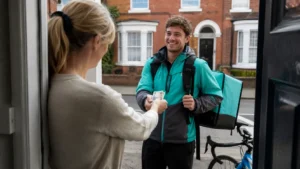
Deliveroo states that riders receive 100% of customer tips.
Customers may add a tip while placing the order or after the food has been delivered. Tips can improve earnings during a shift, but they are voluntary and unpredictable.
A rider should not include an assumed level of tips when calculating whether delivery work can cover essential household bills.
For example:
- Delivery fees: £180
- Customer tips: £15
- Total gross earnings: £195
- Weekly expenses: £25
- Profit before tax: £170
Tips are part of the rider’s trading income and may need to be included when calculating taxable profit.
When Are Deliveroo Drivers Paid?
Deliveroo normally processes rider payments weekly. Riders can view completed order fees and tips through the app.
An early cash-out option may also be available for a transaction charge. Repeatedly using paid cash-out services can gradually reduce take-home earnings.
For example, paying a 50p cash-out fee four times a week would cost:
50p × 4 × 52 weeks = £104 per year
Riders trying to maximise profit may prefer the standard payment schedule unless earlier access to the money is necessary.
Are Deliveroo Drivers Self-Employed?
Deliveroo generally contracts riders as self-employed independent suppliers rather than employees.
Self-employed riders normally choose when to log in, whether to accept an offered order and how long to work. They may also be able to work for competing delivery platforms.
However, self-employed status means riders do not automatically receive the full employment rights available to employees, such as:
- A fixed salary.
- Guaranteed working hours.
- Paid annual leave.
- Statutory redundancy pay.
- Employer pension contributions.
The UK Supreme Court’s Deliveroo decision concerned whether a particular group of riders had an employment relationship for collective bargaining purposes.
The Court concluded that the arrangements considered in that case did not create the required employment relationship, with the riders’ substitution rights being an important factor.
The ruling should not be interpreted as determining every possible employment-status dispute involving every rider. Legal status depends on the contract and the reality of the working arrangement.
Do Deliveroo Drivers Pay Tax?
Deliveroo earnings are generally treated as trading or self-employment income.
A rider is responsible for:
- Keeping records of fees and tips.
- Recording allowable business expenses.
- Checking whether Self Assessment registration is required.
- Submitting a tax return when necessary.
- Paying any Income Tax and National Insurance due.
HMRC’s guidance on income earned through online platforms specifically includes food delivery as a service that may create taxable trading income.
A person whose combined gross trading income is more than £1,000 during a tax year will normally need to tell HMRC, subject to the trading allowance rules and any applicable exceptions.
The £1,000 figure relates to gross income before expenses, not profit.
It also applies across relevant trading activities combined. A person cannot generally use a separate £1,000 allowance for Deliveroo, another delivery app and a different side business.
Example of the Trading Allowance
Suppose a rider earns:
- £750 from Deliveroo.
- £400 from another delivery platform.
- Total gross trading income: £1,150.
The combined amount exceeds £1,000, so the person may need to tell HMRC even though neither platform individually paid more than £1,000.
A rider may be able to claim the trading allowance or deduct qualifying business expenses, but normally cannot use both against the same income. The best option depends on the person’s actual costs.
This section provides general information rather than personal tax advice.
Practical Deliveroo Earnings Examples

Example One: Part-Time Bicycle Rider
A bicycle rider works 15 hours across Friday evening, Saturday evening and Sunday lunchtime.
| Item | Amount |
| Delivery fees | £190 |
| Tips | £12 |
| Gross earnings | £202 |
| Repairs and equipment allowance | £15 |
| Mobile costs | £5 |
| Profit before tax | £182 |
The rider’s gross return is approximately £13.47 per online hour. After direct costs, it falls to approximately £12.13 per hour.
Example Two: E-Bike Rider
An e-bike rider works 25 hours during lunch and evening demand periods.
| Item | Amount |
| Delivery fees and tips | £325 |
| E-bike rental | £55 |
| Charging and mobile costs | £10 |
| Maintenance allowance | £15 |
| Profit before tax | £245 |
The rider grosses £13 per online hour but retains approximately £9.80 per hour before tax.
Example Three: Car Rider
A car rider works 35 hours during a relatively busy week.
| Item | Amount |
| Delivery fees, boosts and tips | £560 |
| Fuel | £70 |
| Delivery insurance allocation | £45 |
| Maintenance and depreciation | £40 |
| Profit before tax | £405 |
The rider’s gross return is £16 per online hour. After estimated operating costs, the return falls to approximately £11.57 per hour before tax.
These examples show why gross app earnings should not be confused with take-home income.
What Factors Affect Deliveroo Driver Earnings?
Location
Large towns and cities may offer more orders because restaurants and customers are concentrated within a smaller area. However, busy areas can also have more riders competing for work.
Working Time
Lunch and evening meal periods generally produce more demand than quiet mid-afternoon hours. Friday and Saturday evenings may be especially active.
Restaurant Waiting Time
A high-fee order can become less profitable when the rider waits a long time for the restaurant to prepare it.
Final Delivery Location
An order that finishes far from restaurants may require an unpaid return journey. Riders should consider where the delivery ends, not just the outward distance.
Vehicle Choice
Cars and scooters can complete longer journeys but normally carry higher expenses. Bicycles cost less to operate but may be slower or less suitable for distant orders.
Weather
Poor weather may increase customer demand, but it can also make riding slower and more dangerous. Safety should always take priority over completing additional orders.
Tips and Additional Fees
Tips and temporary boosts may increase income, but neither should be treated as guaranteed.
Final Takeaway
Deliveroo drivers in the UK are paid per completed order rather than through one fixed hourly salary.
From April 2026, the minimum fee floor ranges from approximately £12.88 per estimated active hour for bicycle riders to £17.18 for car riders.
These figures apply to estimated time on an accepted order and should not be mistaken for guaranteed pay across an entire logged-in shift.
A cautious planning range is approximately £8 to £16 gross per total online hour. However, the rider’s actual take-home income will depend on unpaid waiting time, order availability, vehicle expenses, tips, tax and the locations where deliveries finish.
The clearest way to measure real earnings is:
Delivery fees + tips + boosts − operating expenses − tax and National Insurance = estimated take-home income
Anyone considering Deliveroo as a full-time income should record every online hour, delivery fee and expense for several weeks. This provides a more reliable picture than multiplying the earnings from one particularly busy evening.
Frequently Asked Questions
How Much Does the Average Deliveroo Driver Make Per Hour?
Deliveroo does not publish one verified average covering all logged-in time. A cautious gross planning range is approximately £8 to £16 per online hour, although actual earnings may be lower or higher.
Can a Deliveroo Driver Make £100 a Day?
It is possible during a busy day, but not guaranteed. At £12.50 gross per online hour, a rider would need to work approximately eight hours to reach £100 before expenses and tax.
Can Deliveroo Drivers Make £500 a Week?
A rider would need to average £12.50 per online hour across 40 hours to gross £500. Whether this is achievable depends on location, demand, expenses, vehicle type and working times.
How Much Does Deliveroo Pay Per Delivery?
There is no fixed UK-wide delivery fee. Each order is priced separately using factors such as estimated time, distance, demand and vehicle type.
Do Deliveroo Drivers Get Paid for Waiting?
Normal estimated waiting time may be considered when an order is priced, but riders are not necessarily paid for every minute spent waiting between orders or for every unexpected restaurant delay.
Does Deliveroo Pay for Petrol?
Riders buy their own fuel. The higher minimum fee floor for cars and scooters includes an allowance intended to recognise vehicle costs, but Deliveroo does not separately reimburse every fuel purchase.
Is Deliveroo Worth Doing as a Side Job?
It may provide flexible supplementary income, particularly during busy periods. The rider should calculate profit after all expenses rather than judging the opportunity from gross delivery fees alone.
Can Someone Work for Deliveroo and Another Delivery App?
Self-employed riders may generally use more than one platform, subject to each platform’s terms. Earnings from all relevant platforms must be considered when calculating tax obligations.
Do Deliveroo Drivers Need Special Insurance?
Car and motorised scooter riders normally need hire-and-reward or food-delivery insurance in addition to ordinary motor cover. Riders should check their policies before completing any delivery.
What Is the Best Time to Work for Deliveroo?
Lunch periods, evening meal times and weekends are often the busiest. Local demand can still vary, so riders should track their own earnings by day and time.
Note: This article has been reviewed against official Deliveroo rider guidance, HM Revenue and Customs guidance and UK Supreme Court records.

Jermaine writes informative business content related to entrepreneurship, finance, innovation, operations, and emerging opportunities for growing businesses in the UK.
Can PIP Be Stopped Without Notification?
Yes, a PIP payment can appear to stop before you receive or notice a letter, but the DWP should normally give you written notice when it makes an…

Crypto Tax Warning Letters HMRC: 81,000 Investors Targeted
HMRC has sent 81,000 warning letters to cryptocurrency holders over the past 12 months, according to new figures reported by the BBC, as the tax authority increases scrutiny…
Insights for the Modern
UK Small Business.
Join 15,000+ owners receiving tactical analysis on finance, marketing, and technology. No clutter.
Zero spam. Unsubscribe in one click.