Andy Burnham Cash ISA Rules: What Changes for UK Savers?


Searches for Andy Burnham cash ISA rules centre on a practical question: will savers still be able to put £20,000 a year into tax-free cash savings?
Under the announced reforms, the annual cash ISA subscription limit is due to fall to £12,000 from 6 April 2027 for people who do not qualify for the age-65 exemption.
The overall adult ISA allowance remains £20,000. Existing cash ISA balances are not being capped at £12,000, and the higher cash allowance applies from the beginning of the tax year in which someone turns 65.
For small business owners, this affects where personally owned surplus cash can earn tax-free interest. It does not remove tax on company dividends, reduce taxable trading profits or turn a personal ISA into a business account.
Did Andy Burnham Introduce the Cash ISA Changes?
The cash ISA reduction was announced at Autumn Budget 2025 under Rachel Reeves, before Andy Burnham became Prime Minister. HMRC published further implementation information in June 2026.
Describing the reforms as “Andy Burnham’s cash ISA rules” reflects the government now responsible for their future, rather than who originally announced them.
That distinction matters when reading predictions about a reversal. A new prime minister can support a policy review, but a change of leadership does not itself cancel an announced tax measure.
Savers should distinguish a confirmed Treasury announcement from commentary about what ministers might do.
What Are the Cash ISA Limits Before and After April 2027?
The following table summarises the standard adult subscription allowances. It excludes special provisions such as inherited ISA allowances.
| Rule | 2026/27 tax year | From 6 April 2027: below the age-65 qualifying tax year | From 6 April 2027: age-65 qualifying tax year onwards |
| Overall adult ISA subscription allowance | £20,000 | £20,000 | £20,000 |
| Maximum new cash ISA subscriptions | £20,000 | £12,000 | £20,000 |
| Remaining overall allowance after maximum cash subscription | £0 | £8,000 | £0 |
| Must the remaining allowance be invested? | No | No | No |
| Does the cash limit cap existing balances? | No | No | No |
The £8,000 is not a separate bonus allowance. Someone who puts £7,000 into cash ISAs could potentially put £13,000 into other eligible adult ISAs, subject to product-specific limits.
Equally, someone who only wants to save £12,000 in cash is not required to invest another £8,000. Leaving part of an ISA allowance unused is permitted. It cannot normally be carried forward.
Can Someone Still Have More Than One Cash ISA?
Yes. The general rules permit subscriptions to multiple cash ISAs, subject to the combined annual allowance and individual providers’ terms.
For example, an eligible saver subject to the new £12,000 limit could allocate:
| Cash ISA | New subscription |
| Easy-access cash ISA with Provider A | £5,000 |
| Fixed-rate cash ISA with Provider B | £4,000 |
| Another cash ISA with Provider C | £3,000 |
| Total | £12,000 |
Opening another account does not create another allowance. The limit belongs to the person, not to each account or bank.
For an owner-manager saving irregular dividend payments, a simple record of subscriptions across providers can prevent accidental overfunding. Record new contributions separately from interest and formal transfers of earlier years’ savings.
What Happens to Money Already in a Cash ISA?

The £12,000 figure limits new annual subscriptions; it does not limit the total cash ISA pot.
Consider a 48-year-old business owner with £75,000 already held in cash ISAs on 5 April 2027. Under the announced approach, that existing balance can remain sheltered.
Adding £12,000 of eligible new money in 2027/28 would produce £87,000 before interest.
There is no requirement to withdraw the £63,000 by which the original balance exceeds £12,000. Interest earned inside the cash ISA also does not use up the annual subscription allowance.
However, withdrawing money and paying it into another ISA is different from using a formal ISA transfer.
A withdrawal can lose its existing protection, and redepositing it may use subscription room unless an applicable flexible-ISA rule allows replacement.
Anyone moving an established balance should therefore ask the receiving provider to arrange the transfer.
When Does the Higher Allowance Start for Someone Turning 65?
HMRC’s June 2026 factsheet says entitlement starts at the beginning of the tax year in which the individual turns 65.
| 65th birthday | First tax year qualifying for the higher cash limit | Date that tax year starts |
| 10 October 2027 | 2027/28 | 6 April 2027 |
| 5 April 2028 | 2027/28 | 6 April 2027 |
| 6 April 2028 | 2028/29 | 6 April 2028 |
For example, someone turning 65 on 10 October 2027 would qualify for the £20,000 cash subscription allowance from 6 April 2027, while still aged 64.
The tax-year boundary explains why two people with birthdays one day apart can qualify in different years. Providers’ implementation information should explain how they will apply this to customer accounts.
Will ISA Transfers Still Be Allowed?
The announced transfer restriction works in one direction for those below the qualifying age threshold.
| Transfer | Below age-65 qualifying tax year, from April 2027 | Age-65 qualifying tax year onwards |
| Cash ISA to another cash ISA | Allowed | Allowed |
| Cash ISA to stocks and shares ISA | Allowed | Allowed |
| Stocks and shares ISA to another stocks and shares ISA | Allowed | Allowed |
| Stocks and shares ISA to cash ISA | Restricted under the announced reforms | Restriction disapplied |
Provider acceptance, charges and transfer conditions still matter.
Moving cash into investments should follow a decision about risk and timescale.
A business owner expecting to need money for household expenses during a quiet trading period may not be able to wait for investments to recover after a market fall.
Formal transfers of previous tax years’ ISA savings normally do not consume the current annual subscription allowance.
Current-year transfers and flexible replacements can involve additional accounting rules, so savers should check how their provider records them.
What Is the Planned 22% Charge on ISA Cash Interest?
The announced flat-rate charge applies to interest on cash held inside non-cash ISAs, such as uninvested cash in a stocks and shares ISA. It is not a 22% tax on ordinary cash ISA interest or on the cash balance itself.
Suppose an investor leaves £8,000 uninvested in a stocks and shares ISA for a full year, receiving a hypothetical 4% interest rate:
| Calculation | Amount |
| Cash balance | £8,000 |
| Gross interest at 4% | £320 |
| Charge at 22% of interest | £70.40 |
| Interest after the charge | £249.60 |
The account manager pays the charge to HMRC. The personal savings allowance does not offset it. The announced charge also applies to older investors who qualify for the higher cash ISA allowance.
This is separate from the planned ordinary savings income tax rates of 22%, 42% and 47% from April 2027. Outside an ISA, available tax allowances affect how much interest is taxable.
How Much Could the £8,000 Difference Cost Over Five or Ten Years?
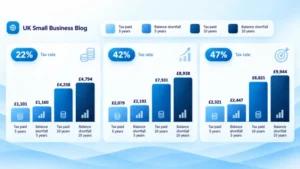
There is no universal tax bill from the lower cash allowance. Someone with unused savings allowances could initially pay no additional tax.
For example, £8,000 earning 4% produces £320 of annual interest. If a basic-rate taxpayer has their full £1,000 personal savings allowance available, that interest would fit within it.
Someone who has already used their allowance would instead face £70.40 at a 22% savings tax rate.
For a longer comparison, assume an individual saves £20,000 annually but wants it all held as cash. Compare a hypothetical unchanged £20,000 cash ISA limit against the announced £12,000 limit, with the extra £8,000 saved outside the ISA each year.
Calculation assumptions: £8,000 deposited at the start of every year; 4% interest compounded annually; no unused personal savings allowance, starting-rate band or personal allowance; tax deducted annually from interest; unchanged interest and tax rates; no fees or withdrawals.
The £12,000 portion is identical in both scenarios and excluded.
| Tax rate on the outside savings interest | Tax paid over 5 years | Balance shortfall after 5 years | Tax paid over 10 years | Balance shortfall after 10 years |
| 22% | £1,101 | £1,160 | £4,258 | £4,794 |
| 42% | £2,079 | £2,192 | £7,931 | £8,938 |
| 47% | £2,321 | £2,447 | £8,821 | £9,944 |
Rounded to the nearest pound. The shortfall includes tax paid and the compound growth lost on that tax.
The hypothetical tax-free £8,000 annual contributions grow to approximately £45,064 after five years and £99,891 after ten years.
These figures illustrate the effect of the tax wrapper, not a forecast of future rates or a promise that someone will remain subject to the lower cash limit for ten years.
How Do the Rules Affect Directors Saving Dividend Income?
A limited company cannot open a personal ISA. Directors must first receive money legitimately, for example through salary or a lawful dividend, before saving it personally.
Putting a dividend into a cash ISA does not cancel dividend tax. The ISA protects subsequent eligible investment income or interest, rather than the original payment from the company.
Consider a director aged 45 with £20,000 of personal surplus available after allowing for dividend tax and living costs:
- Before 6 April 2027: Up to £20,000 could go into a cash ISA if the full annual allowance remains available.
- From 6 April 2027: The announced standard cash subscription limit would allow £12,000, leaving £8,000 to allocate elsewhere.
- For year-end planning: The dividend decision should account for distributable profits, company liquidity and personal tax before the ISA decision is made.
An ISA deadline is not a reason to extract cash needed for VAT, corporation tax, payroll or supplier payments. A company’s accounting year-end may also differ from the personal tax-year end of 5 April.
Where Can Sole Traders Keep Emergency Cash Above £12,000?
A sole trader’s irregular income can make accessible reserves particularly valuable. The appropriate reserve depends on household spending, customer concentration, seasonal income and business commitments.
Suppose a trader wants £24,000 available to cover eight months of essential spending at £3,000 a month.
A £12,000 annual cash ISA limit would cover only half if the reserve were being built entirely from new subscriptions in one year. Existing ISA savings could already cover some or all of the target.
Possible places for additional personal reserves include:
| Option | Potential role | Main consideration |
| Easy-access savings outside an ISA | Accessible cash for unexpected bills | Compare interest after tax and check withdrawal terms |
| Premium Bonds | Additional Treasury-backed personal savings | Prizes are tax-free, but returns are not guaranteed; the holding limit is £50,000 |
| Offset mortgage savings account | Reduce mortgage interest charged | Compare the complete mortgage cost, fees and access conditions |
| Notice or fixed-term savings | Money with a predictable future use date | Access restrictions can make these unsuitable for immediate emergencies |
A headline rate on a regular saver may apply only to limited monthly deposits.
For example, the structure of the Lloyds monthly savings account illustrates why a monthly contribution product needs different calculations from an account accepting an entire lump sum.
Tax efficiency should not come at the expense of being able to pay an urgent bill.
Sole traders should also keep clear records of money reserved for tax and business obligations, even where accounts are personally owned.
What Do the 2029 Salary Sacrifice Changes Mean for Employers?
The separate pension salary sacrifice reform is scheduled for April 2029.
Only the first £2,000 of pension salary sacrifice per employee each year will retain the National Insurance exemption under the announced approach; amounts above it attract employer and employee NICs.
Pension income tax relief remains subject to the usual limits. Genuine employer pension contributions that are not funded through salary sacrifice remain NIC-exempt.
For a small employer, the immediate planning question is the potential payroll cost.
Illustration: Ten employees each sacrifice £5,000 annually. The amount above the £2,000 threshold is £3,000 per employee, or £30,000 overall. At an illustrative unchanged employer NIC rate of 15%, the additional gross employer liability would be:
£30,000 × 15% = £4,500 a year.
Actual net cost depends on the rules and rates then in force, Employment Allowance availability and other circumstances.
Employers should review payroll capability, employee communications and any policy of adding employer NIC savings to pension contributions.
Are VCTs an Alternative for Business Owners?
Venture Capital Trusts can be relevant to experienced investors with surplus long-term capital, including business owners who have reviewed their ISA and pension allowances.
They are investments in smaller companies, not a replacement for a cash emergency fund. Values can fall substantially, and selling can be difficult.
For qualifying new VCT subscriptions from 6 April 2026, upfront income tax relief is 20%, within the £200,000 annual investment limit and the investor’s available income tax liability.
Retaining relief generally requires holding the shares for at least five years.
An eligible £10,000 subscription could therefore produce £2,000 of income tax relief. That relief does not protect the £10,000 against investment loss.
For an owner-manager, another consideration is concentration: personal income and existing wealth may already depend heavily on a small business.
Adding more smaller-company exposure should be an investment decision, not simply a response to a reduced cash allowance.
How Do Pension Inheritance Tax Changes Affect Family Businesses?
Most unused pension funds and relevant death benefits are due to enter the inheritance tax estate from 6 April 2027, with exclusions including registered pension scheme death-in-service benefits.
Business Relief has separate rules. For deaths from 6 April 2026, the combined allowance for qualifying business and agricultural property receiving 100% relief is £2.5 million, with 50% relief generally applying above it.
Unused allowance can transfer between spouses or civil partners, subject to the rules.
A family should therefore assess the business, pension and personal savings together. Business Relief on qualifying shares does not automatically shelter the owner’s pension or cash ISA.
Eligibility and ownership conditions matter, and surplus assets not required for business use may not qualify.
For example, an estate might contain valuable trading-company shares but little accessible cash. A separate pension-related tax liability could create a funding problem even if substantial Business Relief applies to the shares.
Discussion of Andy Burnham’s inheritance tax proposals should be distinguished from the existing Business Relief framework and the scheduled pension change.
Succession planning should address ownership, wills and liquidity as well as tax.
What Should Savers Do Before April 2027?
| When | Action |
| Now, during 2026/27 | Record current-year ISA subscriptions, existing balances and money needed for household or business commitments |
| Before 5 April 2027 | Consider whether using available cash ISA allowance suits personal cash needs; arrange any transfers through providers |
| Before changing investments | Check risk, withdrawal needs, fees and the announced future transfer restrictions |
| From 6 April 2027 | Apply the appropriate cash limit and track subscriptions across all providers, subject to final implementation |
| During 2027/28 | Check tax on savings outside ISAs and provider information about cash interest inside investment ISAs |
| Before April 2029 | Employers should model pension salary sacrifice NIC costs and prepare payroll communications |
Existing cash ISA interest should not be treated as ordinary taxable bank interest merely because a saver also holds non-ISA accounts. Anyone finding an unexpected tax adjustment should check whether an HMRC ISA tax-code error could explain it.
Frequently Asked Questions
Do I Need to Move My Cash ISA Before April 2027?
No. The announced lower subscription limit does not require existing cash ISA savings to be moved. A transfer may be useful for a better rate or suitable access terms, but it should be arranged through providers to preserve the wrapper.
What Counts as a Cash-Like Investment in a Stocks and Shares ISA?
HMRC’s June 2026 factsheet defines cash-like assets for this purpose as money market funds.
They can form part of a portfolio, but the announced rule prevents them representing 100% of investments in the relevant non-cash ISA account. This is separate from the charge on interest paid on actual cash balances.
Is the Brit ISA Still Happening?
The previous proposal for an additional £5,000 British ISA allowance was dropped at Autumn Budget 2024. Savers should not include that proposed allowance in their plans. It is separate from the £12,000 cash ISA reform.
What Happens to Junior ISAs?
The Junior ISA annual subscription allowance remains £9,000 per child under the announced arrangements. It is separate from a parent’s adult ISA allowance.
Money contributed belongs to the child and cannot serve as the parent’s emergency business reserve.
What Happens to Lifetime ISAs?
The Lifetime ISA subscription limit remains £4,000, counting towards the £20,000 overall adult ISA allowance. Eligible subscriptions receive a 25% government bonus.
Opening-age and contribution-age restrictions remain relevant, and most withdrawals outside qualifying first-home purchases or age-60 access attract a 25% charge. It should not be treated as ordinary accessible cash savings.
Will the Rules Definitely Happen, or Could Burnham Reverse Them?
The reduction is announced government policy with a planned start date of 6 April 2027. Implementation depends on the relevant legislation and regulations, and future government decisions can change policy.
A possible reversal should not be presented as confirmed without an official announcement.
Does the £12,000 Limit Apply to Every Business Owner?
No. The higher cash allowance applies from the tax year someone turns 65. Many other business owners also contribute less than £12,000 annually or already hold substantial cash ISA balances.
The effect depends on age, new subscriptions and personal cash needs, not business-owner status alone.

Jennifer contributes business-focused articles covering modern business trends, digital growth, entrepreneurship, and practical insights designed to support startups and SMEs.

DWP Universal Credit Rollout End: Is the Move to Universal Credit Finally Finished?
The DWP Universal Credit rollout has officially finished, ending a programme that began in 2013. DWP completed its exercise to contact remaining legacy-benefit claimants in late March 2026,…

DWP Benefit Fraud Crackdown: What the New Checks Mean for Claimants and Self-Employed Workers
Next scheduled change: New DWP debt-recovery enforcement powers are due to begin rolling out gradually from October 2026. The separate Eligibility Verification Measure for bank-held information is expected…
Insights for the Modern
UK Small Business.
Join 15,000+ owners receiving tactical analysis on finance, marketing, and technology. No clutter.
Zero spam. Unsubscribe in one click.