Burnham Ally Tax Proposals 2026: What Could Change for Small Businesses, Investors and Homeowners?

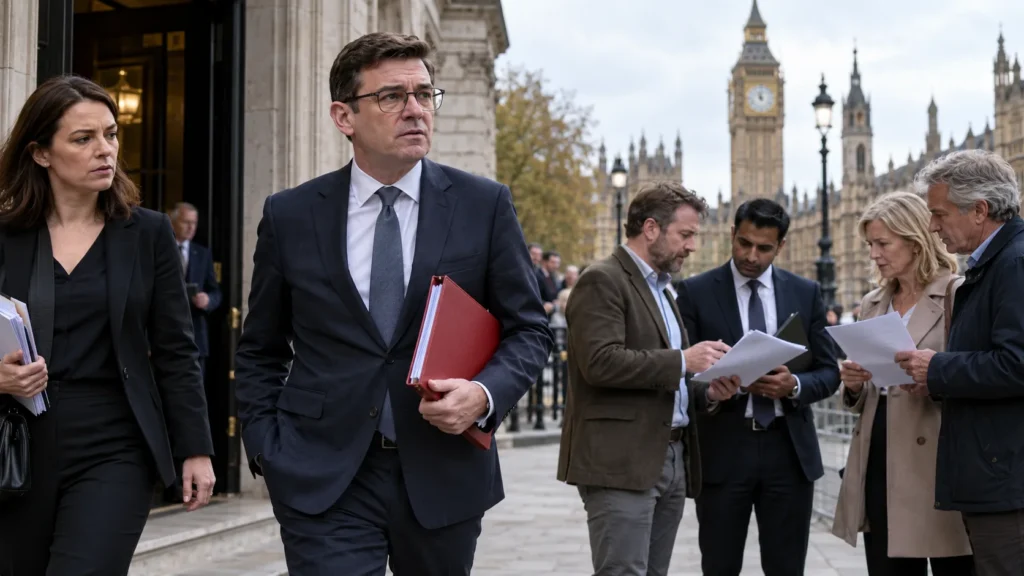
The UK tax debate surrounding Andy Burnham has changed substantially since proposals from his political allies first attracted attention earlier in 2026.
Burnham is no longer a possible Labour leadership contender. He was elected Labour leader in July and became Prime Minister on 20 July 2026, while John Healey was appointed Chancellor of the Exchequer on the same day.
The next major test of the government’s tax direction will therefore be Healey’s Budget on 28 October 2026.
Burnham has also spoken directly about taxation. He has said the system needs a “greater sense of fairness” and acknowledged that the government might need to “ask for a little more” from some taxpayers.
However, that does not mean every tax proposal associated with Burnham, his allies or outside economists is government policy.
For small-business owners, investors and homeowners, that distinction is crucial.
Some changes have already been announced. Others are inherited policies scheduled to take effect in 2027.
Several headline-grabbing ideas, including higher Capital Gains Tax, a national contributions tax and major property-tax reform, remain proposals, previous political positions or speculation.
Which Burnham Tax Changes Are Actually Confirmed?
| Tax area | Position as of 25 September 2026 | Status |
| Capital Gains Tax | General rates remain 18% and 24% | No new rise announced |
| Business Asset Disposal Relief | 18% from 6 April 2026 | Current law |
| Employer National Insurance | Main employer rate remains 15%, with the secondary threshold at £5,000 | Current law |
| Household electricity VAT | 0% in Great Britain from 1 October 2026 to 31 March 2027 | Confirmed |
| Pub, social club and live-music venue business rates | 20% reduction in England from April 2027 | Confirmed |
| Hospitality VAT | Burnham has supported a lower rate, but no general reduction has been announced | Proposal |
| Cash ISA limit | £12,000 cash limit for under-65s from 6 April 2027 while overall ISA allowance remains £20,000 | Previously announced policy |
| Pensions and IHT | Most unused pension funds and death benefits due to enter estates for IHT from April 2027 | Previously announced policy |
| Young-worker income-tax exemption | Reported proposal for first three years of full-time work | Not confirmed policy |
| CGT alignment with Income Tax | Discussed by Burnham allies and commentators | Not announced |
| National contributions tax | Proposed by outside economists | Not government policy |
| Entrepreneur exit tax | Discussed in tax commentary | No individual exit tax announced |
The government’s room for manoeuvre is also restricted by Burnham’s commitment to retain Labour’s pledge not to increase the main rates of Income Tax, employee National Insurance or VAT.
He has also indicated that the main Corporation Tax rate should not rise above its present 25%.
That matters because it helps explain why so much of the current debate is focused on capital, property, reliefs, thresholds and narrower business taxes rather than straightforward increases in the three largest personal taxes.
Capital Gains Tax Could Become One of the Biggest Budget Questions
Capital Gains Tax remains particularly important for entrepreneurs because it can affect the sale of businesses, investment portfolios, second properties and other appreciating assets.
As of September 2026, the standard CGT rates for most gains are 18% for gains falling within the basic-rate band and 24% above it.
The annual exempt amount remains £3,000. Qualifying disposals under Business Asset Disposal Relief are taxed at 18% from 6 April 2026.
There has been no announcement increasing the main 18% and 24% CGT rates.
Nevertheless, proposals to bring CGT closer to Income Tax have become a major part of the tax debate. Louise Haigh previously argued for greater alignment, and other commentators have modelled what such a system could look like.
What Could CGT Alignment Mean in Numbers?
| Scenario | Basic rate | Higher rate | Additional rate | Position |
| Current general CGT | 18% | 24% | 24% | Current law |
| Alignment with current main Income Tax rates | 20% | 40% | 45% | Illustrative scenario |
| Alignment with 2027/28 savings-income rates | 22% | 42% | 47% | Illustrative scenario |
The 20%, 40% and 45% figures illustrate what alignment with present main Income Tax rates could look like.
Separate analysis has highlighted 22%, 42% and 47% because those are the savings-income rates scheduled for 2027/28. Neither structure has been announced as the government’s CGT policy.
For a business owner contemplating a company sale, the difference could be substantial. But restructuring a sale or accelerating a disposal solely because of an unconfirmed tax proposal carries its own risks.
What About Business Asset Disposal Relief?
Business Asset Disposal Relief has already become less generous.
Its tax rate was 10% before April 2025, rose to 14% from April 2025 and reached 18% from 6 April 2026.
Further increases have been discussed by commentators, but there is currently no confirmed increase above 18%.
That distinction matters particularly for founders who are planning an exit and may see claims that a rate above 20% is inevitable. It is not current law.
Could Entrepreneurs Face an Exit Tax?
An entrepreneur “exit tax” has also appeared in tax speculation.
The broad concept would impose a CGT charge when an individual leaves the UK while holding appreciated business assets, potentially preventing someone from becoming non-UK resident before subsequently disposing of a company.
The UK does not currently impose a general individual departure tax of that kind, although residence rules, temporary non-residence provisions and separate company and trust rules can still affect tax treatment.
Earlier commentary suggested an exit tax could be considered as part of a wider move towards taxing accumulated wealth.
More recent reporting has also indicated that the government has ruled out a proposed departure levy aimed at companies or university spin-outs moving overseas.
For now, therefore, an entrepreneur exit tax should be treated as a policy possibility discussed by commentators rather than an announced tax change.
Income Tax: Young Workers, the 50p Rate and Frozen Thresholds
Income Tax is another area where several very different ideas are being discussed at the same time.
One of the most striking reports before Burnham took office was a proposal to exempt younger people from Income Tax during their first three years of full-time employment.
The estimated cost reported for the measure was approximately £3.5 billion, with the policy intended partly to help younger workers accumulate savings towards a house deposit.
As of 25 September, however, this has not been implemented or formally announced as part of the October Budget.
Burnham has also previously expressed support for ideas including a 50p additional Income Tax rate and a 10p starting rate. Those earlier positions need to be read alongside his current commitment not to increase the main Income Tax rates.
That makes a straightforward return to a 50p top rate considerably less certain than some headlines imply.
Could Frozen Tax Thresholds Change?
Another possibility is movement on fiscal drag.
The standard Personal Allowance remains £12,570, while the higher-rate threshold for most taxpayers in England, Wales and Northern Ireland is £50,270.
The thresholds have been frozen for several years and are currently scheduled to remain constrained for longer, meaning wage growth can move taxpayers into higher effective tax burdens even without headline rate increases.
Burnham has previously argued that the freeze should be re-examined. That makes thresholds another area to watch in the October Budget, but an increase to the Personal Allowance or higher-rate threshold has not yet been confirmed.
Employer National Insurance Could Matter More to Small Firms
Employer National Insurance is especially significant for small businesses because it directly affects the cost of employment.
The main employer National Insurance rate rose to 15% from April 2025, while the secondary threshold was reduced to £5,000.
Burnham criticised that increase before becoming Prime Minister and argued that it should be reconsidered.
A reduction would potentially lower the marginal cost of recruitment, but no reversal has yet been announced.
For employers considering recruitment before the Budget, the practical position remains that payroll forecasts should use the current 15% rate unless and until legislation changes it.
Business Rates and VAT: Where Changes Are Already Happening
For the UK Small Business Blog audience, business rates and VAT may ultimately matter more day to day than some of the larger wealth-tax debates.
The Burnham government has already announced a 20% reduction in business rates for pubs, social clubs and live-music venues in England from April 2027. The government says a typical pub could save around £1,100.
Burnham has previously supported broader business-rates reductions, including proposals aimed at smaller retailers, cafés, hairdressers and similar high-street businesses.
Those wider measures should still be distinguished from the pub and live-venue reduction that has actually been announced.
Has Hospitality VAT Been Cut?
Not yet across the sector.
Burnham has previously supported a lower VAT rate for hospitality, including calls for a 10% rate, and hospitality businesses are continuing to press the government for action.
But a general hospitality VAT reduction has not been confirmed as of 25 September 2026.
The separate VAT registration threshold also remains important for small businesses.
It is currently £90,000, and critics have argued that the threshold creates a growth “cliff edge” for firms approaching compulsory VAT registration. No new Burnham-government threshold has yet been announced.
Household Electricity VAT Is Different
One VAT cut is already confirmed.
VAT on qualifying domestic electricity in Great Britain will be reduced to 0% from 1 October 2026 until 31 March 2027.
Other domestic fuels generally remain subject to the existing reduced VAT rate, and Northern Ireland is treated differently under applicable arrangements.
The implications of the household electricity VAT cut are particularly relevant to households with high electricity consumption, including some EV owners.
Could the UK Replace Income Tax and National Insurance With One Tax?
One of the more unusual proposals surrounding the new government has come not from ministers but from economists.
A group including Lord O’Neill of Gatley, who has been described as a close Burnham ally, encouraged the Prime Minister to consider a new “national contributions” tax.
The concept draws on work proposing a single tax framework that could replace or combine Income Tax, National Insurance and taxes applying to capital gains, dividends and inheritances.
It is potentially a much more fundamental reform than simply increasing one existing tax rate.
However, it is important not to describe it as Burnham government policy.
It originated in an external proposal and there is currently no indication that Income Tax, National Insurance, CGT and Inheritance Tax are about to be replaced by a single levy.
For businesses, it is best regarded as an idea worth watching rather than something to incorporate into near-term financial forecasts.
Inheritance Tax Could Become a Bigger Part of the Debate
Inheritance Tax was largely absent from the original discussion around Burnham’s tax plans, but it has increasingly become part of the wider policy debate.
One proposal associated with Labour figures is abolition of the CGT uplift on death.
Under existing rules, CGT is generally not charged simply because an individual dies. Assets inherited by beneficiaries are normally treated as being acquired at their market value at the date of death, effectively resetting the CGT base cost.
Louise Haigh has previously argued for removing that treatment.
If such a reform were ever introduced, it could create significantly different outcomes for family businesses, investment properties and portfolios passed between generations. But no such abolition has been announced.
Burnham also has an older history with the idea of funding social care through estates.
During the debate over a National Care Service more than a decade ago, he was associated with proposals under which pensioners could contribute around 10% of their estate towards care funding.
That is an historical proposal rather than current government policy.
A more detailed look at the inheritance tax and care levy debate explains why the earlier proposal should not be confused with a tax that has actually been introduced.
Agricultural Property Relief
Agricultural and family-business taxation is another area to monitor.
Changes applying from 6 April 2026 provide a combined £2.5 million allowance for assets qualifying for 100% Agricultural Property Relief or Business Property Relief, with 50% relief generally applying above the allowance.
Unused qualifying allowance can also be transferred between spouses or civil partners in relevant circumstances.
Burnham has indicated that the treatment of farmers under recent inheritance-tax reforms should be reviewed.
Any further changes would be especially relevant to agricultural businesses where land values are high but annual cash flow may be much lower.
Property Tax: Council Tax, Stamp Duty and Land Value Tax
Property taxation is another area where several separate proposals are sometimes incorrectly blended together.
Campaign group Fairer Share has advocated replacing Council Tax and Stamp Duty Land Tax with an annual proportional property tax of around 0.48% of a home’s value.
On that model, a home worth £300,000 would generate an annual property-tax bill of:
£300,000 × 0.48% = £1,440
That is a proposal rather than an announced government tax.
Burnham has separately expressed support in the past for forms of land value taxation. That is conceptually different from the Fairer Share model. More detail on the distinction is covered in the site’s analysis of Andy Burnham’s land and property tax proposals.
Another current area of speculation concerns a surcharge on high-value homes. Reports have suggested that a possible threshold could move from around £2 million to £1.5 million, although no final national policy has been announced.
Homeowners should therefore distinguish between proposals under discussion and changes that have actually entered tax legislation.
Cash ISA Changes Are Already Coming in 2027
ISA policy deserves separate treatment because some significant changes are already scheduled and should not be mistaken for new Burnham proposals.
From 6 April 2027, the annual amount that most people under 65 will be able to subscribe to a cash ISA is due to fall from £20,000 to £12,000.
The overall annual ISA allowance remains £20,000, allowing the balance to be allocated to other qualifying ISA investments. People aged 65 or over are due to retain the £20,000 cash ISA limit.
There is also a planned 22% tax charge connected with cash held inside non-cash ISAs for affected under-65 savers under the new framework.
The practical mechanics are covered in more detail in the site’s explanation of cash ISA changes from April 2027.
For directors and sole traders building personal cash reserves outside their businesses, the key point is that these measures are already scheduled. They are not merely speculation about the October Budget.
What Could Happen to Pension Tax?

Pension taxation remains another area attracting speculation.
Potential reforms to pension tax relief have repeatedly been discussed by tax commentators, particularly because higher-rate tax relief represents a significant cost to the Exchequer.
At the same time, an important pension tax change is already approaching: from April 2027, most unused pension funds and pension death benefits are scheduled to be brought within the scope of Inheritance Tax when calculating an estate.
Tax specialists have argued that this may make additional pension tax rises politically and economically more complicated because savers are already adjusting to the inheritance-tax change.
No broad reduction in pension tax relief has yet been announced by the Burnham government.
Could Banks Face Higher Taxes?
There is also pressure from outside government for changes to banking taxation.
The Trades Union Congress has continued to argue for restoration of a higher corporation-tax surcharge on banking profits.
That should not be confused with a confirmed Burnham policy. There is currently no newly announced bank tax arising from the proposal.
The potential implications for lending, banking profits and business customers are examined separately in the site’s coverage of possible bank tax changes.
What Are Burnham’s Political Opponents Saying?
The tax debate is also highly political, so claims from opposition parties should be separated from independently established tax costs.
Reform UK has claimed that policies associated with Burnham could generate roughly £38 billion of additional taxation not contained in Labour’s 2024 manifesto and has argued that this would take Labour-related tax increases above £100 billion annually.
Those numbers are Reform UK’s political estimate rather than an official Treasury forecast.
Conservative leader Kemi Badenoch has also criticised Labour’s tax direction and argued that the government is focusing too heavily on finding additional sources of tax revenue.
The Green Party has taken the opposite approach, arguing for a more extensive wealth-tax programme. It has described Burnham’s approach as insufficiently ambitious and has cited polling which it says shows strong support among people who voted Labour in 2024 for a broader wealth tax.
These are competing political arguments rather than evidence that any particular tax change will appear in the October Budget.
John Healey’s First Budget Is Now the Date That Matters
The appointment of John Healey as Chancellor changes the context of the entire tax debate.
Instead of trying to infer future policy solely from comments by Burnham’s allies, businesses can now focus on the Treasury and the 28 October 2026 Budget.
Healey has said fiscal discipline and the government’s fiscal rules will remain central to the Budget.
That creates a difficult balance.
The government has pledged not to increase the main rates of Income Tax, employee National Insurance or VAT while also facing pressure for higher spending, tax relief for some households and businesses, and changes intended to make the tax system more progressive.
Consequently, smaller tax bases, reliefs, asset taxation, property taxes and business-specific measures may receive considerable attention.
But that is precisely why businesses should distinguish between measures that have been announced and those that merely provide clues about the direction of travel.
What Should Small-Business Owners Do Before the October Budget?
Business owners do not need to restructure their affairs every time a new tax proposal appears in the press.
The more useful approach before 28 October is to model decisions under both current rules and plausible alternative scenarios.
A business owner considering a disposal, for example, could calculate the effect of today’s CGT and BADR rates alongside higher hypothetical rates.
Employers can model payroll costs using the existing 15% employer NI rate while understanding what a reduction would mean. Hospitality businesses can account for the confirmed business-rates changes without assuming that a 10% VAT rate will arrive.
The same principle applies to succession planning. Existing inheritance-tax and pension changes can be incorporated into planning now, whereas removing the CGT uplift on death or creating a new estate levy should not be treated as settled law.
Major transactions should generally be based on legislation, confirmed commencement dates and the circumstances of the individual business rather than attempts to predict an unannounced Budget.
What Does This Mean for Business Owners and Investors?
The most important change since the original Burnham tax story is not one individual tax proposal.
It is the fact that the discussion has moved from speculation about what a Labour leadership candidate or one of his allies might favour to scrutiny of an actual Burnham government preparing its first Budget.
Some policies are already clear.
Household electricity VAT is temporarily falling to zero in Great Britain. Business rates will fall by 20% for qualifying pubs, social clubs and live-music venues in England from April 2027. Existing ISA and pension reforms are still scheduled for 2027.
Other potentially significant changes ,higher CGT, a young-worker Income Tax exemption, broader hospitality VAT relief, changes to frozen Income Tax thresholds, land or property-tax reform, abolition of CGT uplift on death and a national contributions tax, remain proposals, previous positions or matters under discussion.
For small-business owners, the distinction between those categories is more useful than attempting to guess which headline will become legislation.
FAQs
Has Andy Burnham increased Capital Gains Tax?
No. As of 25 September 2026, the general CGT rates remain 18% and 24%. Higher alignment scenarios have been discussed but not announced.
Is the 50p Income Tax rate returning?
Burnham has previously supported the idea, but his government has committed not to increase the main Income Tax rates. No 50p rate has been announced.
Has hospitality VAT been cut to 10%?
No. Burnham has supported a lower hospitality VAT rate, but a general 10% hospitality rate has not been implemented.
Are business rates being reduced?
Yes, for some businesses. A 20% reduction has been announced for pubs, social clubs and live-music venues in England from April 2027.
Will young workers pay no Income Tax for three years?
The idea has been reported as a Burnham proposal, with an estimated £3.5 billion cost, but it has not yet been confirmed as government policy.
Is an entrepreneur exit tax being introduced?
No general individual exit tax has been announced. It remains a subject of tax-policy discussion.
Is the cash ISA allowance being reduced?
For most under-65s, the cash component is scheduled to fall to £12,000 from April 2027, although the overall annual ISA allowance remains £20,000.
Will pensions become subject to Inheritance Tax?
Most unused pension funds and death benefits are scheduled to be included when calculating estates for IHT from April 2027.
When will the government’s tax plans become clearer?
The next major fiscal event is Chancellor John Healey’s Budget on 28 October 2026, when confirmed tax measures and accompanying Treasury documents should provide much greater clarity.

Jennifer contributes business-focused articles covering modern business trends, digital growth, entrepreneurship, and practical insights designed to support startups and SMEs.

UK Budget Savings Tax Changes 2026: New Rates, ISA Rules and How Much More Savers Could Pay?
The UK Budget savings tax changes announced on 28 October 2026 have introduced significant financial implications for millions of savers, pensioners and small business owners. From 6 April…

DWP Energy Bill Letters Dispatched: Six Million Households Could Get £150 Discount
Millions of UK households are being urged to watch their post as the Department for Work and Pensions (DWP) prepares to distribute letters concerning a £150 reduction in…
Insights for the Modern
UK Small Business.
Join 15,000+ owners receiving tactical analysis on finance, marketing, and technology. No clutter.
Zero spam. Unsubscribe in one click.